


















Last updated on May 13th, 2026 at 09:13 pm
Bangalore Times Newspaper Article ~ Is India really a safe place for women?
Crime Statistics and Safety Reality: Bangalore’s Troubling Position in National Rankings
Times of India investigation into women’s safety in India reveals deeply troubling reality: India ranks worst among G20 nations regarding women’s safety, with National Crime Records Bureau data demonstrating systematic violence against women throughout the country. Bangalore occupies particularly concerning position, ranking second nationally for crimes committed against women with 1,890 documented cases accounting for 5.6 percent of national total, exceeded only by New Delhi’s 13.3 percent.
Beyond official statistics, daily incidents reflect ongoing violence and harassment targeting women. A 23-year-old Bangalore media professional encountered brutality when a bike-borne assailant spat on her during morning commute, leaving her shaken and questioning herself. Rather than blaming perpetrator, victim initially questioned own appearance and clothing choices, demonstrating how victim-blaming culture undermines women’s legitimate rage and agency. “I was shocked and before I could regain my composure, he had sped off. At first I asked myself if my clothes had invited such an action. But I hate him now for making me question myself. It was nothing less than a Taliban-esque assault on a woman,” she recounts.
This incident exemplifies broader pattern where women become targets of leering, jeering, and violence, with perpetrators deliberately making women feel vulnerable and attacking their dignity. Within such environment, Power to Women Corporate Self-Defence Workshops for Safe Cities and Communities represent essential response addressing both individual capability development and societal attitudes enabling violence.
Sex Crimes in Bangalore: Detailed Breakdown of Violence Categories
National Crime Records Bureau data reveals disturbing violence diversity within Bangalore:
Cruelty by Husband: 398 to 458 cases
Molestation: 308 to 250 cases
Rape: 65 to 97 cases
Dowry deaths: 52 to 53 cases
Sexual harassment: 40 to 50 cases
This data demonstrates that intimate partner violence represents largest category, while molestation constitutes significant threat category. The reality that violence predominantly emanates from known perpetrators particularly within domestic contexts fundamentally shapes required protective response. Power to Women Corporate Self-Defence Workshops for Intimate Partner Violence Prevention address this reality through de-escalation, boundary-setting, and psychological empowerment rather than exclusively physical technique emphasis.
Media Influence and Patriarchal Reinforcement: How Cinema Normalises Violence Against Women
Specialist Guruji Franklin Joseph, who conducts Power to Women Corporate Self-Defence Workshops for Media Literacy and Attitude Change, emphasises critical media influence on social attitudes regarding women and violence. “When a family watches a film in which a man beats up a woman, and a father has no issues watching it, the son gets a subconscious message that it is OK for him to commit the same acts. Mothers usually have no say on the matter and the silence is proof of the power of the man,” Franklin articulates.
This psychological analysis reveals how mainstream entertainment reinforces patriarchal attitudes and normalises violence against women. When families watch films depicting male violence toward women without objection, young male viewers internalise messaging that such behaviour represents acceptable masculine expression. Mothers’ silence permits these attitudes to persist unchallenged, perpetuating patriarchal power dynamics across generations.
Beyond explicit violence depiction, “old movies” frequently include sequences where “the hero jeers at a woman. Masked under the act of courtship, this is sexual harassment and legitimise such acts,” according to psychologist Vikram Prabhu. This romanticisation of harassment under courtship guise normalises inappropriate male behaviour whilst positioning women as objects of male attention rather than autonomous individuals deserving respect.
Patriarchal Systems Enabling Male Violence: Psychological and Sociological Analysis
Psychologist Vikram Prabhu identifies fundamental psychological mechanism: “Patriarchy allows men to commit violence against women. It occurs when a man sees a woman as inferior. This has become common in urban areas where men can take refuge under the mask of anonymity. It is male chauvinism, with the man forcing the woman into submission.”
Read Franklin Joseph Corporate Women Empowerment / Self Defense ArticlesCall 9886769281 for Corporate WorkshopsThis analysis reveals that violence against women emerges not from isolated individual pathology but from systematic patriarchal structures viewing women as inferior, justifying domination and control. Urban anonymity paradoxically increases perpetrator confidence because community oversight diminishes whilst social surveillance decreases. This combination creates dangerous environment where patriarchal attitudes flourish without community accountability.
Activist Arundhati Ghosh offers broader sociological perspective: “There are many Indias at present. It is difficult for a socio-economically and sexually repressed India to live with the modern, independent India. Backward ideas about gender and sexuality overpower the India in which women want to live on their own.” This analysis identifies fundamental societal contradiction: traditional India’s patriarchal structures clash directly with modern women’s autonomy expectations and independence aspirations, creating conflict where traditionalists use violence attempting reasserting control.
Victim-Blaming Culture: Why Society Blames Women Rather Than Perpetrators
Critical failure emerges in how society responds to violence: rather than holding perpetrators accountable, victim-blaming culture interrogates women’s clothing, behaviour, intoxication status, and presence in particular locations. In the notorious Guwahati molestation case, main accused defended himself by claiming victim was intoxicated, shifting responsibility from perpetrator to victim. Society accepts this narrative, perpetuating dangerous fiction that women’s conditions invite violence rather than recognising violence as perpetrator choice and responsibility.
Civil rights activist Teesta Setalvad identifies systemic failure: “We are guided by weak laws, and women are not given enough support in their family to come out and talk about it. So, women face the worst of both worlds.” Women encounter both inadequate legal protection and family abandonment, leaving them isolated without resources or support pursuing justice or recovery.
Power to Women Corporate Self-Defence Workshops for Victim Support and Empowerment directly address this gap by creating supportive communities where women feel believed, supported, and empowered rather than blamed. By focusing on perpetrator accountability and victim support rather than victim interrogation, training contributes to cultural attitude shift toward genuine protection and justice.
India’s Complex Gender Reality: Multiple Indias Requiring Different Solutions
Rather than monolithic India, contemporary reality reflects multiple competing Indias: traditional patriarchal India emphasising male dominance and female submission, modern independent India recognising women’s autonomy and equality rights, and socio-economically repressed India where survival concerns override gender equality aspirations. This multiplicity creates profound tension where traditional forces attempt maintaining control against women’s expanding autonomy and independence.
Arundhati Ghosh identifies this conflict: “It is because of feminism that women like me are able to talk about it. It is not the feminist cause, but the men who have not kept up with the changing woman. It is time to stop worshipping the Sitas and Parvatis, and to bring the Kalis out.” This powerful statement challenges cultural narratives celebrating women’s submission and self-sacrifice, advocating instead for fierce, powerful female figures defending themselves and others.
Media’s Masculine Glorification: Hero Worship and Violence Normalisation
Psychologist Vikram Prabhu observes that “Indian society has always prided itself on a strong masculine figure,” creating cultural environment where male aggression, dominance, and control receive valorisation rather than criticism. Cinema amplifies this through hero worship, where protagonists employ violence, coercion, and harassment justified as masculine strength and desirable traits.
This mediarepresentation directly influences young male viewers internalising violence as acceptable masculine behaviour and desirable trait. Power to Women Corporate Self-Defence Workshops for Media Literacy and Attitude Reformation address this cultural programming by helping participants recognise harmful media narratives, understand psychological manipulation, and develop critical media consumption capabilities resisting patriarchal messaging.
Workplace and Professional Women: Heightened Vulnerability Within Corporate Environments
Professional women entering corporate workplaces encounter unique vulnerabilities combining commute risks, workplace harassment, and professional power imbalances. Power to Women Corporate Self-Defence Workshops for Professional Woman Protection address workplace-specific threats including sexual harassment, commute safety, and professional boundary violation, equipping female employees with practical capability and psychological empowerment.
Employee safety training within corporate environments communicates organisational commitment to female employee protection whilst providing practical safety capability transcending workplace to encompassing commute and personal safety. CSR women’s safety initiatives demonstrate that organisations recognising women’s safety concerns invest in comprehensive solutions rather than merely expressing concern through public statements.
Franklin Joseph TEDx Talk Speaker ~ Video on Combat Science
Specialist Franklin Joseph delivered a powerful TEDx speech regarding women’s personal security. He confronts traditional safety concepts and lays out the proven blueprint of his Power to Women Corporate Self-Defense Workshop.
He clarifies why basic defense methods fail and emphasizes the role of criminal psychology in preparing for real threats. The integration of 21 psychological tools with Israeli Military Krav Maga elevates his training far beyond standard routines.
HR teams and business leaders resonate with his message that true empowerment is built on functional skills, not surface-level initiatives.
Read Franklin Joseph Corporate Women Empowerment / Self Defense ArticlesCall 9886769281 for Corporate WorkshopsWatch the full TEDx talk at this link: Specialist Franklin Joseph TEDx Talk on Women’s Safety
Feminist Progress and Remaining Challenges: Celebrating Advances While Acknowledging Ongoing Struggle
Arundhati Ghosh challenges narratives suggesting feminist movement has failed in India, instead asserting: “It is because of feminism that women like me are able to talk about it.” This perspective recognises that feminist activism enables women’s voices, visibility, and advocacy previously suppressed through patriarchal silencing.
However, feminism’s progress remains incomplete and contested. Psychologist Vikram Prabhu and activists identify that men have not kept pace with women’s changing aspirations and capabilities. Traditional patriarchal men struggle accepting women’s independence and autonomy, leading some to employ violence reasserting control. This dynamic creates ongoing conflict where male resistance to equality generates violence against women pursuing autonomy.
Power to Women Corporate Self-Defence Workshops for Feminist Empowerment and Equality represent practical feminist action enabling women developing capability, confidence, and psychological resilience for navigating patriarchal resistance and pursuing genuine autonomy and safety.
Institutional Failure and Support System Inadequacy
Civil rights activists identify systemic failures preventing justice and recovery for assault victims. Weak legal frameworks, inadequate police response, family abandonment, and social stigma combine creating environment where perpetrators face minimal accountability whilst victims suffer multiple forms of victimisation including legal system failure and social rejection.
Beyond legal reform urgency, psychological and social support systems prove equally critical. Women requiring support following assault or harassment need believing, validating communities rather than victim-blaming environments. Power to Women Corporate Self-Defence Workshops for Survivor Support and Community Building create such supportive communities enabling healing, resilience development, and collective empowerment.
Comprehensive Solutions: Individual Empowerment Within Systemic Change Context
Addressing India’s women safety crisis requires multifaceted approaches operating across individual, institutional, and systemic levels. Power to Women Corporate Self-Defence Workshops for Comprehensive Safety Solutions represent essential individual empowerment component, equipping women with practical capability, psychological resilience, and confidence enabling secure, autonomous engagement.
However, individual empowerment alone proves insufficient without simultaneous institutional reform, legal strengthening, media responsibility, and cultural attitude change. Genuine progress requires coordinated approaches addressing patriarchal systems, victim-blaming culture, media glorification of violence, institutional failures, and male resistance to gender equality.
Intensive Training Options: Accelerated Development for Busy Professionals
For busy female professionals requiring intensive skill development and psychological empowerment within compressed timeframes, Krav Maga 1-to-1 Fast-Track Training provides personalised instruction addressing individual threat concerns, specific workplace scenarios, and accelerated confidence development.
Conclusion: Is India Safe for Women? The Path Forward Through Education, Empowerment, and Accountability
Times of India’s investigation into women’s safety answers clearly: India currently fails providing adequate safety for women, with crime statistics, victim-blaming culture, institutional failures, and patriarchal attitudes combining creating hostile environment. However, rather than accepting this reality as inevitable, activists, psychologists, and empowerment specialists like Specialist Guruji Franklin Joseph work toward transformation through education, psychological empowerment, and culture change.
Power to Women Corporate Self-Defence Workshops for Safer India contribute essential component toward genuine women safety through practical skill development, psychological resilience building, media literacy, and supportive community creation. However, these individual and group efforts require systemic support through legal reform, institutional accountability, media responsibility, and societal attitude change prioritising women’s equality and safety over patriarchal tradition.
India’s safety for women depends on collective commitment to reform spanning legal systems, media industries, family dynamics, educational institutions, and societal values. Only through comprehensive approaches addressing root causes of violence whilst simultaneously empowering women developing protective capability can India transition from worst G20 nation regarding women’s safety toward genuinely protective society valuing women’s autonomy, equality, and security.
Read Franklin Joseph Corporate Women Empowerment / Self Defense ArticlesCall 9886769281 for Corporate WorkshopsContribute to safer India through women’s empowerment and comprehensive safety solutions. Contact Specialist Guruji Franklin Joseph at 9886769281 to implement Power to Women Corporate Self-Defence Workshops for Your Organisation combining practical self-defence capability with psychological empowerment, stress resilience, and crisis management training. Support institutional commitment to female employee protection through workplace safety programmes and CSR women’s safety initiatives. Together, through individual empowerment, institutional responsibility, and societal commitment to gender equality, we can transform India into genuinely safe place where women pursue autonomous, secure, dignified lives free from violence and fear.
Corporate Self Defence Workshops ~ 'Embrace Inner Power'
Our all-encompassing strategy combines state-of-the-art Israeli Military Krav Maga self-defence methods with revolutionary psychological tactics like to help you maintain composure, assertiveness, and control whether you're negotiating a high-pressure boardroom or an unpredictable street or domestic encounter. Don't hesitate; give Specialist Franklin Joseph a call @ 9886769281 right now to learn the most important skills and become a part of the movement towards empowered life.
Connect with Specialist Guruji Franklin Joseph for
Women Emergency All State Helpline Directory Guide
PDF - Click to Download India State-Wise Women Emergency Helpline DirectoryARTICLE - Read Online Basic Corporate Self-Defense & Women Emergency Resource Guide

Corporate Workshops Clients
Other Posts & Articles

Jain International Trade Organisation (JITO) Power To Women Self Defense Workshop
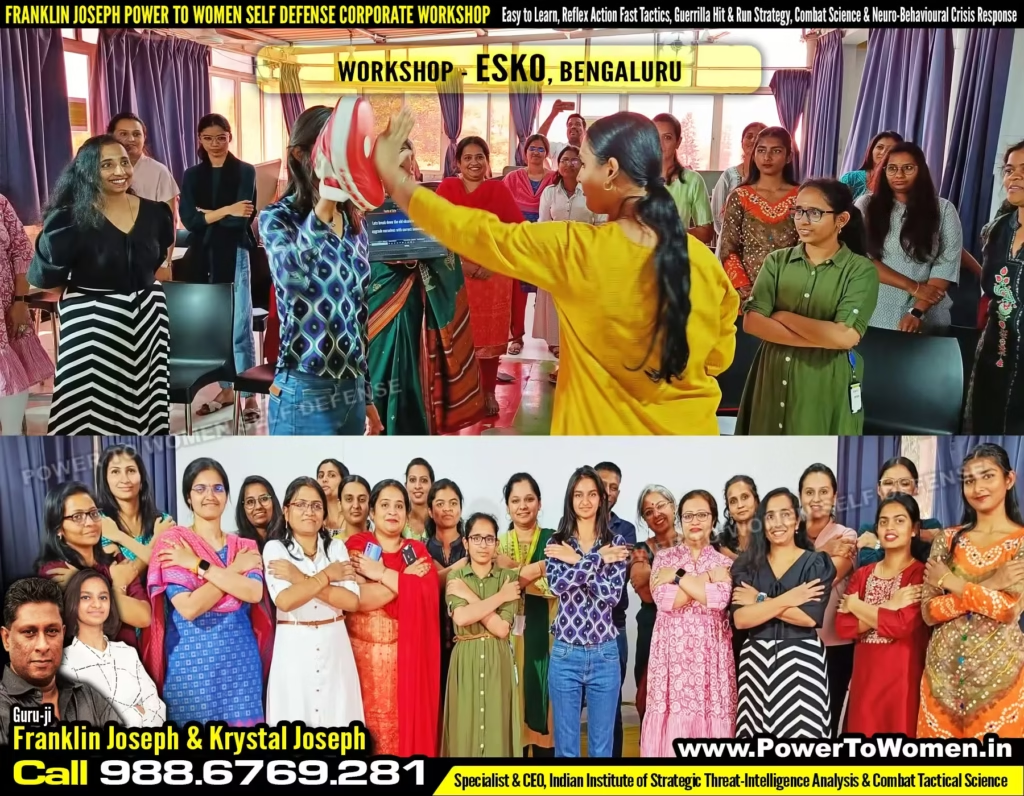
ESKO India International Women’s Day Corporate Self-Defence Workshop Bengaluru
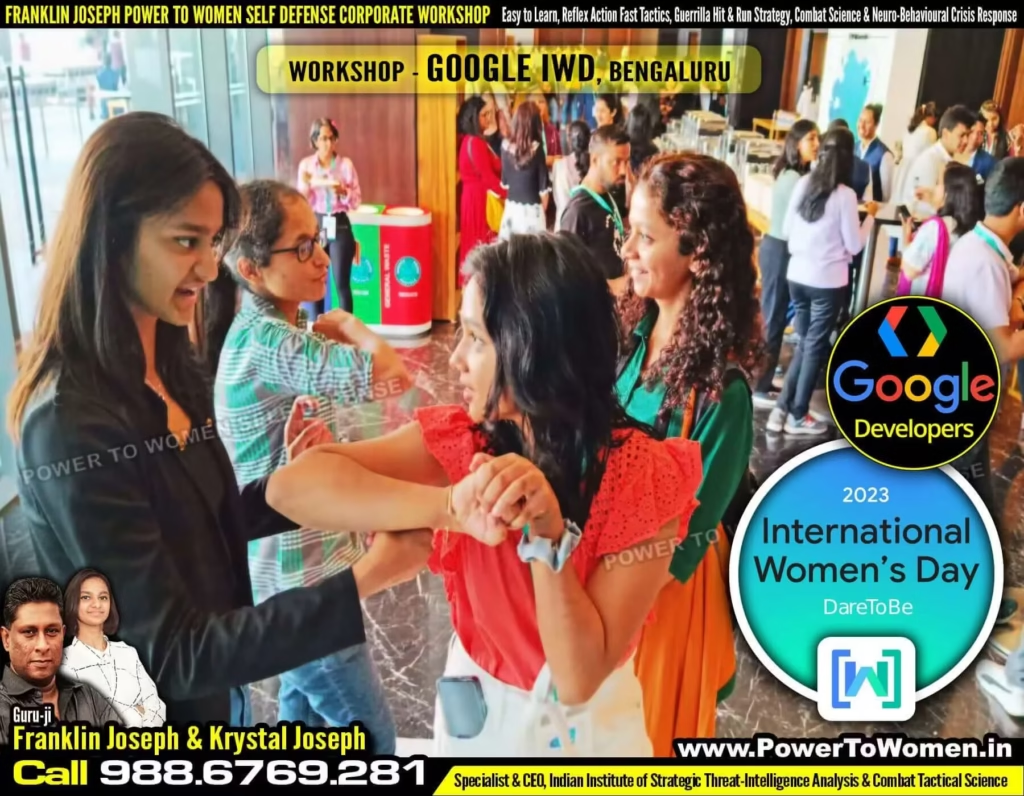
Google Women Techmakers Bengaluru ~ Power To Women Krav Maga Self-Defence and Psychological Women’s Empowerment Workshop by Franklin Joseph
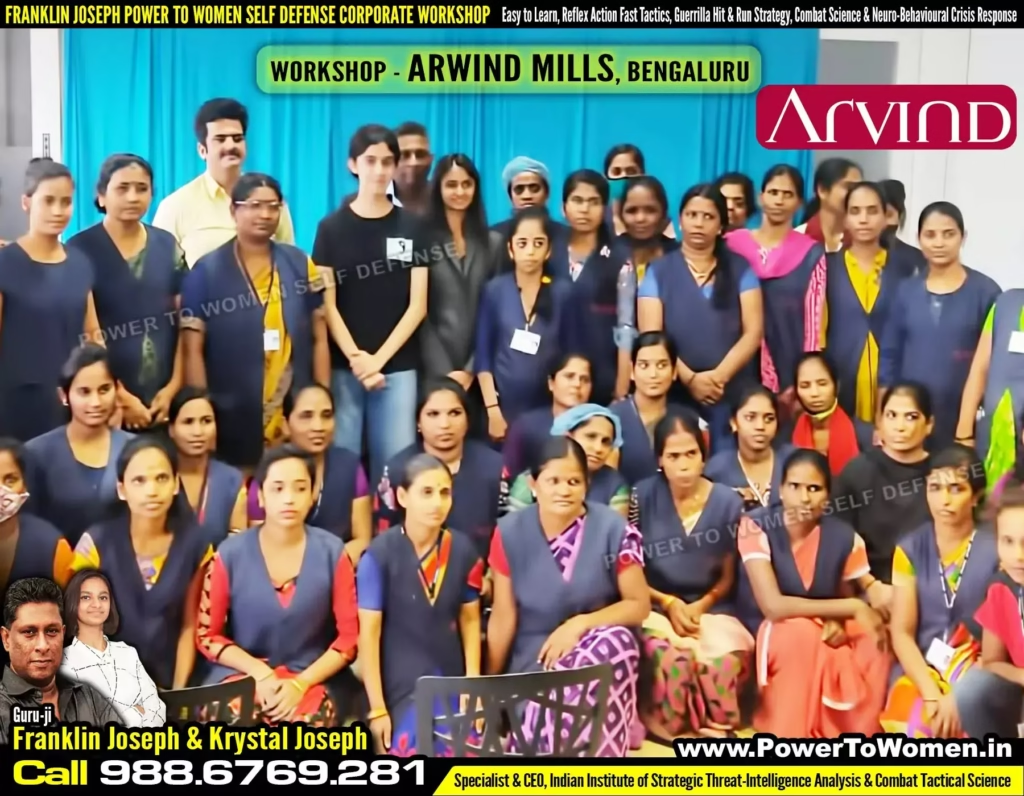
Arvind Mills Women Employee Safety Training ~ Power To Women Corporate Self-Defence Workshop Case Study
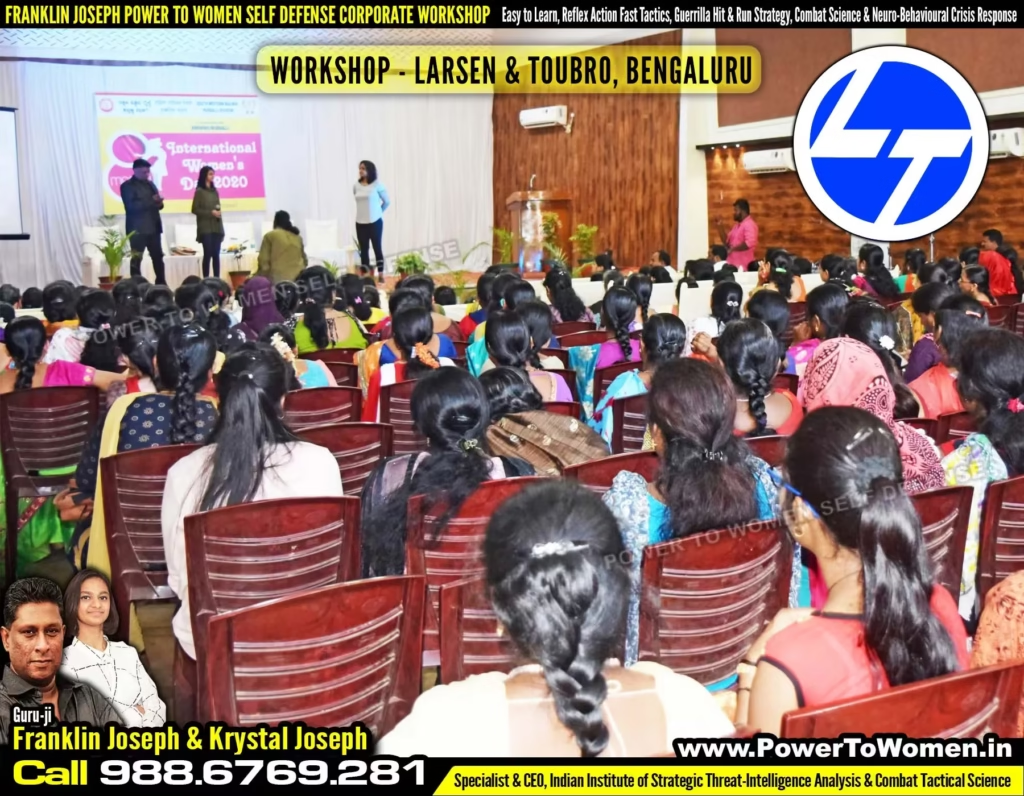
Larsen & Toubro Technology Women’s Empowerment Workshop ~ Corporate Self Defence Training Case Study Bengaluru

Amazon India Employee Safety Training ~ Online Corporate Women’s Empowerment Workshop Case Study Bengaluru
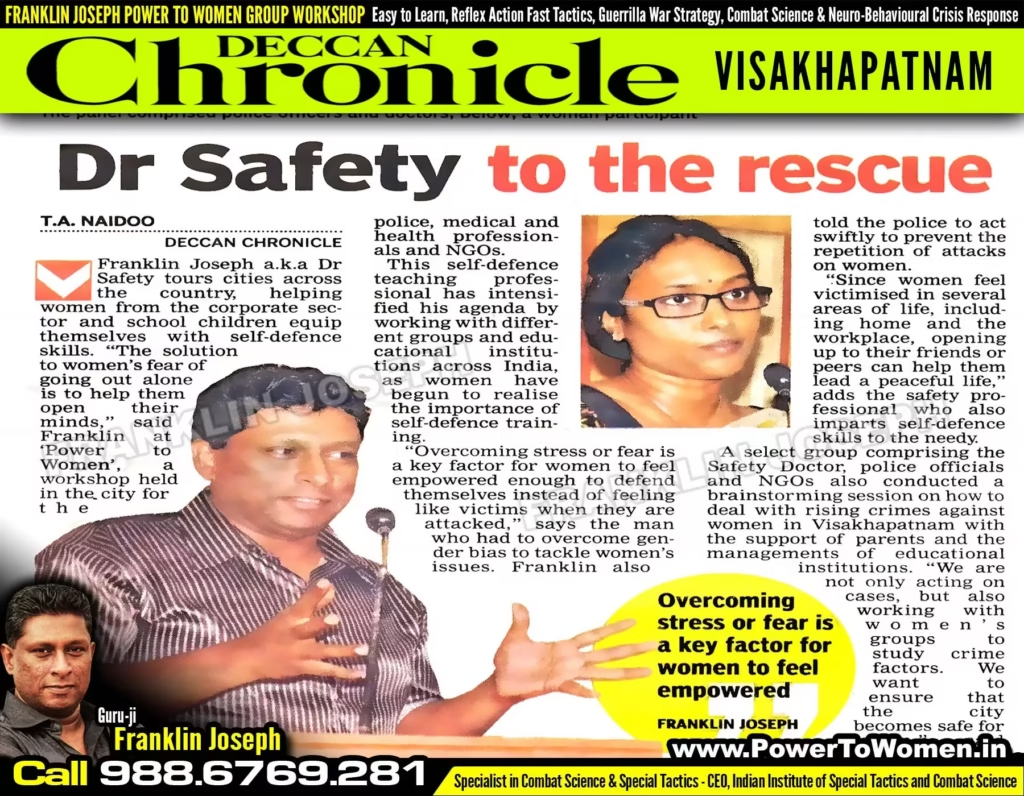
Deccan Chronicle Newspaper Article ~ Dr. Safety Franklin Joseph’s Women Empowerment Initiative Bringing Real Change to Visakhapatnam Communities

Dainik Jagran Newspaper Article ~ Learn the real self defense from Dr. Safety Franklin Joseph
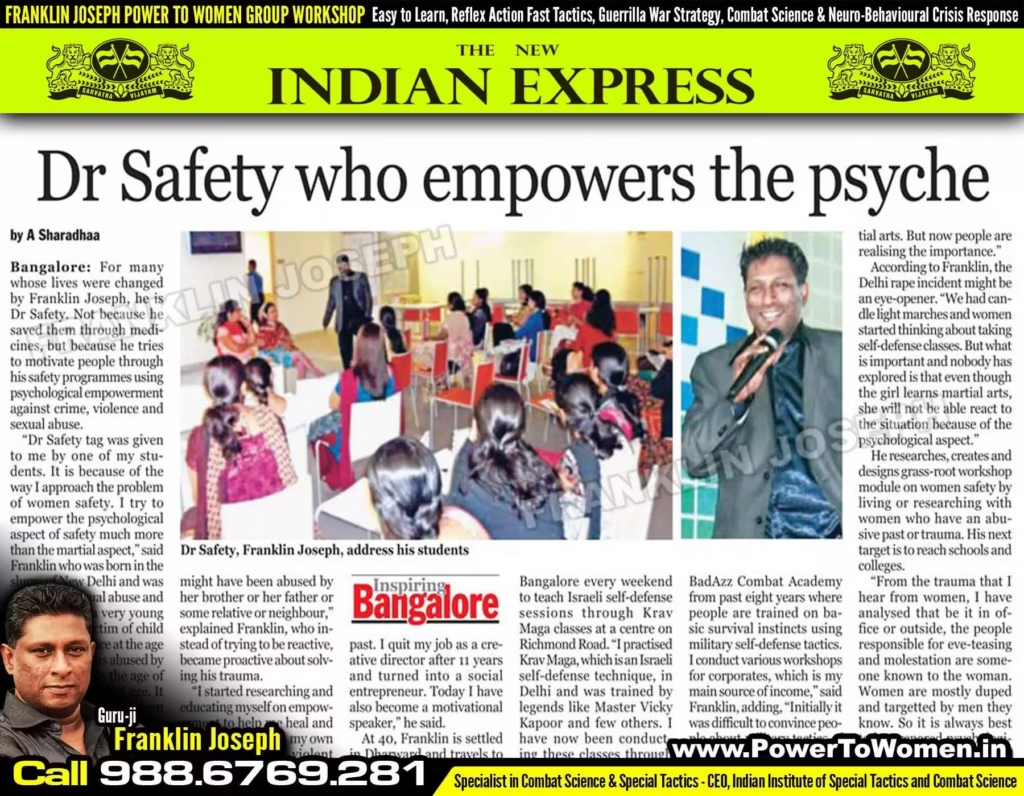
The New Indian Express Newspaper Article ~ Dr Safety who empowers the psyche
Call 9886769281 for Corporate Workshops From Childhood Trauma to Safety Empowerment: Dr. Safety's Transformational Journey Guruji Franklin Joseph, Founder and CEO of the Indian Institute of Threat-Intelligence Analysis ...
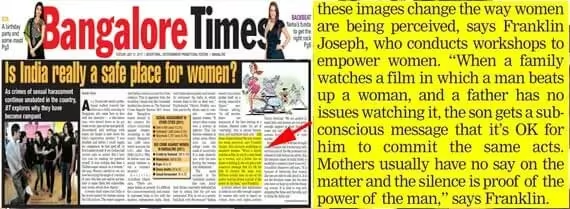
Bangalore Times Newspaper Article ~ Is India really a safe place for women?

Deccan Chronical Newspaper Article ~ Krav Maga Work your mind
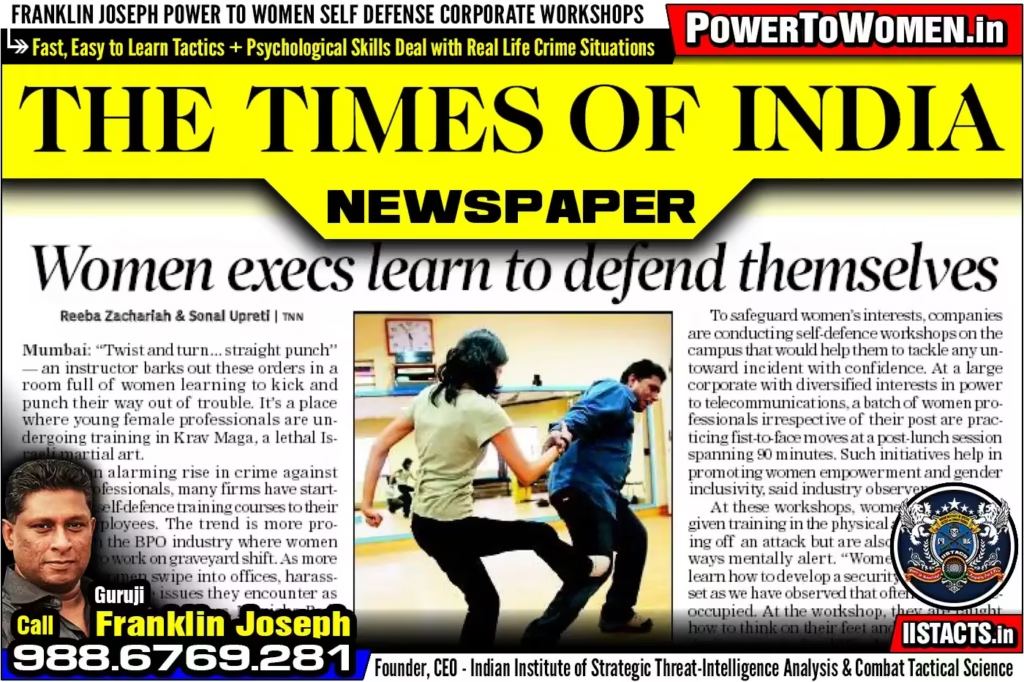
Times of India Newspaper Article ~ Women execs learn to defend themselves

Franklin Joseph Article > Why Corporate Self-Defence Training for Women Is Not About Fighting ~ It Is About Coming Home Safe

Franklin Joseph Article > Corporate Sexual Harassment During Remote Work and Hybrid Meetings ~ How Online Harassment Works and How to Stop It

Franklin Joseph Article > Sexual Harassment by Clients and Vendors ~ Legal Rights for Indian Professionals Outside the Office

Franklin Joseph Article > Female Victims of Workplace Sexual Harassment ~ POSH Act Rights ICC Complaint Process and Recovery Strategies in India

Franklin Joseph Article > POSH Act Internal Complaints Committee Process ~ Step by Step Guide for Filing Workplace Sexual Harassment Complaints in India
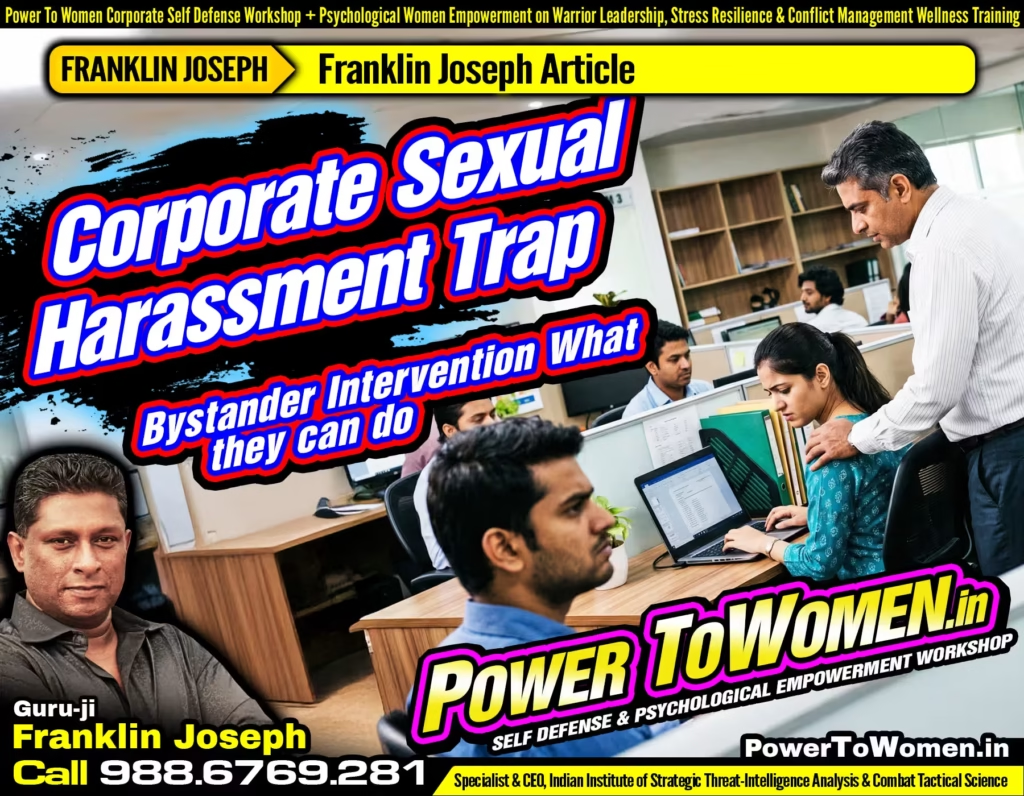
Franklin Joseph Article > Bystander Intervention in Corporate Sexual Harassment ~ What Colleagues Can Do When They Witness Harassment at Work

Ms. Priyamvada Advocate – Krav Maga Self Defence Training Impact on her Solo Travel Safety ~ Professional Women’s Transformation Through Corporate Empowerment Workshop
About Specialist Franklin Joseph