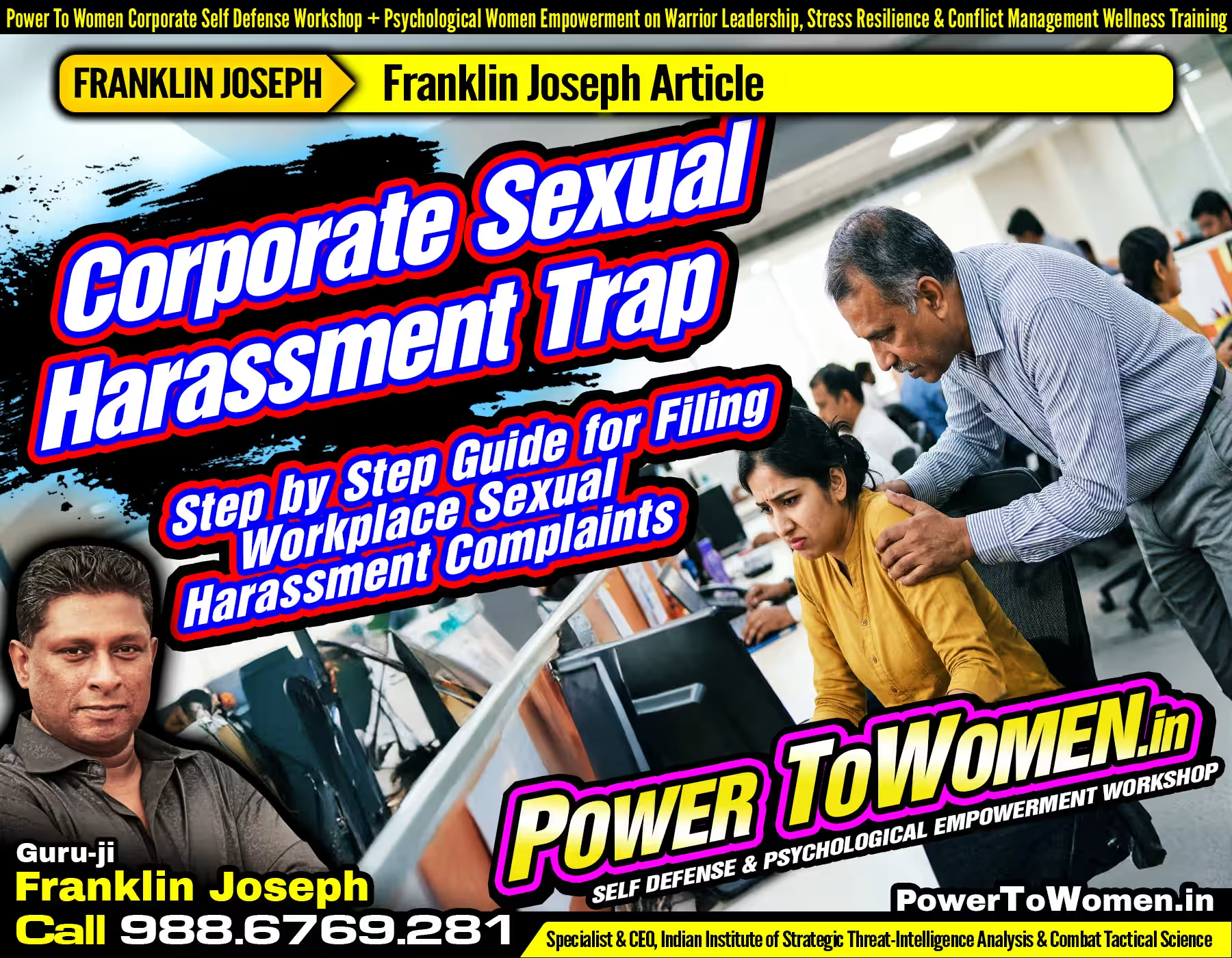



















Franklin Joseph Article > POSH Act Internal Complaints Committee Process ~ Step by Step Guide for Filing Workplace Sexual Harassment Complaints in India
By Specialist Franklin Joseph | Corporate Wellness Training Expert | Franklin Joseph Krav Maga Bengaluru
Comprehensive guide to India’s Prevention of Sexual Harassment (POSH) Act and Internal Complaints Committee process through employee safety training. What female victims need to know before filing workplace harassment complaints in corporate wellness training programmes.
Understanding POSH Act Through Workplace Safety Programmes for Female Employee Protection
The POSH Act Framework in Corporate Training Context
The Prevention of Sexual Harassment (POSH) Act, 2013, is India’s primary statutory framework for addressing workplace sexual harassment against women. Unlike general harassment policies or civil lawsuit procedures, POSH provides a specific, structured legal process that every employer with more than 10 employees must follow through comprehensive employee safety training programmes.
The Act does three critical things for female victims within gender safety programmes:
- It gives you the right to file a complaint with a specific internal committee (Internal Complaints Committee or ICC) that must investigate your complaint.
- It mandates a timeline for investigation (90 days from filing) and requires the committee to determine whether the harassment occurred.
- It provides specific remedies if harassment is substantiated, including transfer or termination of the harasser, damages to the victim, and restitution.
The POSH Act is not perfect. Companies often fail to comply with its requirements. Investigations can be inadequate. But it provides a clearer legal pathway for female victims than exists for any other group, particularly when supported by robust Power to Women Corporate Self-Defence Workshops for Professional Women.
“The POSH Act gives female victims a statutory right that male victims do not have: access to a mandatory investigation committee with specific powers and responsibilities. Understanding how to use this right strategically through workplace safety programmes is the foundation of your harassment response.”
Specialist Franklin Joseph, Bengaluru
Corporate Wellness Training Requirements: ICC Implementation for Employee Safety
Employer Coverage Under Women’s Empowerment Programmes
Every employer with more than 10 employees is required to establish an Internal Complaints Committee (ICC) as part of comprehensive workplace safety programs. This includes:
- All private sector companies with more than 10 employees
- All government departments and agencies
- All public sector undertakings
- All educational institutions
- All nonprofit organisations with more than 10 employees
- All temporary and contractual workers are covered (you do not need to be a permanent employee to file)
If your organisation has more than 10 employees, it is legally required to have an ICC as part of their employee safety training framework. If it does not, your organisation is in violation of the POSH Act.
Coverage Gaps in Gender Safety Programmes
Organisations with 10 or fewer employees are not required to establish an ICC under POSH. However, they are still required to address sexual harassment through other mechanisms and may face civil liability if harassment occurs.
If you work for a small organisation without an ICC, you can file a complaint with the Local Complaints Committee (LCC), which is a district-level committee established under POSH as part of broader CSR women’s safety initiatives.
Internal Complaints Committee Structure in Corporate Wellness Training
ICC Composition for Women’s Self Defence for Corporates
The ICC is required to have the following composition as part of effective workplace safety programmes:
- A presiding officer (typically an HR or senior management person)
- At least one representative from among the employees (a peer or colleague)
- At least one external member with expertise in sexual harassment law or women’s rights
- At least one woman representative (and the committee cannot be entirely male)
The actual composition varies by company, but the key requirement is that the ICC cannot be controlled entirely by management or entirely by men in effective gender safety programmes.
ICC Functions in Employee Safety Training Context
The ICC is mandated to operate within corporate wellness training frameworks to:
- Receive complaints of sexual harassment from women
- Conduct preliminary inquiry within 7 days of receiving the complaint
- Complete full investigation within 90 days of the complaint being filed
- Determine whether sexual harassment occurred
- Recommend remedial action to the employer (transfer, suspension, termination, damages)
- Ensure confidentiality of the complainant and process
- Protect the complainant from retaliation
ICC Limitations in Workplace Safety Programmes
The ICC is not a criminal investigation body. It does not have police powers. It cannot compel testimony or produce evidence beyond what the employer controls. It cannot press criminal charges. Its role is to determine whether harassment occurred within the workplace context and to recommend employer action through established women’s empowerment workshops protocols.
If you want to pursue criminal charges (for assault, threats, or other crimes), you must file a First Information Report (FIR) with police separately from the POSH complaint.
Pre-Filing Strategy Through CSR Women’s Safety Initiatives
Step 1: Documentation Preparation for Gender Safety Programmes
Before filing a POSH complaint, ensure you have complete documentation of the harassment as taught in Power to Women Corporate Self-Defence Workshops for Working Women. The ICC is evaluating facts, not feelings. Your documentation is your evidence.
Organise your Evidence Wall into a clear, chronological written statement that includes:
- Date, time, and location of each incident
- Exact words used (or paraphrase if not exact)
- Your response to each incident
- Names of witnesses (or descriptions if you do not know names)
- Any physical evidence (messages, emails, calendar entries)
- Impact of each incident (emotional, physical, professional)
Step 2: Understanding POSH Act Timeline in Employee Safety Training
Understanding the POSH Act timeline through workplace safety programmes helps you know what to expect and when to expect it:
- Upon receipt of complaint: ICC must begin preliminary inquiry within 7 days
- Full investigation: Must be completed within 90 days of complaint receipt (can be extended by 30 days if needed)
- Findings: ICC determines whether harassment occurred and issues findings
- Recommendations: ICC recommends action to employer
- Employer response: Employer must communicate action taken within 30 days
Step 3: ICC Identification in Corporate Wellness Training
Identify who the ICC chairperson is at your organisation. Typically, this information is available on the company intranet, in the HR policy handbook, or from the HR department directly. If your company does not provide ICC information readily as part of their women’s empowerment workshops, request it from HR.
If your company does not have an ICC or you are concerned about confidentiality within the ICC at your workplace, you can file a complaint with the Local Complaints Committee (LCC) at the district level.
Step 4: Support Network Building Through Women’s Self Defence for Corporates
If possible, consult with an employment lawyer before filing. The lawyer can review your documentation, help you understand your legal standing, and advise you on strategy. Many organisations provide free legal consultations, and some lawyers will work on contingency.
Identify a trusted person (colleague, family member, mentor, counsellor) who you can tell about your complaint and who can support you through the process. Do not go through this alone.
Filing POSH Complaints: Structured Process for Female Employee Protection
Step 1: Written Complaint Preparation in Gender Safety Programmes
Your complaint should be submitted in writing following protocols established in comprehensive workplace safety programmes. It should include:
- Date of complaint
- Your name and designation
- Name and designation of the accused harasser
- Dates and detailed description of incidents of harassment
- Names of witnesses or people who can corroborate your account
- Any physical evidence (messages, emails, etc.)
- How the harassment affected you (emotional distress, inability to work, career impact)
- Any relief or remedy you are seeking (disciplinary action against harasser, transfer, damages, etc.)
Your complaint does not need to be legal in language or format. A clear, factual, chronological narrative is sufficient. However, it must be in writing.
Step 2: ICC Submission Through Employee Safety Training Protocols
Submit your written complaint to the ICC. Deliver it in person if possible, or send it via email to the ICC email address (if one exists). Obtain a dated receipt or email confirmation that your complaint was received.
Read Franklin Joseph Corporate Women Empowerment / Self Defense ArticlesCall 9886769281 for Corporate WorkshopsKeep a copy for yourself, outside company systems. Your own records are important for ongoing CSR women’s safety initiatives.
Step 3: ICC Preliminary Inquiry in Corporate Wellness Training (Days 1-7)
Upon receiving your complaint, the ICC must begin a preliminary inquiry within 7 days as mandated by effective women’s empowerment workshops protocols. This preliminary inquiry assesses whether there is prima facie (on the face of it) evidence that harassment occurred.
During this phase, the ICC may contact you for clarification or additional information. Respond promptly and provide any additional documentation you have.
Step 4: Full Investigation Through Workplace Safety Programmes (Days 7-90)
If the preliminary inquiry confirms prima facie evidence, the ICC moves to full investigation. This investigation includes:
- Interviewing you (the complainant)
- Interviewing the accused harasser
- Interviewing witnesses you named
- Reviewing physical evidence (messages, emails, calendar entries)
- Reviewing company records (performance reviews, attendance, etc.)
The ICC may also conduct interviews with other colleagues to gather context about the work environment and the accused’s behaviour towards others.
Step 5: ICC Findings in Gender Safety Programmes (Day 90)
By day 90, the ICC must complete its investigation and issue findings. The findings will state whether:
- Sexual harassment occurred (substantiated complaint)
- Sexual harassment did not occur (unsubstantiated complaint)
- The complaint is partially substantiated (some incidents occurred, others did not)
The ICC issues findings in writing, along with reasoning for their determination.
Step 6: ICC Recommendations for Employee Safety Training (Day 90)
If harassment is substantiated, the ICC recommends action to the employer. Recommendations can include:
- Disciplinary action against the harasser (written warning, suspension, termination)
- Transfer of either party
- Counselling for the harasser or workplace mediation
- Monetary damages to the complainant for emotional distress or career harm
- Restitution (for example, restoration of lost benefits or promotions)
- Apology or public correction of any false statements made by the harasser
Step 7: Employer Response in Corporate Wellness Training (Day 120)
The employer is required to communicate what action it is taking in response to the ICC recommendations within 30 days (by day 120 from complaint filing). This communication must be given to you in writing.
The employer may choose to follow ICC recommendations, or may choose a different course of action. However, if the employer ignores the ICC findings or recommendations entirely, that action is itself a violation of the POSH Act and may be grounds for legal challenge.
Victim Rights Within Women’s Empowerment Workshops Framework
Confidentiality Rights in Workplace Safety Programmes
The ICC is required to maintain confidentiality of your complaint and identity to the extent possible. This means the investigation process should not be publicised throughout the organisation.
However, some level of disclosure is necessary for investigation (the accused must know they are being investigated and have the right to respond).
Retaliation Protection in CSR Women’s Safety Initiatives
Read Franklin Joseph Corporate Women Empowerment / Self Defense ArticlesCall 9886769281 for Corporate WorkshopsYou have the right to work without retaliation following your complaint. Retaliation includes negative performance reviews, transfer to less favourable positions, exclusion from meetings, or any other negative employment action taken in response to your complaint.
If you experience retaliation, document it immediately and bring it to the ICC’s attention. Retaliation is a violation of the POSH Act and can result in additional disciplinary action against the retaliator.
Representation Rights in Gender Safety Programmes
You have the right to bring a support person or advocate to ICC interviews or meetings. You are not required to face the ICC or accused harasser alone.
Information Rights in Employee Safety Training
You have the right to know the outcome of the investigation and the ICC’s findings and recommendations. You should receive written communication of the findings.
Challenge Rights in Corporate Wellness Training
If you believe the ICC investigation was inadequate or the findings are unjust, you have the right to challenge the findings. This may involve filing an appeal with the ICC, seeking intervention from the employer, or pursuing civil action.
Substantiated Complaint Outcomes in Women’s Self Defence for Corporates
When Harassment Is Confirmed Through Workplace Safety Programmes
If the ICC substantiates your complaint, the employer is required to take action. The most common outcomes include:
- Disciplinary action: The harasser may be given a written warning, suspended, or terminated depending on the severity of the harassment and any previous violations.
- Transfer: Either the harasser or you may be transferred to a different department or location to prevent ongoing interaction.
- Damages: You may receive monetary compensation for emotional distress, lost wages, or other harms caused by the harassment.
- Workplace policy changes: The organisation may implement new policies or training to prevent future harassment.
Harasser Termination or Transfer in Gender Safety Programmes
If the accused harasser is terminated, you may feel relief that the immediate threat is removed. However, you may still experience psychological aftermath of the harassment. Accessing mental health support during this period is important.
If the harasser is transferred rather than terminated, you have the right to know whether they remain in the same organisation. You have the right to request your own transfer if you do not feel safe with the harasser remaining in the workplace.
Damages Award in Employee Safety Training Context
Monetary damages awarded by the ICC may include compensation for emotional distress, counselling costs, loss of wages during the period when you were unable to work due to harassment, and loss of career opportunities (if you were denied promotion due to the harassment).
These damages are separate from any civil lawsuit you might pursue. You can receive ICC damages and also pursue a civil case for additional damages if desired.
Unsubstantiated Complaint Management in Corporate Wellness Training
When Harassment Is Not Confirmed in Workplace Safety Programmes
If the ICC finds that harassment did not occur, the investigation is closed and the accused harasser is not disciplined. This outcome, whilst disappointing, does not mean you were lying or that your experience was not real.
Investigations can reach wrong conclusions. Harassers are often skilled at denying harassment or reframing it as miscommunication. Witnesses may be intimidated or unwilling to corroborate. The investigative process may be flawed.
Challenging ICC Findings Through Women’s Empowerment Workshops
Read Franklin Joseph Corporate Women Empowerment / Self Defense ArticlesCall 9886769281 for Corporate WorkshopsIf you believe the ICC investigation was inadequate or the findings are wrong, you have several options:
- Request an appeal or review: Some organisations allow appeals of ICC findings. Check your company’s POSH policy.
- File a complaint with the Labour Commissioner: You can file a complaint with the state’s labour commissioner alleging that the ICC investigation was inadequate and that the company violated the POSH Act.
- Pursue civil action: You can file a civil lawsuit against the harasser and the company for damages from the harassment, regardless of the ICC findings.
- File a criminal complaint: If the harassment involved assault or threats, you can file an FIR with police separately from the POSH process.
Ongoing Documentation in CSR Women’s Safety Initiatives
If the ICC dismisses your complaint, continue documenting any further harassment or retaliation. This documentation strengthens any subsequent civil case against both the harasser and the company.
POSH Act Timeline Management for Gender Safety Programmes
Day 1: You file written complaint with ICC
Days 1-7: ICC conducts preliminary inquiry
Days 7-90: ICC conducts full investigation (interviews, evidence review)
Day 90: ICC issues findings and recommendations
Days 90-120: Employer reviews ICC recommendations and decides what action to take
Day 120: Employer communicates action taken to you in writing
Note: This timeline can be extended. If the ICC needs more time to investigate, they can request a 30-day extension. If the employer needs more time to respond, there may be further delays.
Comprehensive Employee Safety Training: Specialist Franklin Joseph POSH Act Compliance
Understanding POSH Act procedures and navigating the ICC process strategically requires knowledge and preparation. Power to Women Corporate Self-Defence Workshops for Female Executives include specific training on POSH Act compliance and complaint strategy.
What POSH Act Training Includes in Women’s Empowerment Workshops:
- Tactic 1: POSH Act Rights and Responsibilities Documentation – Understand exactly what the POSH Act requires of your employer, what the ICC must do, and what your rights are. Know when your employer is violating the law and what you can do about it.
- Tactic 2: Strategic Complaint Preparation and Presentation – Prepare your complaint with the precision and documentation that will compel ICC investigation. Learn to present your case clearly and professionally so investigators cannot dismiss it.
- Tactic 3: ICC Process Navigation and Advocacy – Understand each phase of the ICC investigation. Know what to expect, how to present evidence effectively, and how to protect yourself from being retraumatised during investigation.
- Tactic 4: Post-Complaint Strategy and Civil Action Planning – Plan your next steps whether the ICC substantiates your complaint or not. Understand how ICC findings affect your ability to pursue civil action or criminal charges.
Why Organisations Choose This Corporate Wellness Training for Their HR Teams:
- Ensures company ICC is compliant with POSH Act statutory requirements
- Improves quality and fairness of harassment investigations
- Reduces legal liability from POSH Act violations
- Builds employee confidence that harassment will be addressed
- Training for HR managers, ICC members, and employee advocates
Additionally, for women seeking comprehensive physical self-defence skills alongside legal knowledge, Specialist Franklin Joseph offers Krav Maga 1-to-1 Fast-Track Training that complements workplace safety programmes with practical self-defence techniques.
Contact Specialist Franklin Joseph for POSH Act Training:
Call or WhatsApp: 9886769281
Website: PowerToWomen.in
Training for Corporate HR Teams: Bengaluru, Dharwad, Hubballi, Mysuru, Chennai, Hyderabad, Mumbai, Delhi, Pune, Goa, and across India
Individual Guidance for Victims: Available for women filing POSH complaints and preparing ICC strategy
Ensure your POSH complaint is heard. Your preparation determines your outcome. Get expert guidance on ICC strategy and complaint presentation.
Frequently Asked Questions About POSH Act ICC Process in Employee Safety Training
Question: Can I file a POSH complaint if I am not a permanent employee?
Answer: Yes. All workers, including temporary, contractual, and daily wage workers, are covered by the POSH Act as part of comprehensive workplace safety programmes. You do not need to be permanent to file.
Question: Can I remain anonymous when filing a complaint?
Answer: The ICC should maintain confidentiality of your identity to the extent possible, but complete anonymity is not practical because the accused harasser must know they are being investigated. However, you can request that the ICC limit disclosure of your identity within the organisation.
Question: What if my company does not have an ICC?
Answer: Your company is in violation of the POSH Act. You can file a complaint with the Local Complaints Committee (LCC) at the district level, or you can file a complaint with the Labour Commissioner alleging that your employer has failed to establish the required ICC.
Question: What if I am afraid of retaliation after filing a complaint?
Answer: Document any retaliation immediately. Retaliation is illegal under the POSH Act. You can report retaliation to the ICC or to the Labour Commissioner. You may also have grounds for civil action or additional criminal charges if retaliation occurs.
Question: Can I pursue a civil lawsuit whilst the ICC is investigating?
Answer: Yes. The POSH Act process and civil litigation are separate. You can pursue both simultaneously. However, many lawyers recommend waiting for the ICC outcome before pursuing civil action, as the ICC findings can strengthen your civil case.
Question: What if the ICC finds that harassment occurred but the employer does not take action?
Answer: If the employer ignores the ICC findings, that is itself a violation of the POSH Act. You can file a complaint with the Labour Commissioner alleging employer non-compliance with ICC recommendations. You can also pursue civil action against both the harasser and the company for failure to address substantiated harassment.
Key Takeaways: POSH Act and ICC Process for Gender Safety Programmes
- The POSH Act provides female victims a mandatory investigation committee with specific powers and timelines. This is a significant right within employee safety training frameworks.
- Every employer with more than 10 employees must have an ICC. If yours does not, your employer is violating the law.
- ICC findings must occur within 90 days of complaint filing. Know this timeline and track the process through workplace safety programmes.
- Your documentation is your evidence. Prepare thoroughly before filing, organising your Evidence Wall into a clear, chronological narrative.
- You have rights during the ICC process: confidentiality, protection from retaliation, right to representation, right to information.
- If the ICC finds harassment occurred, the employer must take action. If it does not, that is a violation you can challenge.
- If the ICC finds harassment did not occur, you can appeal or pursue civil action separately.
- For prevention strategies, read “3 Ways to Avoid Corporate Sexual Harassment at Work.”
- For exit strategies, read “3 Ways to Exit Corporate Sexual Harassment: Evidence-Based Recovery Guide.”
Resources for POSH Act Information and Support in Corporate Wellness Training
- Your Company’s POSH Policy: Request this from HR. It should describe the ICC composition, complaint process, and your rights.
- Your Company’s ICC Contact Information: Request the name and contact of the ICC presiding officer.
- District Level Local Complaints Committee (LCC): Contact your district labour commissioner’s office
- National Helpline for Workplace Harassment: 1800-233-1001
- State Legal Services Authority: Free legal aid and information about your rights under POSH Act
- Employment Lawyer: Consult a lawyer specialising in employment law before filing your complaint
Franklin Joseph TEDx Talk Speaker on Combat Science ~ How Threat Recognition Pre-Attack Behaviour and Krav Maga Self-Defence Science Protect Indian Women Corporate Professionals
Specialist Franklin Joseph delivered a powerful TEDx speech regarding women’s personal security. He confronts traditional safety concepts and lays out the proven blueprint of his Power to Women Corporate Self-Defense Workshop.
He clarifies why basic defense methods fail and emphasizes the role of criminal psychology in preparing for real threats. The integration of 21 psychological tools with Israeli Military Krav Maga elevates his training far beyond standard routines.
HR teams and business leaders resonate with his message that true empowerment is built on functional skills, not surface-level initiatives.
Watch the full TEDx talk at this link: Specialist Franklin Joseph TEDx Talk on Women’s Safety
Related Articles in This Series
- 3 Ways to Avoid Corporate Sexual Harassment at Work: Prevention Guide for Indian Professionals
- 3 Ways to Exit Corporate Sexual Harassment: Evidence-Based Recovery Guide for Workplace Victims
- Male Victims of Workplace Sexual Harassment: Legal Rights, Recovery Strategies, and Civil Action in India
- Racial Harassment Combined With Sexual Coercion: Compound Trauma, Legal Recognition, and Documentation Strategy
Corporate Self Defence Workshops ~ 'Embrace Inner Power'
Our all-encompassing strategy combines state-of-the-art Israeli Military Krav Maga self-defence methods with revolutionary psychological tactics like to help you maintain composure, assertiveness, and control whether you're negotiating a high-pressure boardroom or an unpredictable street or domestic encounter. Don't hesitate; give Specialist Franklin Joseph a call @ 9886769281 right now to learn the most important skills and become a part of the movement towards empowered life.
Connect with Specialist Guruji Franklin Joseph for
Women Emergency All State Helpline Directory Guide
PDF - Click to Download India State-Wise Women Emergency Helpline DirectoryARTICLE - Read Online Basic Corporate Self-Defense & Women Emergency Resource Guide

Corporate Workshops Clients
Other Posts & Articles
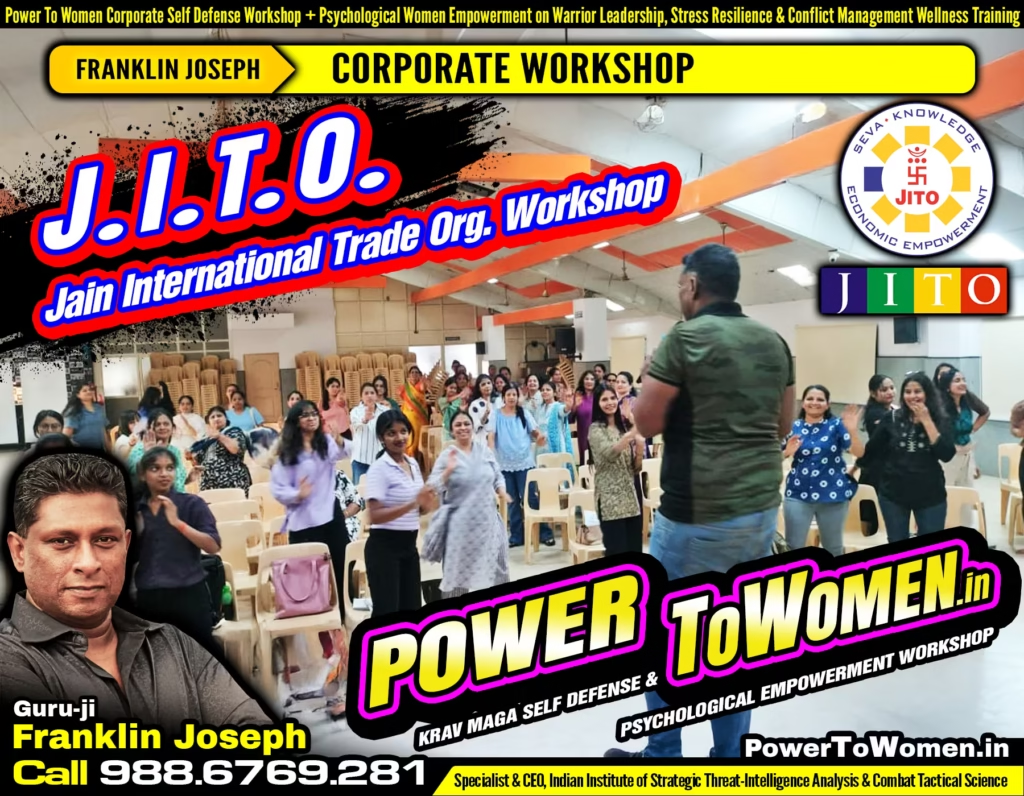
Jain International Trade Organisation (JITO) Power To Women Self Defense Workshop

ESKO India International Women’s Day Corporate Self-Defence Workshop Bengaluru

Google Women Techmakers Bengaluru ~ Power To Women Krav Maga Self-Defence and Psychological Women’s Empowerment Workshop by Franklin Joseph
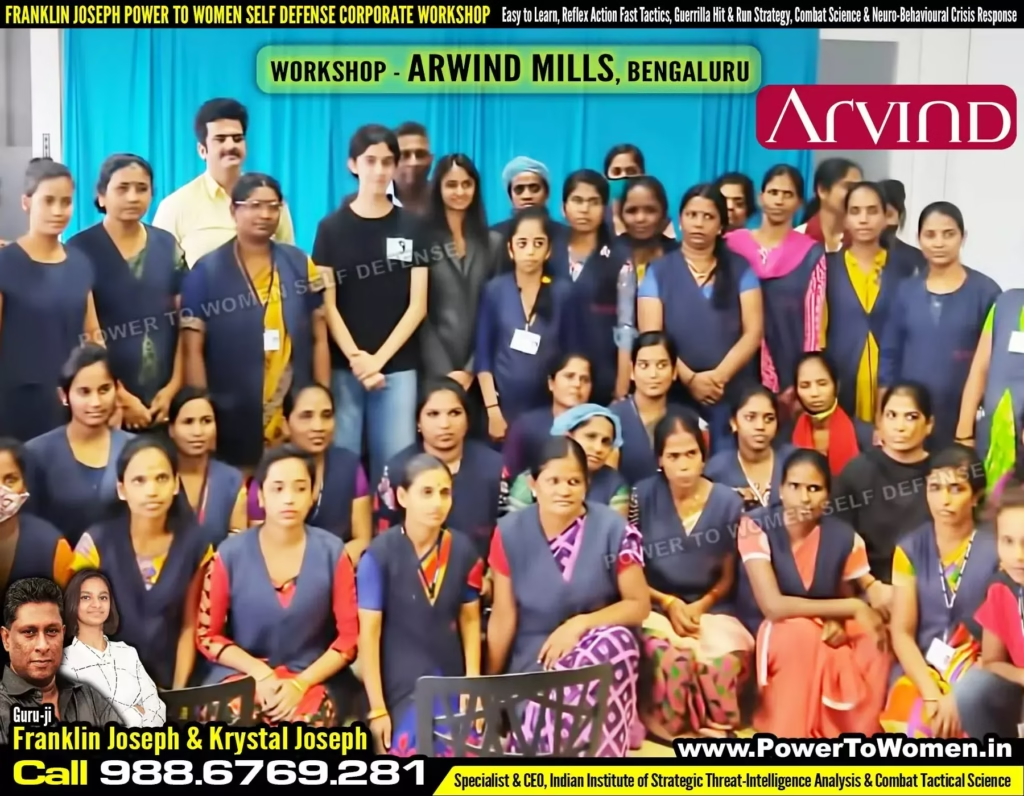
Arvind Mills Women Employee Safety Training ~ Power To Women Corporate Self-Defence Workshop Case Study
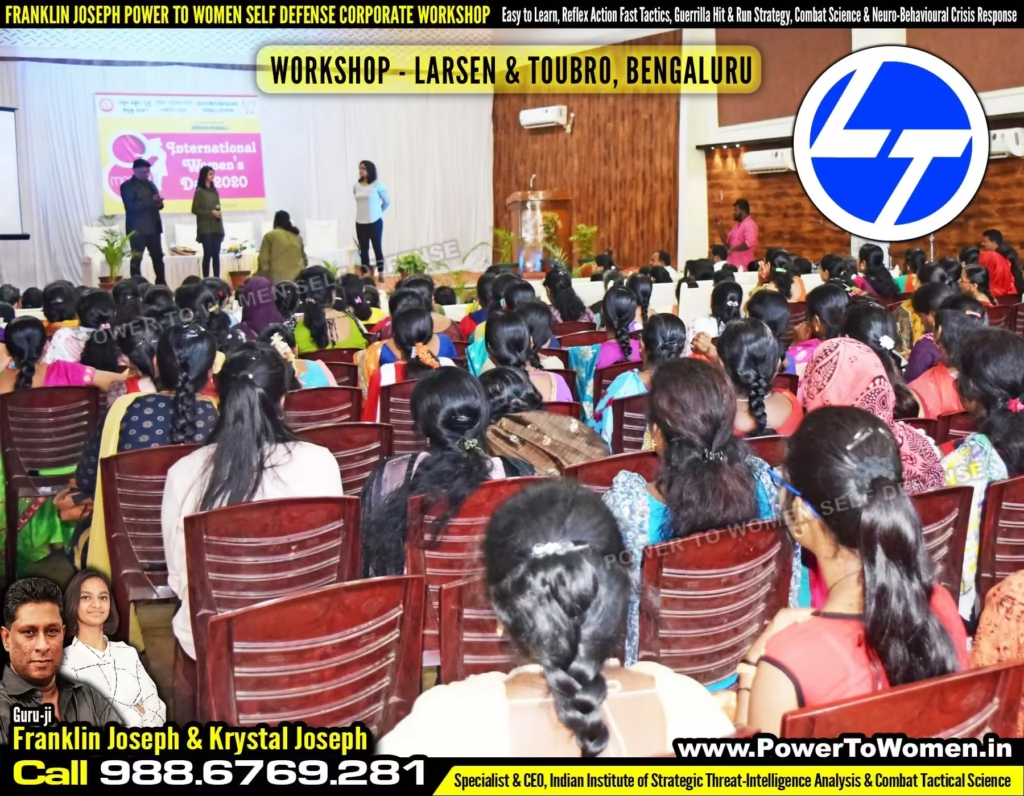
Larsen & Toubro Technology Women’s Empowerment Workshop ~ Corporate Self Defence Training Case Study Bengaluru

Amazon India Employee Safety Training ~ Online Corporate Women’s Empowerment Workshop Case Study Bengaluru
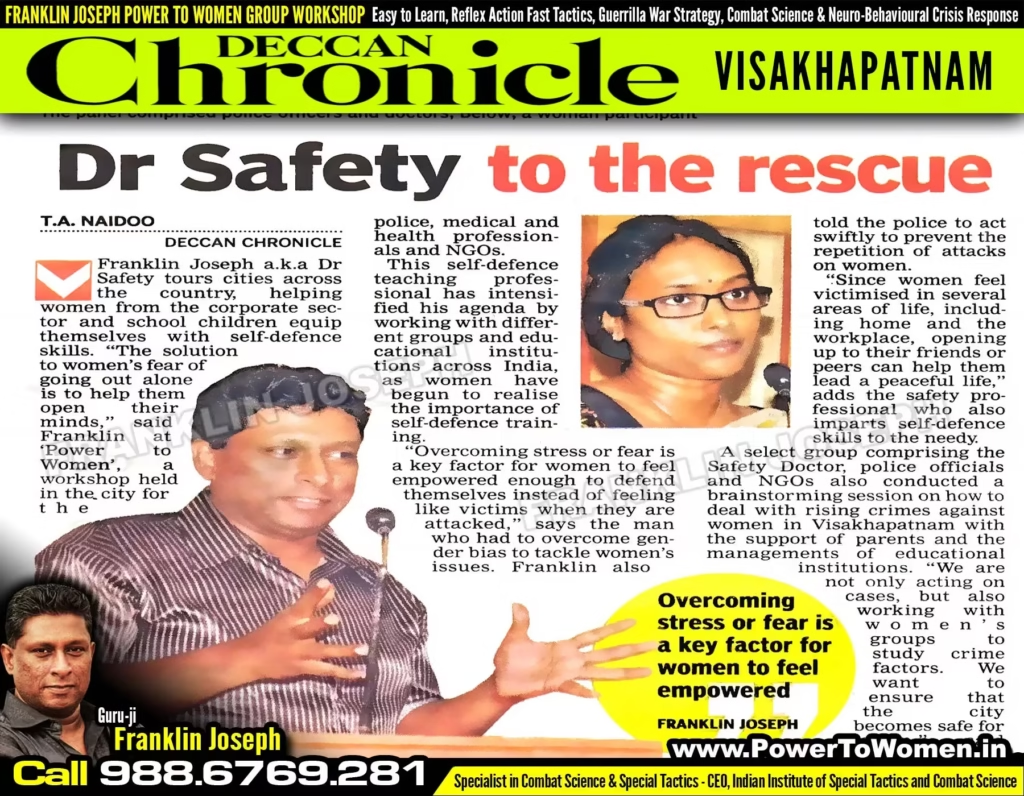
Deccan Chronicle Newspaper Article ~ Dr. Safety Franklin Joseph’s Women Empowerment Initiative Bringing Real Change to Visakhapatnam Communities

Dainik Jagran Newspaper Article ~ Learn the real self defense from Dr. Safety Franklin Joseph
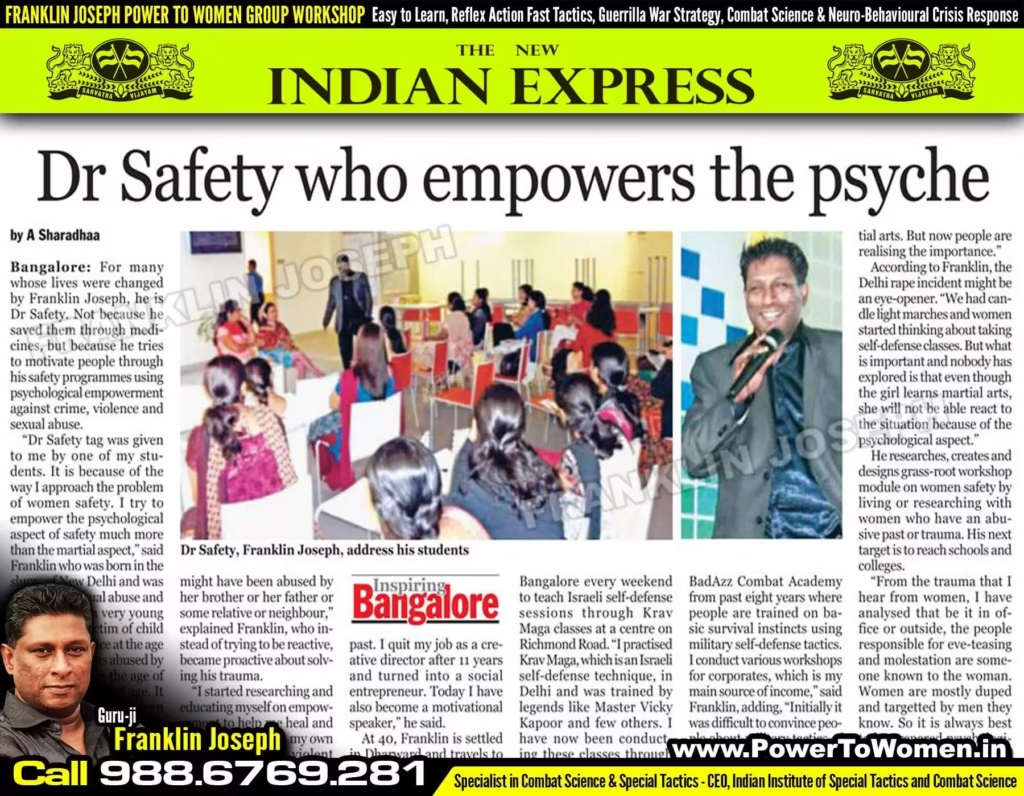
The New Indian Express Newspaper Article ~ Dr Safety who empowers the psyche
Call 9886769281 for Corporate Workshops From Childhood Trauma to Safety Empowerment: Dr. Safety's Transformational Journey Guruji Franklin Joseph, Founder and CEO of the Indian Institute of Threat-Intelligence Analysis ...

Bangalore Times Newspaper Article ~ Is India really a safe place for women?

Deccan Chronical Newspaper Article ~ Krav Maga Work your mind

Times of India Newspaper Article ~ Women execs learn to defend themselves

Franklin Joseph Article > Why Corporate Self-Defence Training for Women Is Not About Fighting ~ It Is About Coming Home Safe

Franklin Joseph Article > Corporate Sexual Harassment During Remote Work and Hybrid Meetings ~ How Online Harassment Works and How to Stop It

Franklin Joseph Article > Sexual Harassment by Clients and Vendors ~ Legal Rights for Indian Professionals Outside the Office
Franklin Joseph Article > Female Victims of Workplace Sexual Harassment ~ POSH Act Rights ICC Complaint Process and Recovery Strategies in India
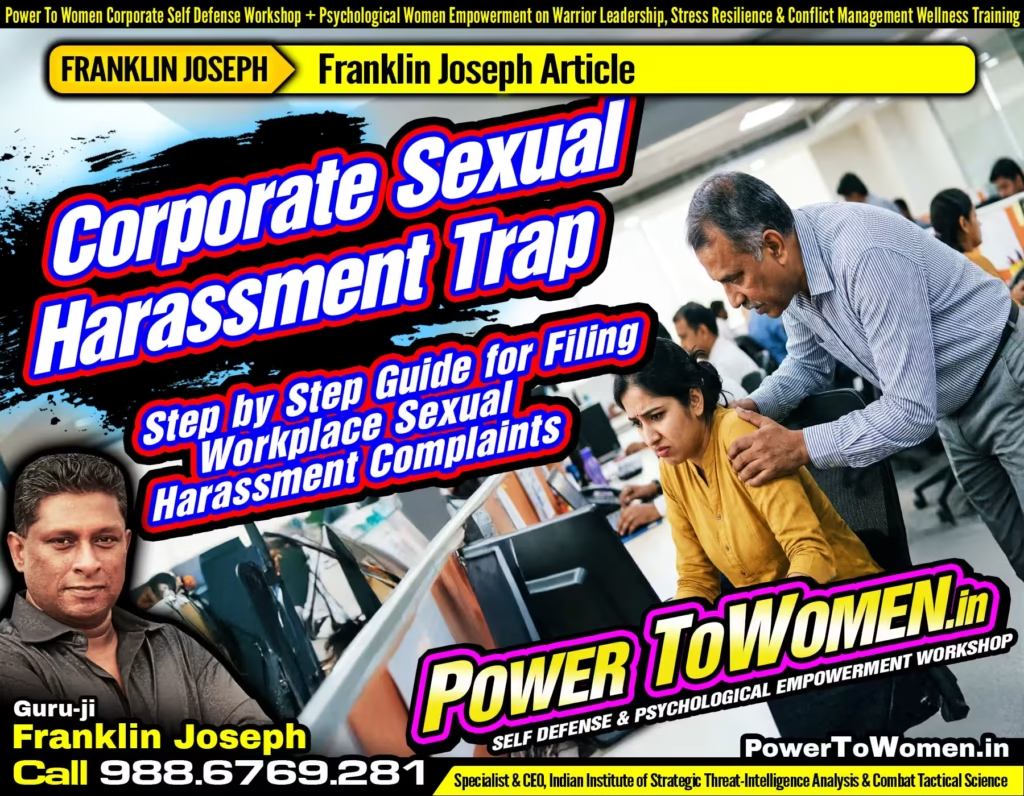
Franklin Joseph Article > POSH Act Internal Complaints Committee Process ~ Step by Step Guide for Filing Workplace Sexual Harassment Complaints in India
Franklin Joseph Article > Bystander Intervention in Corporate Sexual Harassment ~ What Colleagues Can Do When They Witness Harassment at Work

Ms. Priyamvada Advocate – Krav Maga Self Defence Training Impact on her Solo Travel Safety ~ Professional Women’s Transformation Through Corporate Empowerment Workshop
About Specialist Franklin Joseph