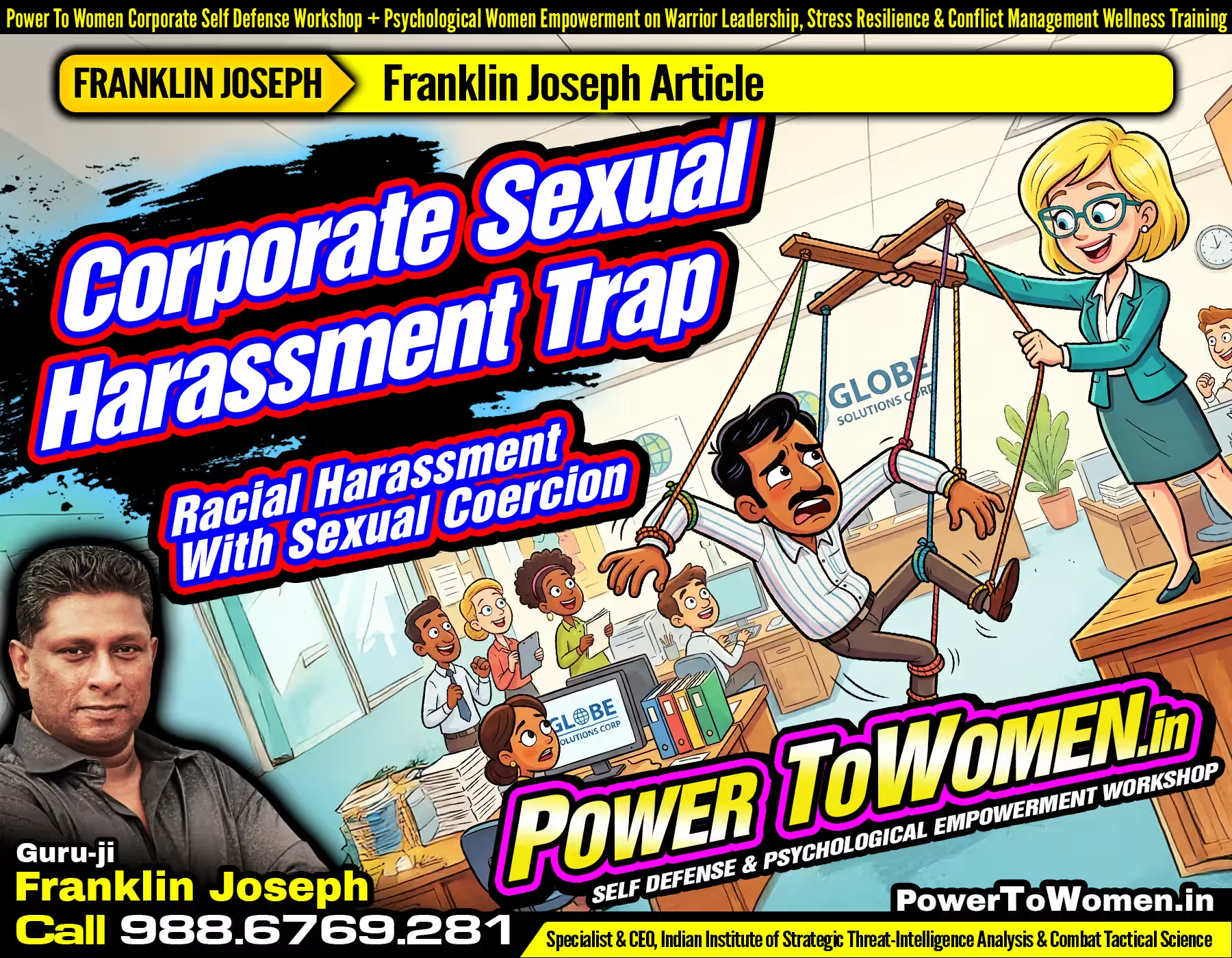


















Franklin Joseph Article > Racial Harassment Combined With Sexual Coercion ~ Compound Trauma Legal Recognition and Documentation Strategy in India
By Specialist Franklin Joseph | Specialist, Power to Women Corporate Self Defence Workshop | Franklin Joseph Krav Maga Bengaluru
Understanding compound trauma from simultaneous racial and sexual harassment. Legal framework for addressing intersectional workplace harassment in India. Documentation and recovery strategies for victims through comprehensive gender safety programmes.
Hidden Dimensions of Corporate Sexual Harassment: Caste and Racial Attack in Employee Safety Training
In many workplace harassment cases, sexual coercion does not occur in isolation. It occurs alongside racial slurs, ethnic stereotyping, caste-based comments, national origin attacks, or religious discrimination. The harassment operates on two axes simultaneously.
For Indian professionals, this compound harassment is particularly damaging. Indian society’s historical caste system intersects with colonial legacies and contemporary discrimination against people from specific regions, religions, or economic backgrounds. When a harasser combines sexual coercion with caste or ethnic attack, they are exploiting these existing power structures to isolate and dehumanise the victim.
A harasser might say: “People from your background are used to this kind of thing” or “Your culture does not respect women the way ours does” or invoke caste-based slurs whilst committing sexual assault. The racial or caste dimension is not separate from the sexual harassment. It is an integral part of the weapon being used.
This intersectional approach to harassment requires specialised understanding through Power to Women Corporate Self-Defence Workshops for Diverse Female Professionals, where comprehensive employee safety training addresses compound trauma recovery.
“When harassment targets you on multiple axes, the damage is not additive. It is multiplicative. The racial dimension makes the victim doubt whether anyone will believe them. The sexual dimension attacks bodily autonomy. Together, they create compound trauma that requires specialised understanding and recovery.”
Specialist Franklin Joseph, Bengaluru
Understanding Intersectional Attack Strategy in Corporate Wellness Training
Component 1: Sexual Coercion and Bodily Violation in Workplace Safety Programmes
The sexual dimension of compound harassment involves unwanted touching, sexual comments, coerced sexual contact, or sexual threats. These components operate the same way as standalone sexual harassment addressed in women’s empowerment workshops.
Component 2: Racial or Caste-Based Undermining in Gender Safety Programmes
The racial or caste-based dimension involves slurs, stereotyping, or attacks on the victim’s identity. Examples include:
- Slurs targeting the victim’s religion, caste, or ethnicity
- Comments about the victim’s appearance tied to racial stereotypes
- Implications that the victim’s background makes them sexually available or sexually promiscuous
- Suggestions that the victim is less educated, less capable, or less deserving based on caste or race
- Comments in regional languages designed to exclude or demean
- References to colonialism, immigration status, or “outsider” status
How These Components Create Compound Trauma in Female Employee Protection
The sexual harassment violates bodily autonomy. The racial harassment undermines credibility and sense of belonging. Together, they accomplish what the harasser intends:
- The victim questions whether anyone will believe them, knowing they will face both sexual harassment scepticism and racial stereotype bias.
- The victim internalises the message that their body and identity are not worthy of protection.
- The victim feels isolated not just from their harasser but from their workplace community, fearing that reporting will expose them to racial bias even from investigators.
- The victim’s sense of professional capability is undermined. Racial attacks on competence combine with sexual violation to create profound self-doubt.
Demographics Most Affected by Compound Harassment in CSR Women’s Safety Initiatives
Indian Professionals in Global Corporations
Indian professionals working in multinational corporations with significant Western leadership may face compound harassment from colleagues or superiors who hold both ethnic and gender-based power. The harasser may assume that Indian or South Asian employees are less protected, less likely to be believed, or less likely to report due to cultural differences around sexuality.
Women From Religious Minorities in Corporate Wellness Training
Read Franklin Joseph Corporate Women Empowerment / Self Defense ArticlesCall 9886769281 for Corporate WorkshopsWomen from religious minority backgrounds (Muslim, Christian, Sikh, Jewish women, and others) may face compound harassment that combines sexual coercion with religious slurs or stereotyping about their religion’s treatment of women.
Dalit and Bahujan Women and Men
Victims from lower caste backgrounds may face compound harassment that uses sexual violation alongside caste slurs. The harassment may include language designed to reinforce the victim’s perceived lower status and to exploit the historical sexual subjugation of lower caste groups.
Internal Migrants and Regional Minorities in Employee Safety Training
Professionals who have migrated from one region of India to another may face harassment combining sexual coercion with regional slurs, mockery of regional language, or stereotyping about regional groups. Regional discrimination is a significant but often-overlooked dimension of workplace harassment in India.
LGBTQ Plus Professionals in Gender Safety Programmes
LGBTQ plus professionals may face harassment that combines sexual violation with homophobic or transphobic slurs. The harassment may attempt to “correct” the victim’s sexual orientation or gender identity through coercion.
Why Compound Harassment Creates Reporting Barriers in Workplace Safety Programs
Fear of Racial Bias in Investigation
Victims of compound harassment often fear that if they report the sexual harassment component, investigators will bring racial bias to the investigation. They may doubt that a predominantly upper-caste or Western-led HR team will take seriously a claim involving caste slurs. They may worry that the racial dimension will be used to discredit them rather than strengthen their case.
Concern That Reporting Will Expose Them to Additional Discrimination
Victims may fear that reporting will mark them as “problematic” or “too sensitive about diversity issues,” resulting in additional discrimination beyond what they experienced from the original harasser. They may worry that their colleagues will label them as someone who “brings politics into the workplace” if they name the racial dimension of their harassment.
Cultural and Religious Factors Around Sexual Disclosure in Women’s Self Defence for Corporates
For victims from cultures or religions where discussing sexuality openly creates shame or family consequences, the sexual dimension of harassment may feel impossible to disclose. The shame may be compounded if the harassment involved slurs about the victim’s religion or culture’s relationship with sexuality.
Doubt That the Racial and Sexual Dimensions Will Be Understood as Connected
Victims may fear that investigators will see the sexual harassment and the racial harassment as separate issues rather than as integrated components of the same attack. If each is minimised or rationalised separately, the full harm is not recognised, and the strategic nature of the compound attack is lost.
Strategic Documentation Methods for Intersectional Harassment in Employee Safety Training
Why Documenting Both Dimensions Is Critical for Corporate Wellness Training
When you document compound harassment, you must document both the sexual and racial dimensions and make clear their connection. This is not two separate complaints. This is one integrated harassment campaign with multiple components, as taught in comprehensive Power to Women Corporate Self-Defence Workshops for Marginalised Female Employees.
What Your Compound Harassment Documentation Should Include
For each incident, document:
- The Sexual Component: Exact words of sexual comments, description of unwanted touching, nature of sexual threat or coercion, professional leverage used, your refusal and the harasser’s response
- The Racial or Caste Component: Exact slurs or demeaning language used, stereotypes invoked, references to the victim’s background or identity, timing relative to sexual harassment
- The Strategic Connection: How the racial attack functioned within the sexual harassment. Did the harasser use the racial slur to undermine credibility before making sexual advances? Did they use racial stereotyping to suggest the victim’s background made them sexually available? Did they mock the victim’s family or cultural values whilst committing sexual violation?
- Impact and Context: How the combination of attacks affected you. Did the racial dimension make you doubt whether anyone would believe the sexual harassment claim? Did it make you feel unable to report?
Example of Integrated Documentation for Gender Safety Programmes
Date: March 15, 2024. Time: 3:30 PM. Location: Conference room B after team meeting.
“Manager [Name] stood very close to me whilst reviewing a document. He touched my shoulder repeatedly, then said: ‘You South Indians are so cautious about everything. You need to loosen up a bit. Relax with me tonight.’ When I moved away and said I needed to leave, he said: ‘You people always make such a big deal about personal space. In my experience, girls from your community are more comfortable with this kind of familiarity.’ I left the room. Later, he sent a message saying: ‘Don’t be shy. It is just casual like we do in my culture.'”
This documentation shows the sexual component (touching, explicit comment, invitation), the racial/regional component (stereotyping about South Indian caution, comments about “your community”), and the strategic connection (the harasser used cultural stereotyping to normalise sexual violation).
Legal Framework Navigation for Intersectional Attack in CSR Women’s Safety Initiatives
Legal Framework for Sexual Harassment (POSH Act)
Sexual harassment is addressed through the Prevention of Sexual Harassment (POSH) Act for female victims, or through civil action for male victims.
Legal Framework for Racial and Caste-Based Discrimination in Employee Safety Training
Read Franklin Joseph Corporate Women Empowerment / Self Defense ArticlesCall 9886769281 for Corporate WorkshopsRacial, religious, and caste-based discrimination are addressed through multiple legal mechanisms in India:
- Article 15 of the Indian Constitution: Prohibits discrimination on grounds of religion, race, caste, sex, or place of birth
- The Scheduled Castes and Scheduled Tribes (Prevention of Atrocities) Act, 1989: Addresses caste-based discrimination and violence
- The Employment Act and Labour Laws: Prohibit discrimination in employment
- Criminal Law: Slurs and dehumanising language may constitute criminal intimidation, defamation, or hate speech under relevant criminal statutes
How to Combine Legal Frameworks in Your Report or Lawsuit
When you report or pursue legal action for compound harassment, do not separate the sexual harassment from the racial harassment. Present them as integrated components of the same campaign of violation and discrimination.
In your written complaint, state: “The harassment I experienced included both sexual coercion and racial discrimination. These elements were strategically integrated. The harasser used racial stereotyping to isolate me and undermine my credibility, then used sexual advances knowing I felt unable to report due to the racial dimension. The sexual harassment and racial discrimination functioned together to create an environment where I could not safely refuse or report.”
This framing makes clear that you are not making two complaints. You are describing one compound harm with multiple legal dimensions.
Identity Recovery After Compound Trauma in Women’s Empowerment Workshops
What Compound Harassment Does to Your Sense of Self
Compound harassment attacks your identity on multiple levels. It says: your body is available for violation, your background makes you less credible, your culture makes you less protected, your identity is shameful. These messages are designed to fragment your sense of self.
Recovery requires acknowledging that the attack was multifaceted but that the attack does not define you. You are not your background, your body’s compliance, or anyone’s dehumanising words. This recovery process is supported through specialised Power to Women Corporate Self-Defence Workshops for Minority Female Employees.
Separating What Was Done From Who You Are
After compound harassment, you may internalise messages about:
- Your body being available for violation based on your race or caste
- Your background making you deserving of discrimination
- Your culture or religion being less valued or less protected
- Your identity being shameful or unworthy of respect
Recovery begins with naming these as lies that were told to you through abuse, not truths about who you are. Your background is not your shame. Your body is not available. Your culture is not less valuable. Your identity is worthy of protection.
The Role of Community and Witness in Corporate Wellness Training
After compound harassment, rebuilding often requires specific kinds of support: witness from people who share your background and can validate your identity, witness from allies who can confirm that the harassment was about the harasser’s bias not about your reality, and witness from professionals trained to understand intersectional trauma.
Seeking out community, whether through support groups for victims, cultural communities, or professional mental health services, is part of recovery, not a sign of weakness.
Specific Documentation Strategies for Intersectional Harassment by Demographics
Women From Religious Minorities in Female Employee Protection
Document how the harasser used religious stereotyping. “He said that women from my religion are repressed and need to be liberated, then made sexual advances.” This shows the harasser used religious stereotyping as justification for sexual violation.
Dalit and Lower-Caste Victims in Gender Safety Programmes
Document caste slurs explicitly, even though it may feel uncomfortable to record them. The explicit documentation of the caste dimension is what allows investigators and courts to see the compound nature of the harassment. Do not soften the language. Record what was actually said.
Internal Migrants From Other Regions of India
Read Franklin Joseph Corporate Women Empowerment / Self Defense ArticlesCall 9886769281 for Corporate WorkshopsDocument regional slurs and stereotyping. These are often dismissed as “just cultural differences” but they constitute discrimination. “He repeatedly mocked my accent and said people from my region are not sophisticated enough for this company. He then invited me to his apartment, suggesting that women from my region were more ‘traditional’ and would be comfortable with [inappropriate behaviour].”
LGBTQ Plus Professionals in Workplace Safety Programs
If you are LGBTQ plus and experiencing harassment, document both the sexual harassment dimension and the homophobic or transphobic dimension. “He made unwanted sexual advances and said they were designed to ‘cure’ my orientation. He used slurs referring to my sexual orientation as justification for sexual coercion.”
Specialist Franklin Joseph: Intersectional Corporate Wellness Training and Employee Safety
Victims of compound racial and sexual harassment need specialised training that addresses the unique dynamics of intersectional attack. Power to Women Corporate Self-Defence Workshops for Intersectional Female Employees include specific modules on addressing intersectional harassment.
What Intersectional Employee Safety Training Includes:
- Tactic 1: Integrated Documentation of Compound Harassment – Learn to document the intersectional nature of harassment so that investigators cannot separate or minimise either component. Master how to show the strategic connection between sexual and racial/caste elements.
- Tactic 2: Legal Framework Navigation for Compound Claims – Understand how to invoke multiple legal frameworks (POSH, constitutional protections, criminal law) in a single coherent complaint. Learn to frame your experience as integrated intersectional attack, not as separate issues.
- Tactic 3: Identity Affirmation and Community Connection – Rebuild your sense of identity and cultural pride after compound trauma. Connect with others who share your background and can validate both the sexual violation and the discrimination dimension.
- Tactic 4: Strategic Reporting With Intersectional Evidence – Present your case to investigators and employers in a way that makes clear that dismissing either component minimises the full harm. Learn to speak about intersectional trauma with authority and clarity.
Why Victims of Intersectional Harassment Choose These Women’s Empowerment Workshops:
- Training specifically addresses intersectional dynamics that generic harassment training ignores
- Expert guidance from someone trained in both trauma and diversity work
- Framework that validates compound trauma as serious and distinct from single-axis harassment
- Strategies for overcoming investigator bias or dismissal of the racial/caste component
- Community connection to others who understand intersectional experience
Additionally, for comprehensive physical self-defence skills alongside intersectional harassment recovery, Specialist Franklin Joseph’s Krav Maga 1-to-1 Fast-Track Training provides practical safety techniques that complement corporate wellness training approaches to intersectional harassment.
Contact Specialist Franklin Joseph for Intersectional Harassment Support:
Call or WhatsApp: 9886769281
Website: PowerToWomen.in
Group Workshops on Intersectional Harassment: Available for organisations and community groups
1:1 Coaching: Available for individual victims of compound harassment
Your compound trauma is real. Both dimensions matter. Your identity is worth protecting and celebrating.
Avoiding Retraumatisation During Investigation and Reporting in CSR Women’s Safety Initiatives
The Risk of Retraumatisation in Gender Safety Programmes
Investigators or HR personnel may retraumatise you during the investigation process by minimising the racial dimension, suggesting you are making the harassment “about politics,” or implying that the racial component is separate from and less important than the sexual component. This retraumatisation can be as damaging as the original harassment.
How to Protect Yourself During Investigation in Employee Safety Training
- Insist that both components of your harassment be investigated equally.
- If investigators suggest the racial dimension is separate or secondary, correct them: “These elements were integrated. The harassment cannot be understood by examining only the sexual component.”
- Bring an advocate or support person to investigation meetings if possible.
- Request written investigation summaries and correct any mischaracterisation immediately.
- Do not accept an outcome that addresses only the sexual harassment whilst dismissing the racial component.
Key Takeaways: Compound Racial-Sexual Harassment Recovery
- Compound harassment attacks you on multiple axes simultaneously. The sexual and racial dimensions are integrated, not separate.
- Compound harassment creates specific barriers to reporting that single-axis harassment does not. Fear of racial bias in investigation is rational.
- Document the intersection explicitly. Show how the racial dimension functioned within the sexual harassment strategy.
- Know your legal options on both fronts: POSH or civil action for sexual harassment, constitutional protections and specific statutes for racial/caste discrimination.
- Your identity is not shameful. Your background is not your fault. The harasser’s bias is their responsibility, not yours.
- Recovery requires community and witness. Do not attempt to process compound trauma alone.
- For general harassment prevention, read “3 Ways to Avoid Corporate Sexual Harassment at Work.”
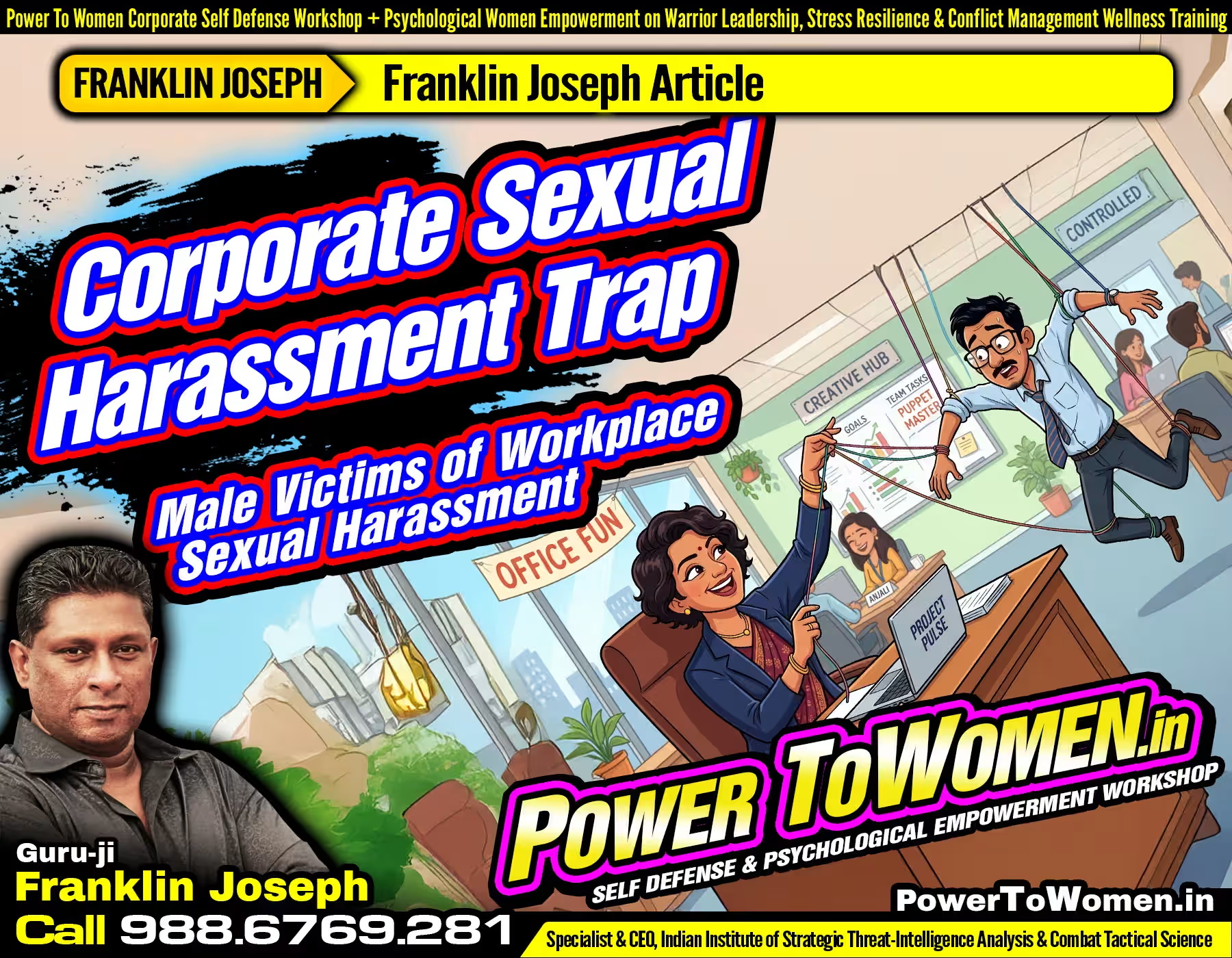
- For male victim specific information, read “Male Victims of Workplace Sexual Harassment: Legal Rights and Recovery.”
Franklin Joseph TEDx Talk Speaker on Combat Science ~ How Threat Recognition Pre-Attack Behaviour and Krav Maga Self-Defence Science Protect Indian Women Corporate Professionals
Specialist Franklin Joseph used his TEDx appearance to reshape the conversation around women’s safety. He disputes traditional methods and explains the scientific reasoning supporting his Power to Women Corporate Self-Defense Workshop.
His talk highlights the frequent failure of standard techniques and the necessity of anticipating criminal behavior. He demonstrates how combining over 21 psychological strategies with Israeli Military Krav Maga creates a truly effective defense system.
Read Franklin Joseph Corporate Women Empowerment / Self Defense ArticlesCall 9886769281 for Corporate WorkshopsCorporate decision-makers and HR experts appreciate his demand for tangible skill development over empty empowerment gestures.
Watch the entire TEDx event here: Specialist Franklin Joseph TEDx Talk on Women’s Safety
Related Articles in This Series
- 3 Ways to Avoid Corporate Sexual Harassment at Work: Prevention Guide for Indian Professionals
- 3 Ways to Exit Corporate Sexual Harassment: Evidence-Based Recovery Guide for Workplace Victims
- Male Victims of Workplace Sexual Harassment: Legal Rights, Recovery Strategies, and Civil Action in India
- POSH Act Internal Complaints Committee Process: Step by Step Guide for Filing Workplace Sexual Harassment Complaints
Corporate Self Defence Workshops ~ 'Embrace Inner Power'
Our all-encompassing strategy combines state-of-the-art Israeli Military Krav Maga self-defence methods with revolutionary psychological tactics like to help you maintain composure, assertiveness, and control whether you're negotiating a high-pressure boardroom or an unpredictable street or domestic encounter. Don't hesitate; give Specialist Franklin Joseph a call @ 9886769281 right now to learn the most important skills and become a part of the movement towards empowered life.
Connect with Specialist Guruji Franklin Joseph for
Women Emergency All State Helpline Directory Guide
PDF - Click to Download India State-Wise Women Emergency Helpline DirectoryARTICLE - Read Online Basic Corporate Self-Defense & Women Emergency Resource Guide

Corporate Workshops Clients
Other Posts & Articles
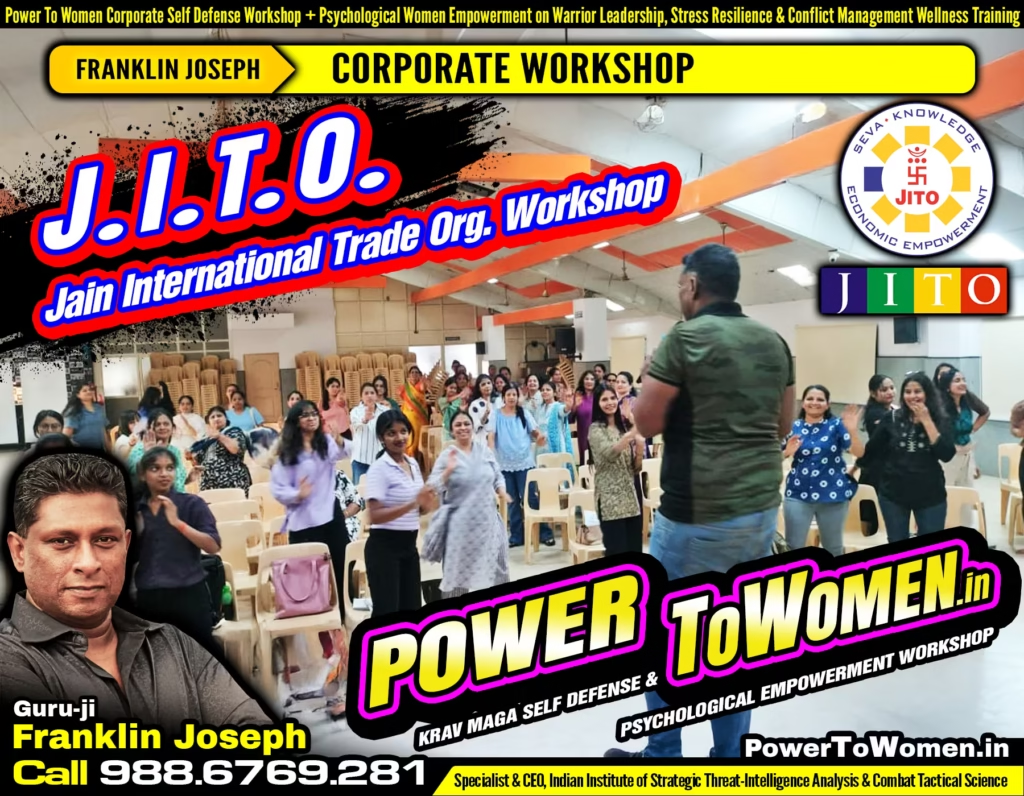
Jain International Trade Organisation (JITO) Power To Women Self Defense Workshop
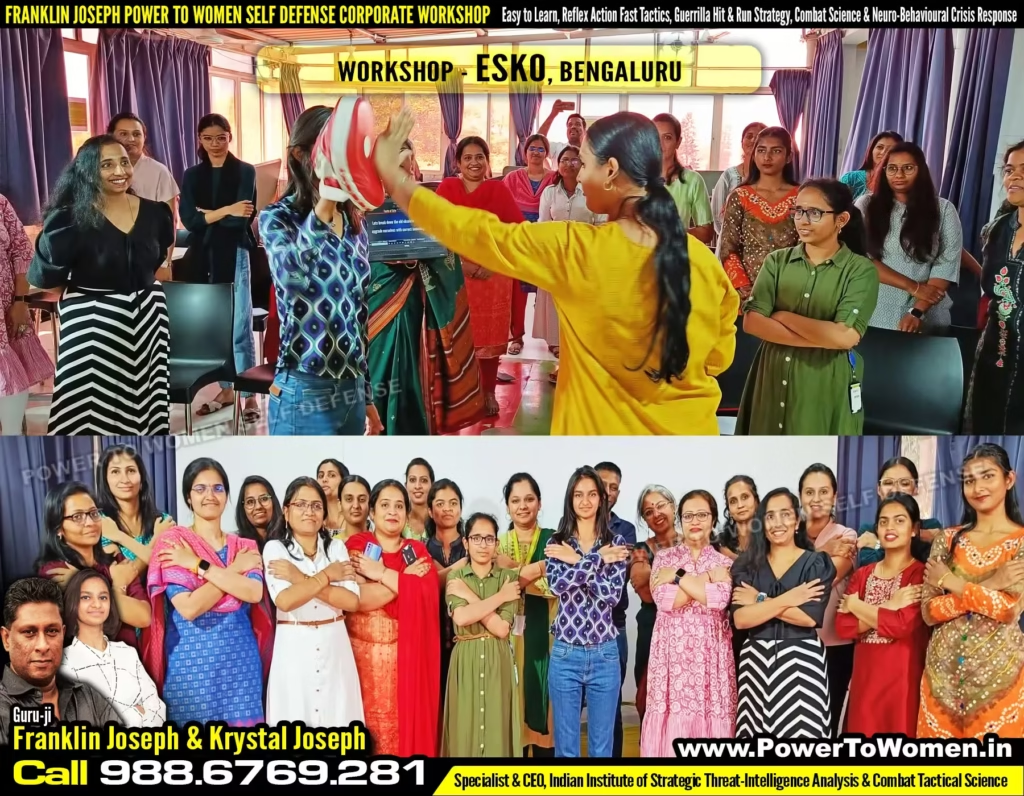
ESKO India International Women’s Day Corporate Self-Defence Workshop Bengaluru
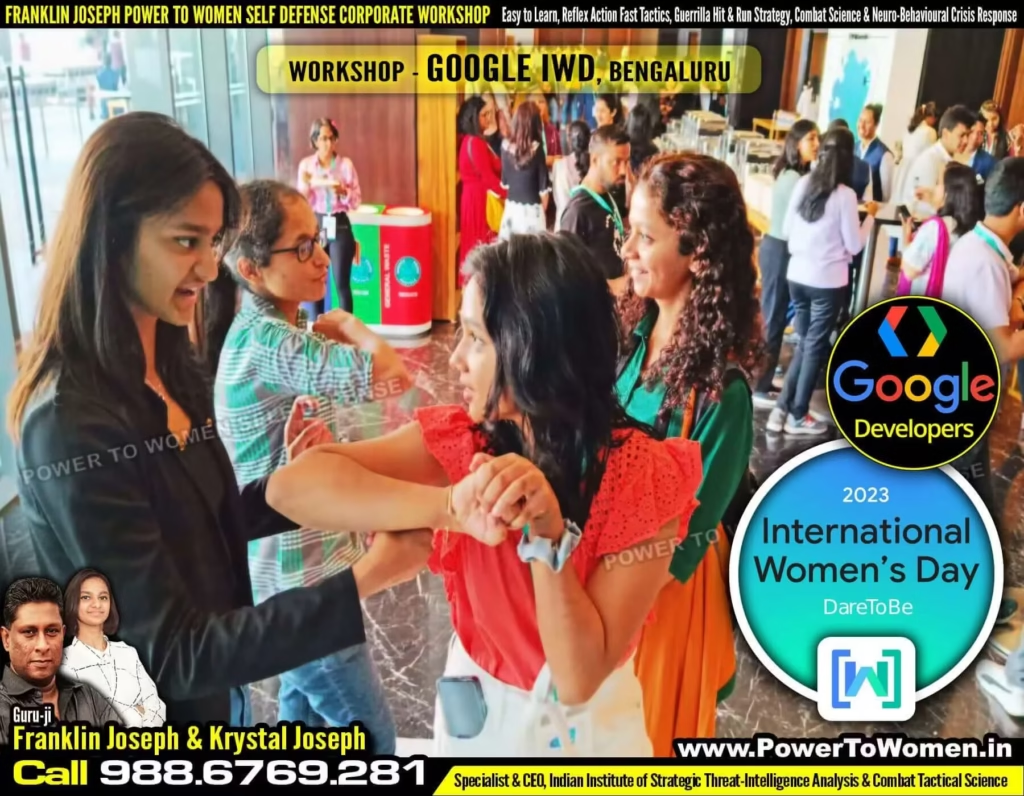
Google Women Techmakers Bengaluru ~ Power To Women Krav Maga Self-Defence and Psychological Women’s Empowerment Workshop by Franklin Joseph
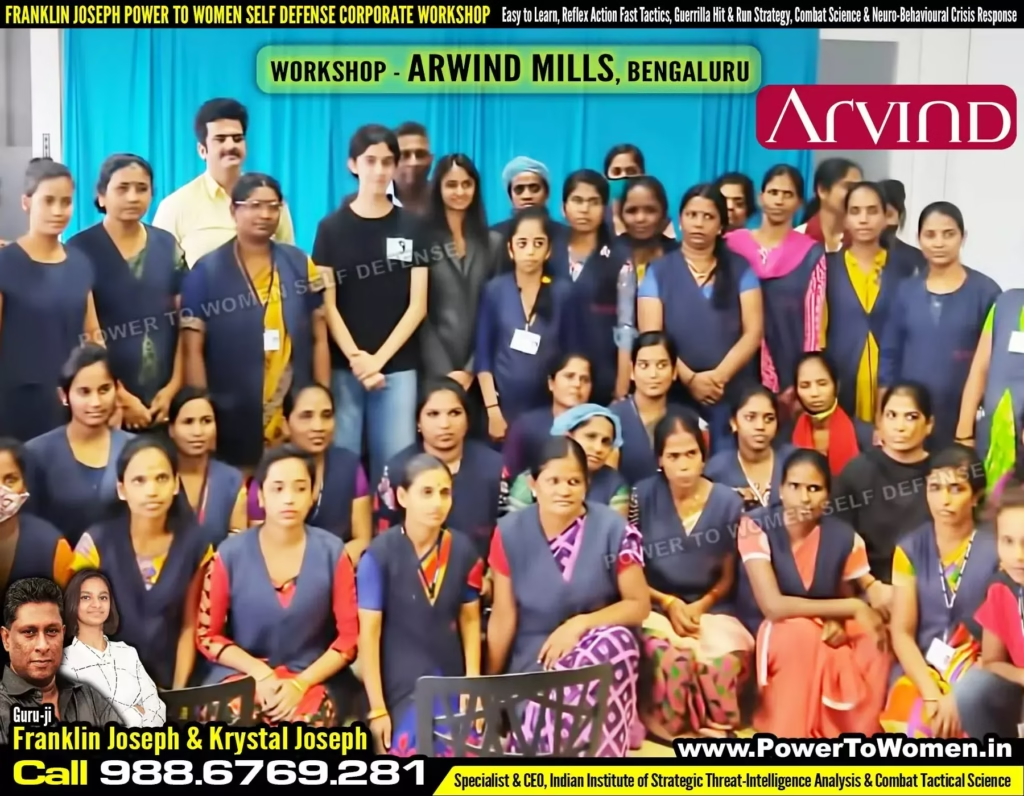
Arvind Mills Women Employee Safety Training ~ Power To Women Corporate Self-Defence Workshop Case Study
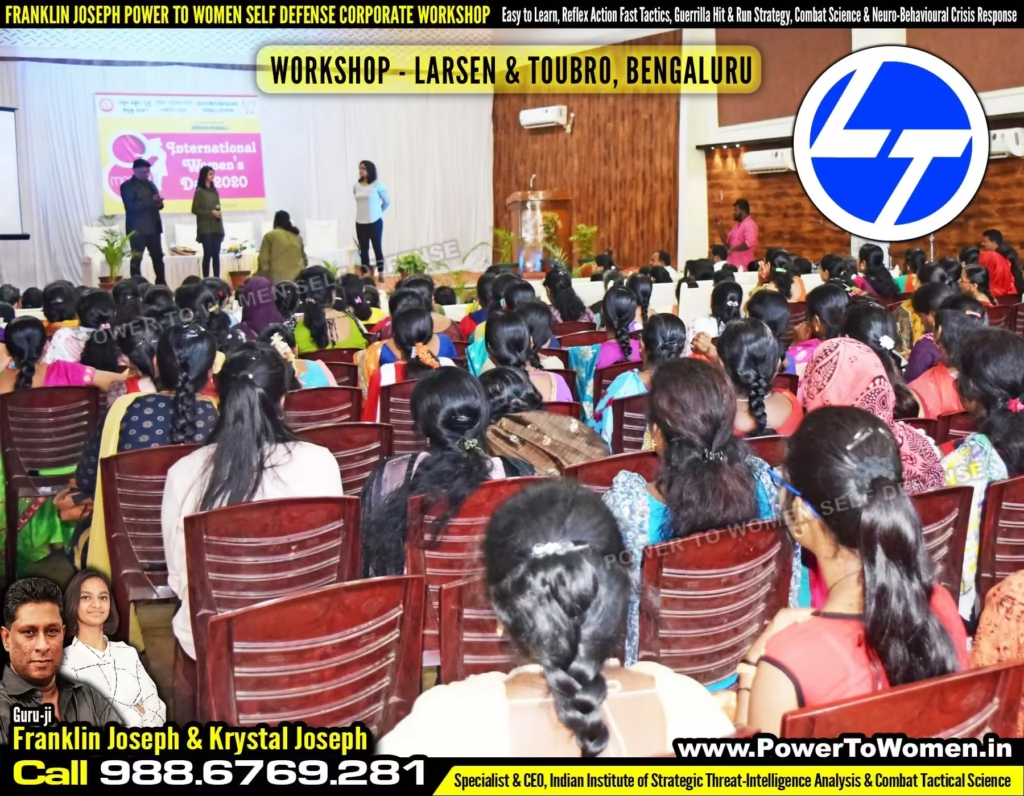
Larsen & Toubro Technology Women’s Empowerment Workshop ~ Corporate Self Defence Training Case Study Bengaluru
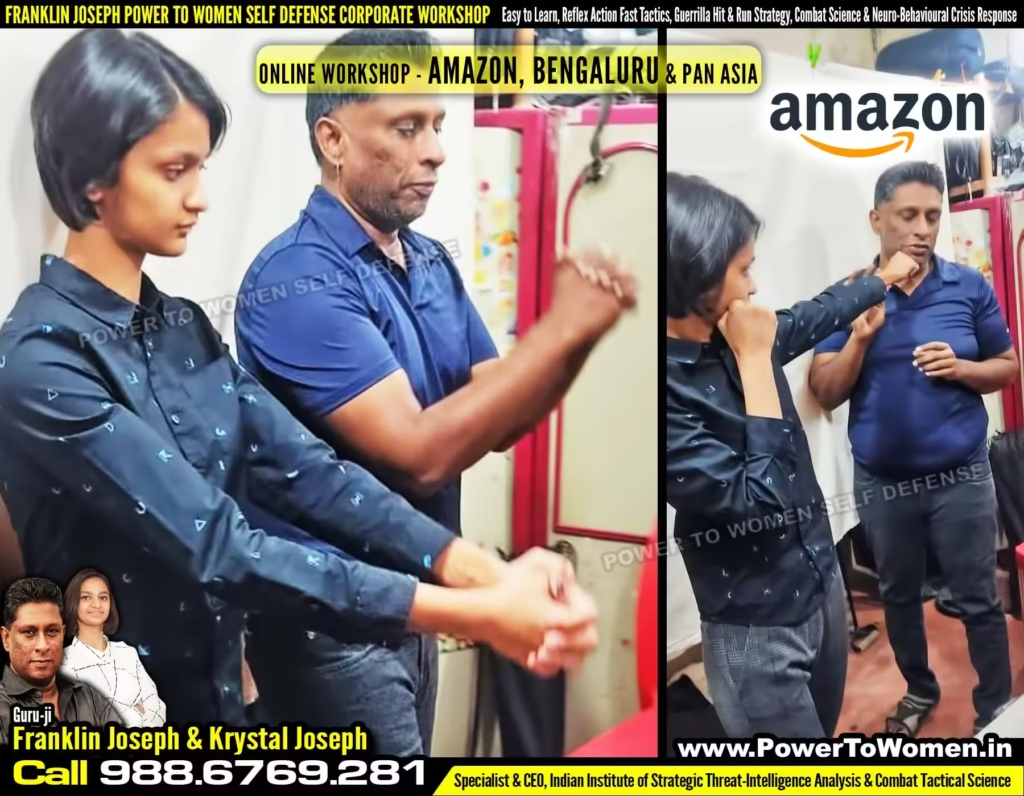
Amazon India Employee Safety Training ~ Online Corporate Women’s Empowerment Workshop Case Study Bengaluru
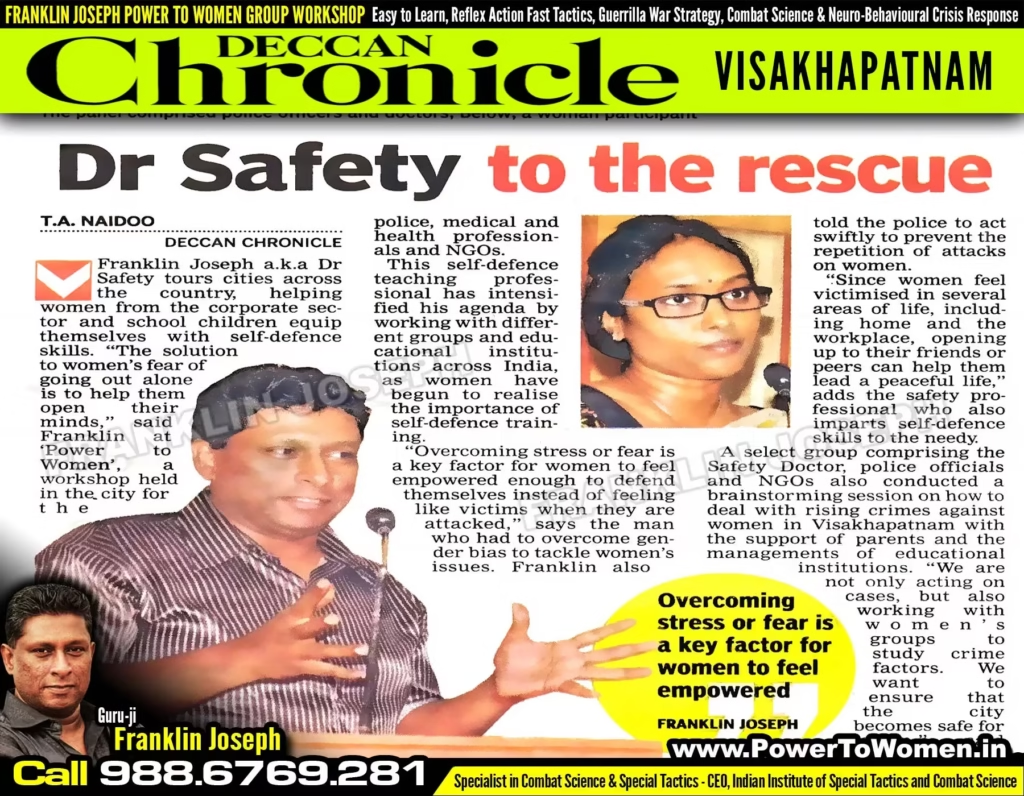
Deccan Chronicle Newspaper Article ~ Dr. Safety Franklin Joseph’s Women Empowerment Initiative Bringing Real Change to Visakhapatnam Communities
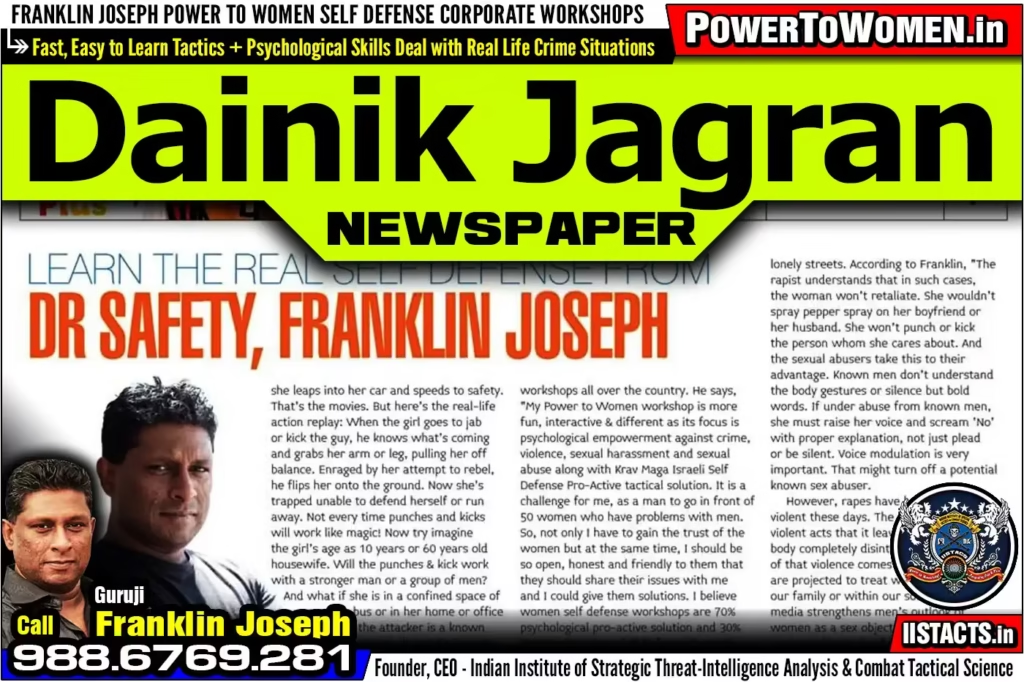
Dainik Jagran Newspaper Article ~ Learn the real self defense from Dr. Safety Franklin Joseph
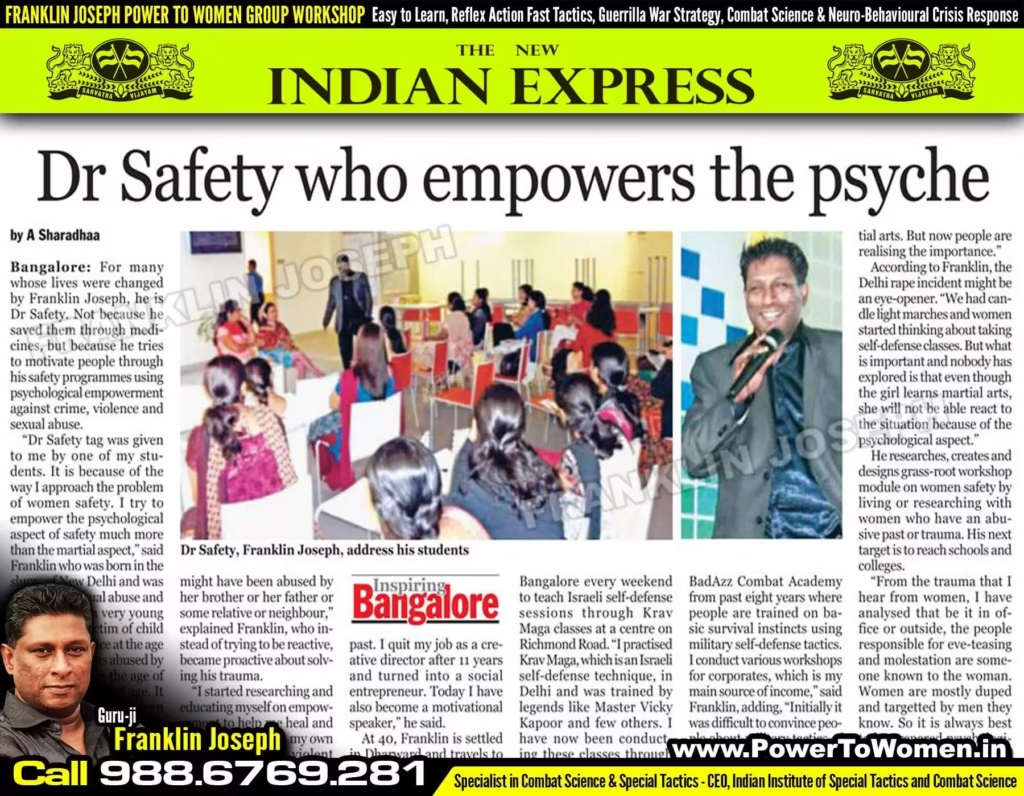
The New Indian Express Newspaper Article ~ Dr Safety who empowers the psyche
Call 9886769281 for Corporate Workshops From Childhood Trauma to Safety Empowerment: Dr. Safety's Transformational Journey Guruji Franklin Joseph, Founder and CEO of the Indian Institute of Threat-Intelligence Analysis ...
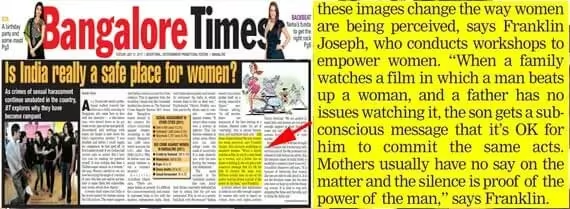
Bangalore Times Newspaper Article ~ Is India really a safe place for women?

Deccan Chronical Newspaper Article ~ Krav Maga Work your mind
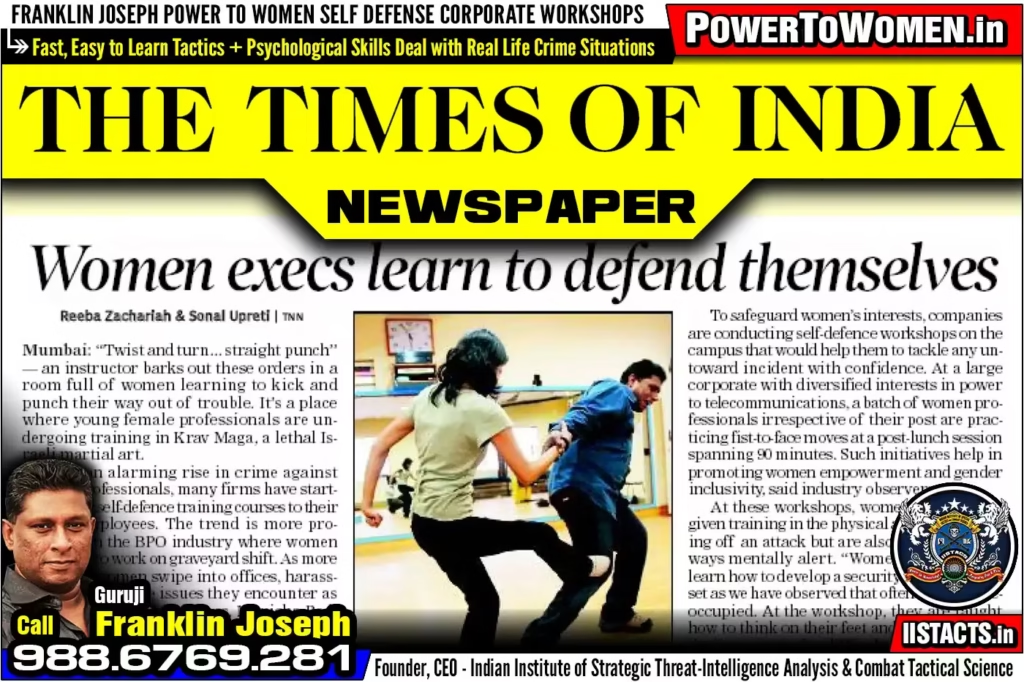
Times of India Newspaper Article ~ Women execs learn to defend themselves
Franklin Joseph Article > Why Corporate Self-Defence Training for Women Is Not About Fighting ~ It Is About Coming Home Safe
Franklin Joseph Article > Corporate Sexual Harassment During Remote Work and Hybrid Meetings ~ How Online Harassment Works and How to Stop It
Franklin Joseph Article > Sexual Harassment by Clients and Vendors ~ Legal Rights for Indian Professionals Outside the Office
Franklin Joseph Article > Female Victims of Workplace Sexual Harassment ~ POSH Act Rights ICC Complaint Process and Recovery Strategies in India
Franklin Joseph Article > POSH Act Internal Complaints Committee Process ~ Step by Step Guide for Filing Workplace Sexual Harassment Complaints in India
Franklin Joseph Article > Bystander Intervention in Corporate Sexual Harassment ~ What Colleagues Can Do When They Witness Harassment at Work

Ms. Priyamvada Advocate – Krav Maga Self Defence Training Impact on her Solo Travel Safety ~ Professional Women’s Transformation Through Corporate Empowerment Workshop
About Specialist Franklin Joseph