



















Last updated on May 14th, 2026 at 08:57 am
7 Steps of De-Escalation Techniques Every Woman Should Know | Franklin Joseph Power To Women Corporate Self-Defence Workshops for Female Employees
Article written by Specialist Guruji Franklin Joseph
Along with being its CEO, Guruji Franklin Joseph (alias ‘Dr. Safety’) leads the Indian Institute of Strategic Threat Intelligence Analysis and Combat Tactical Science. Safety Specialist Guruji Franklin Joseph is also a Social Entrepreneur and Founder of Franklin Joseph PowerToWomen.in, delivering Power To Women Corporate Self-Defence Workshops for Female Employees with Psychological Leadership Empowerment, Stress Resilience and Crisis Management Training.
Women need to feel empowered and safe in today’s world. De-escalation strategies can be just as effective as physical self-defence techniques. De-escalation is the process of calming a crisis and preventing violence by employing both verbal and non-verbal techniques. Women can greatly lower their risk of an attack and improve their odds of escaping unharmed by adopting these strategies. These are core pillars taught across our Power To Women Corporate Self-Defence Workshops for Women in the Workplace, which form part of structured employee safety training, women’s empowerment workshops, and broader workplace safety programmes across Indian corporates. Please call 9886769281 to seek information on corporate self-defence workshops, women’s self-defence for corporates, or private Krav Maga 1-to-1 Fast-Track training.
Why De-Escalation Is the First Line of Defence for Women at Work and Beyond
Before any physical technique becomes necessary, a woman equipped with de-escalation awareness holds a powerful advantage. This is precisely why Power To Women Corporate Self-Defence Workshops for Corporate Women Professionals integrate these seven steps as foundational modules within every corporate wellness training engagement, gender safety programme, and CSR women’s safety initiative we deliver.
7 Essential De-Escalation Techniques Taught in Franklin Joseph Power To Women Corporate Self-Defence Workshops
Here are seven essential steps to de-escalation that every woman should know. These steps are covered across various modules of the Power To Women Corporate Self-Defence Workshops for Women Employees Across Industries:
1. Situational Awareness and Personal Safety Prevention
- Pay attention to your surroundings: Be mindful of your environment and follow your instincts. If something does not feel right, it most likely is not.
- Stay cautious of distractions: Reduce the number of distractions that can impair your focus, such as phone calls or wearing headphones in public spaces.
- Trust your gut feelings: If you feel uncomfortable, leave the situation immediately without hesitation.
- Always pay attention to your surroundings, especially in crowded areas or at night.
- Carry a whistle or personal alarm to draw attention in the event of danger.
- Inform someone of your destination and your anticipated return time.
- Vary your commute route to work or home to avoid predictable patterns.
- Exercise caution when sharing personal information on social media and avoid posting private details.
2. Verbal De-Escalation Techniques for Women in Threatening Situations
- Maintain Calmness: Even when you are feeling nervous, speak clearly and gently. Your tone communicates control.
- Use Assertive Body Language: Project confidence, maintain steady eye contact, and stand tall.
- Establish Clear Boundaries: Clearly state your boundaries without ambiguity. For instance, say “Please back away” or “I am not interested in speaking with you.”
- Avoid Argument: Do not argue or attempt to reason with someone who is angry or agitated.
- Employ Measured Empathetic Words: Attempt to acknowledge the person’s emotional state without endorsing their behaviour. For instance, “I can see you are upset, but that does not give you the right to hurt me.”
- Speak with confidence and firmness, but refrain from becoming combative or hostile.
- Use “I” statements to communicate your needs and feelings clearly.
- Avoid offering excuses or expressing unnecessary apology.
- Do not challenge or argue with the aggressor.
- Make an effort to redirect the conversation towards a non-threatening subject to reduce tension.
3. Non-Verbal De-Escalation Techniques to Defuse Aggression
- Keep a Safe Distance: Maintain a safe physical distance from the aggressor at all times.
- Avoid Provocative Behaviour: Steer clear of abrupt gestures or movements that can be interpreted as threatening or challenging.
- Employ Open Body Language: Hold your arms in front of you with your palms facing outward or keep them relaxed at your sides.
- Manage Eye Contact Wisely: Avoiding prolonged direct eye contact can assist in defusing tense confrontations in certain situations.
- Maintain a composed and controlled manner throughout the encounter.
- Avoid crossing your arms or legs, which can signal aggression or defensiveness.
- Keep at least an arm’s length away from the aggressor to protect your personal space.
- If at all possible, move to a more populated area where others are present.
4. How to Identify Escape Routes and Opportunity Weapons
- Pay Attention to Your Surroundings: Continuously scan for potential exits and everyday objects that could serve as opportunity weapons if required.
- Prepare an Escape Plan: Have a clear escape strategy in mind before a situation escalates to physical threat.
- Identify possible escape routes such as windows, doors, stairwells, or open exits.
- Take note of everyday items such as a pen, keys, or a book that you could use to protect yourself in an emergency.
- Keep your mobile phone accessible at all times in case you need to call for assistance.
5. Yelling and Screaming as a De-Escalation and Deterrence Tool
- Draw Immediate Attention: Yell loudly and deliberately to draw attention and discourage the aggressor from continuing.
- Use Specific, High-Impact Words: Shout words such as “Fire!” or “I do not know this person!” rather than simply shouting “Help”, as specific words tend to prompt a stronger public reaction.
- Shout as loudly and clearly as you can to attract attention from bystanders.
- If possible, use specific descriptions of the attacker’s clothing or physical attributes when calling out to others nearby.
6. Physical Self-Defence as an Absolute Last Resort
- Target Vital and Sensitive Areas: If physical contact becomes unavoidable, target vulnerable points such as the knees, groin, throat, eyes, or nose.
- Use Simple and Effective Techniques: Focus on methods such as palm strikes, elbow strikes, and kicks that are straightforward to learn and execute under pressure.
- Escape as Soon as Possible: The moment you create an opportunity, move away from the situation as quickly as you can.
- Prioritise techniques that are easy to remember and simple to apply under stress.
- Use nearby objects such as a pen, keys, or a book to protect yourself if no other option is available.
- Once an escape route opens, leave the scene immediately without hesitation.
For those who wish to develop physical self-defence skills more comprehensively and at their own pace, Specialist Guruji Franklin Joseph offers personalised Krav Maga 1-to-1 Fast-Track training, designed to build practical combat competence quickly and effectively through one-on-one intensive sessions. Call 9886769281 to enquire.
7. Seeking Help and Support After a Threatening or Violent Incident
- Report the Incident: Report every incident to the relevant authorities without delay, regardless of how minor it may seem.
- Seek Professional Assistance: Consider speaking with a qualified counsellor or therapist to help you process trauma and develop healthy coping mechanisms.
- Connect with Support Groups: Join a support group to meet other survivors, share experiences, and draw strength from community.
- Talk about what happened with a person you trust, whether a friend, family member, or colleague.
- Remember that you are not alone. Help is available and seeking it is an act of strength.
De-Escalation Techniques for Women Dealing with Known or Domestic Attackers
When dealing with a known aggressor such as a domestic abuser or a threatening colleague, it is essential to prioritise your safety above all else and seek guidance from professionals. These situations are also addressed within the Power To Women Corporate Self-Defence Workshops for Working Women and Female Professionals, particularly within modules covering workplace harassment, gender safety programmes, and female employee protection frameworks.
- Document Everything: Maintain a thorough record of every incident, including dates, times, and any tangible evidence you can preserve.
- Establish a Personal Safety Plan: Create a clear plan that outlines safe locations, escape routes, and emergency contacts for various scenarios.
- Inform Trusted Individuals: Speak openly with a therapist, family member, or trusted friend about your situation so that others are aware and can support you.
- Seek Legal Counsel: Consult a lawyer to understand your legal rights, options, and the protections available to you.
- Keep a consistent record of every incident including times, dates, and physical evidence.
- Identify safe locations, reliable escape routes, and emergency contacts in your safety plan.
- Share your experience with a therapist, trusted family member, or close friend.
- Seek legal counsel to understand your options and to take steps that will safeguard your wellbeing.
- Consider obtaining a restraining order if the situation warrants it.
- Your safety is always the first priority. De-escalation knowledge, combined with a clear plan, significantly increases your ability to stay safe.
Additional Safety Tips Covered in Franklin Joseph Power To Women Corporate Self-Defence Workshops for Female Employees
Please call Specialist Guruji Franklin Joseph at 9886769281 for the Power To Women Corporate Self-Defence Workshops for Women Across Corporate India, which integrate employee safety training, corporate wellness training, women’s empowerment workshops, CSR women’s safety initiatives, and gender safety programmes tailored to your organisation’s needs.
- Enrol in a Self-Defence Class: Sign up for a Krav Maga 1-to-1 Fast-Track session with Specialist Guruji Franklin Joseph to build confidence and acquire practical self-defence skills quickly.
- Carry a Personal Alarm: A personal alarm is an effective tool for drawing immediate attention and discouraging potential aggressors in public.
- Follow Your Instincts: If something does not feel right, it most likely is not. Never dismiss your gut feeling.
- Stay Informed: Stay up to date with current safety advice, local news, and personal safety developments relevant to your environment.
- Prioritise Self-Care: To reduce stress and support mental health, make self-care practices such as yoga, meditation, and time spent outdoors a consistent part of your routine.
- Enrol in a Krav Maga 1-to-1 Fast-Track session to gain practical skills and build the self-assurance to act decisively under pressure.
- Carry a whistle or personal alarm as part of your daily essentials for situations that may require immediate attention.
- Trust your instincts and remove yourself from any situation that feels unsafe without waiting for confirmation.
- Follow safety professionals, attend workshops, and read credible articles to stay informed about personal and workplace safety.
- Invest in your mental health through consistent self-care practices that build resilience and reduce vulnerability to stress.
- By integrating these de-escalation techniques into your daily life, you take charge of your own safety and develop the self-assurance needed to handle difficult situations. You hold the power to protect yourself.
Franklin Joseph Power To Women Corporate Self-Defence Workshops: Empowering Women in India’s Workplaces
The Power To Women Corporate Self-Defence Workshops for Female Staff and Leadership Teams go far beyond conventional self-defence instruction. Each engagement combines threat intelligence, psychological empowerment, stress resilience strategy, and crisis management training into a structured workplace safety programme purpose-built for Indian corporates. Whether your organisation is seeking women’s self-defence for corporates as part of a CSR women’s safety initiative, a gender safety programme, or a broader corporate wellness training rollout, Specialist Guruji Franklin Joseph delivers measurable outcomes that protect and empower your female workforce. Call 9886769281 today to discuss how these workshops can be integrated into your employee safety training calendar.
Corporate Self Defence Workshops ~ 'Embrace Inner Power'
Our all-encompassing strategy combines state-of-the-art Israeli Military Krav Maga self-defence methods with revolutionary psychological tactics like to help you maintain composure, assertiveness, and control whether you're negotiating a high-pressure boardroom or an unpredictable street or domestic encounter. Don't hesitate; give Specialist Franklin Joseph a call @ 9886769281 right now to learn the most important skills and become a part of the movement towards empowered life.
Connect with Specialist Guruji Franklin Joseph for
Women Emergency All State Helpline Directory Guide
PDF - Click to Download India State-Wise Women Emergency Helpline DirectoryARTICLE - Read Online Basic Corporate Self-Defense & Women Emergency Resource Guide

Corporate Workshops Clients
Other Posts & Articles

Jain International Trade Organisation (JITO) Power To Women Self Defense Workshop
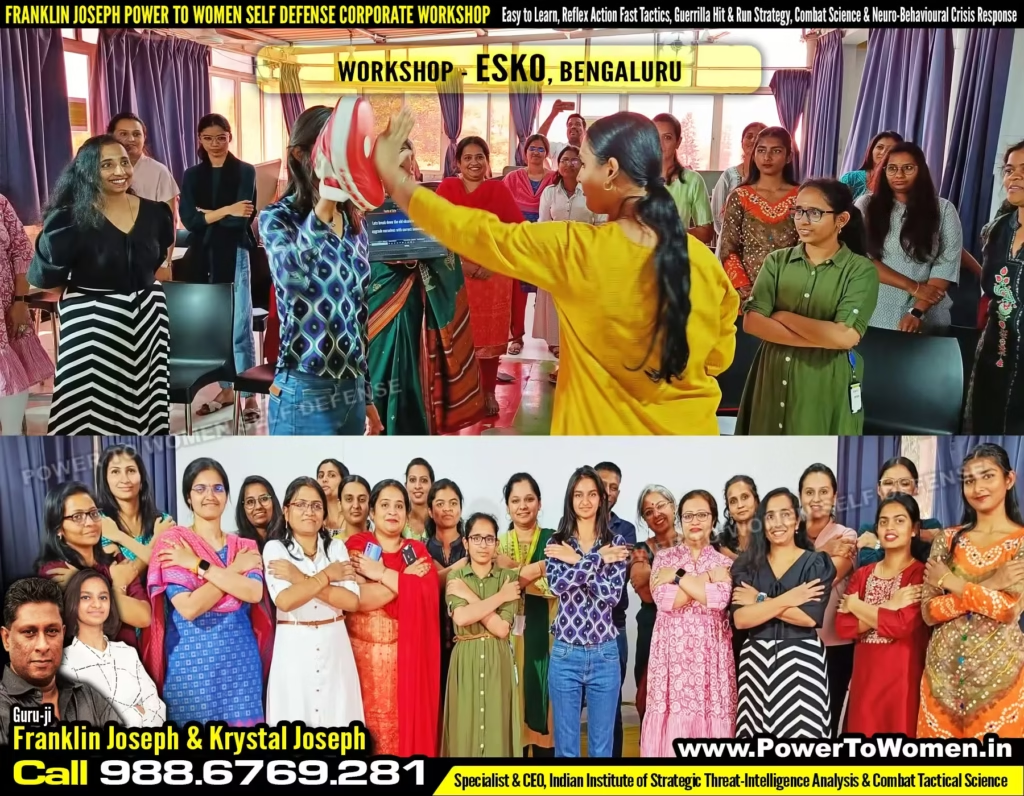
ESKO India International Women’s Day Corporate Self-Defence Workshop Bengaluru

Google Women Techmakers Bengaluru ~ Power To Women Krav Maga Self-Defence and Psychological Women’s Empowerment Workshop by Franklin Joseph

Arvind Mills Women Employee Safety Training ~ Power To Women Corporate Self-Defence Workshop Case Study

Larsen & Toubro Technology Women’s Empowerment Workshop ~ Corporate Self Defence Training Case Study Bengaluru

Amazon India Employee Safety Training ~ Online Corporate Women’s Empowerment Workshop Case Study Bengaluru
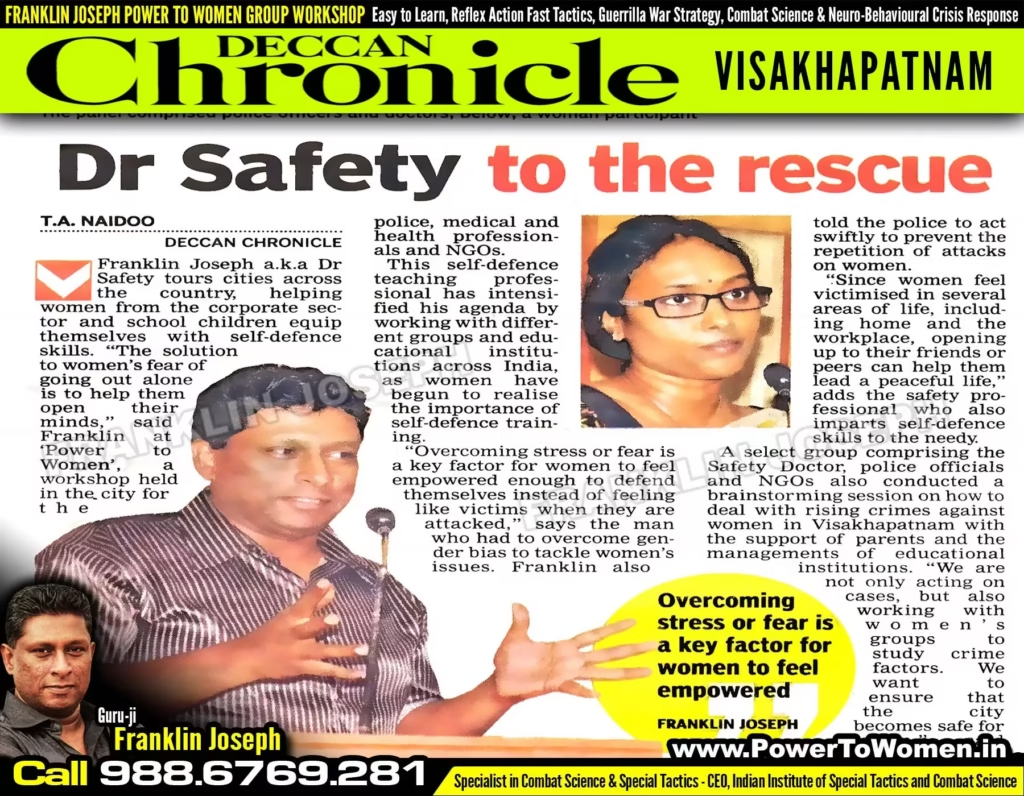
Deccan Chronicle Newspaper Article ~ Dr. Safety Franklin Joseph’s Women Empowerment Initiative Bringing Real Change to Visakhapatnam Communities
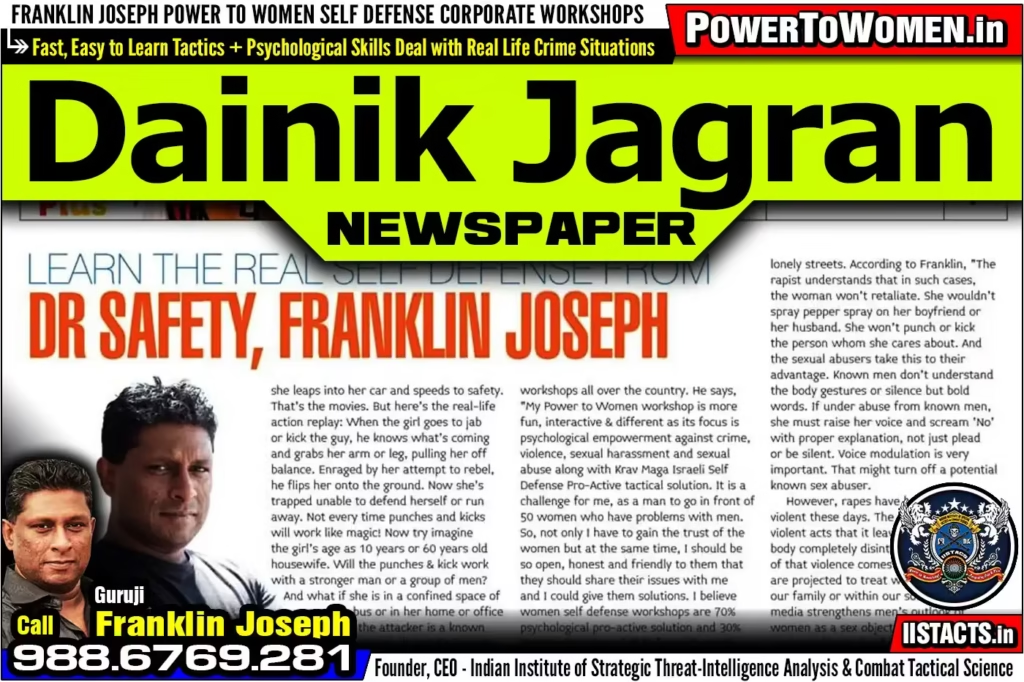
Dainik Jagran Newspaper Article ~ Learn the real self defense from Dr. Safety Franklin Joseph

The New Indian Express Newspaper Article ~ Dr Safety who empowers the psyche
Call 9886769281 for Corporate Workshops From Childhood Trauma to Safety Empowerment: Dr. Safety's Transformational Journey Guruji Franklin Joseph, Founder and CEO of the Indian Institute of Threat-Intelligence Analysis ...

Bangalore Times Newspaper Article ~ Is India really a safe place for women?

Deccan Chronical Newspaper Article ~ Krav Maga Work your mind

Times of India Newspaper Article ~ Women execs learn to defend themselves

Franklin Joseph Article > Why Corporate Self-Defence Training for Women Is Not About Fighting ~ It Is About Coming Home Safe

Franklin Joseph Article > Corporate Sexual Harassment During Remote Work and Hybrid Meetings ~ How Online Harassment Works and How to Stop It

Franklin Joseph Article > Sexual Harassment by Clients and Vendors ~ Legal Rights for Indian Professionals Outside the Office

Franklin Joseph Article > Female Victims of Workplace Sexual Harassment ~ POSH Act Rights ICC Complaint Process and Recovery Strategies in India

Franklin Joseph Article > POSH Act Internal Complaints Committee Process ~ Step by Step Guide for Filing Workplace Sexual Harassment Complaints in India
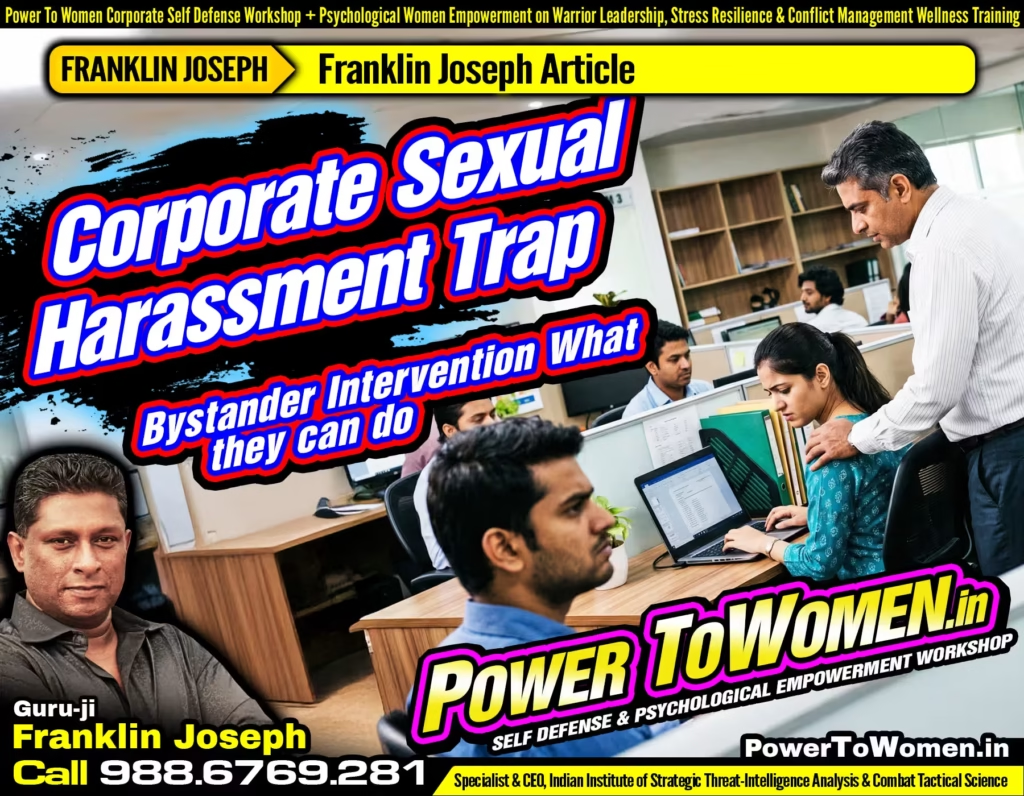
Franklin Joseph Article > Bystander Intervention in Corporate Sexual Harassment ~ What Colleagues Can Do When They Witness Harassment at Work

Ms. Priyamvada Advocate – Krav Maga Self Defence Training Impact on her Solo Travel Safety ~ Professional Women’s Transformation Through Corporate Empowerment Workshop
About Specialist Franklin Joseph