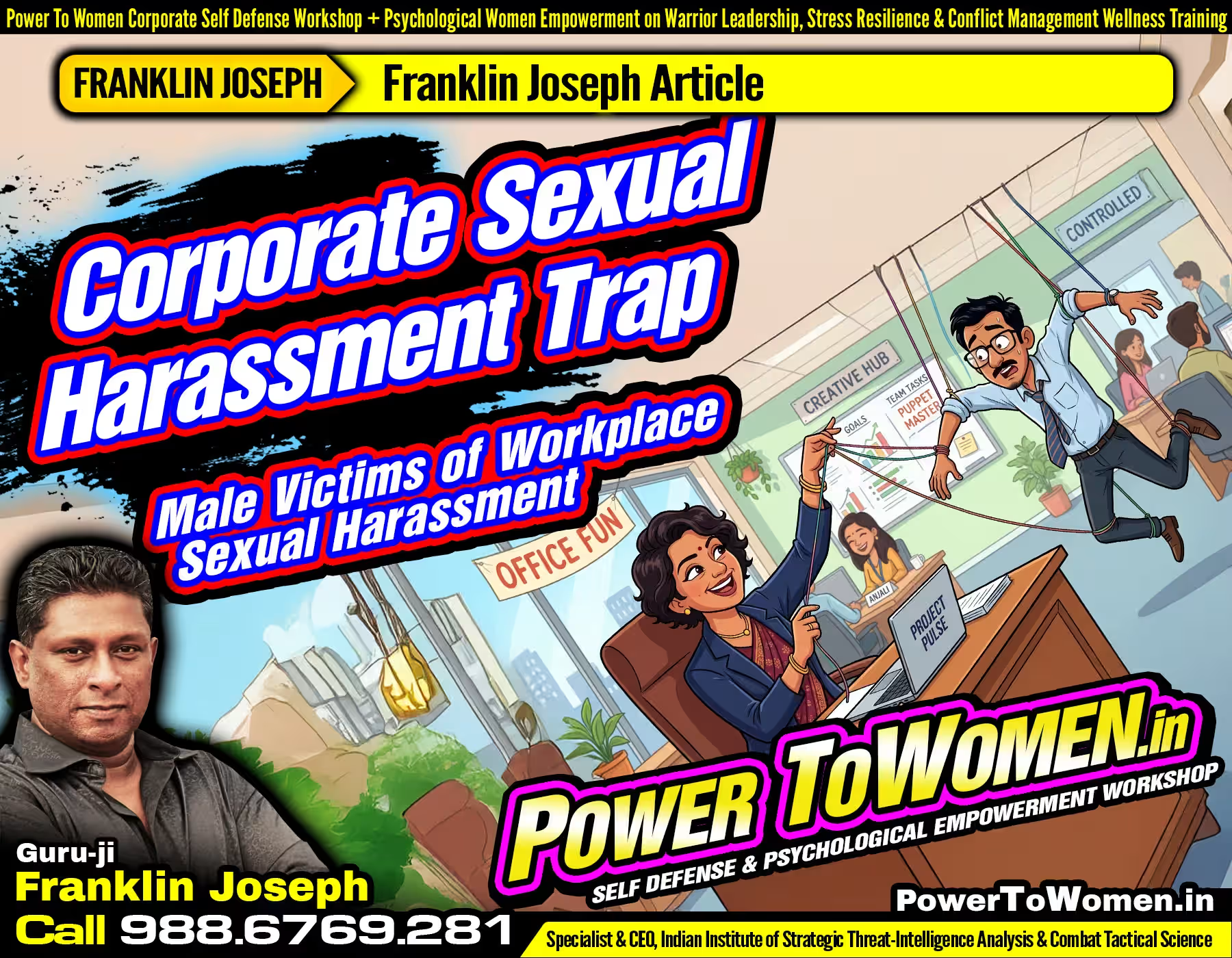




















Franklin Joseph Article > Male Victims of Workplace Sexual Harassment: Legal Rights, Civil Action Pathways, and Recovery Strategies in India
By Specialist Franklin Joseph | Specialist, Power to Women Corporate Self Defence Workshop | Franklin Joseph Krav Maga Bengaluru
Comprehensive legal framework and recovery strategies for male professionals experiencing workplace sexual harassment in India. Understanding the POSH Act statutory gap, gender-neutral corporate policies, civil action pathways, documentation strategies, psychological recovery, and practical Krav Maga self-defense techniques for men.
Why Male Victims Need to Understand Their Legal Standing in India
Workplace sexual harassment affects male professionals across every industry, every seniority level, and every organization size in India. Unlike female victims who have structured statutory protection under the Prevention of Sexual Harassment (POSH) Act, 2013, male victims must navigate a different and more complicated legal pathway.
The POSH Act, despite its gender-neutral naming, was designed specifically to protect women from sexual harassment in the workplace. Male victims are excluded from its statutory protections. This gap in Indian law is not theoretical. It is practical, consequential, and creates significant barriers for male professionals seeking to address workplace sexual harassment.
Understanding exactly what legal protections do exist for male victims, what documentation standards you must meet, and how to pursue civil action when internal corporate processes fail is the foundation of your response to workplace sexual harassment.
This article is designed specifically for male victims of workplace sexual harassment in India. It explains the statutory gap, walks you through the available legal pathways including gender-neutral corporate policies and civil action, provides documentation strategies that meet the higher evidentiary burden you face, addresses the trauma responses you may be experiencing, and includes practical physical self-defense techniques.
“The absence of statutory protection for male victims does not mean no legal recourse exists. It means the path to justice is more complicated and more dependent on clear, thorough, and strategic documentation.”
Specialist Franklin Joseph, Power To Women Corporate Workshop, Bengaluru
The Statutory Gap: What Legal Protections Do NOT Exist for Male Victims
What the POSH Act Does Not Cover
The Prevention of Sexual Harassment (POSH) Act, 2013, provides a clear legal framework for female victims including mandatory Internal Complaints Committees, investigation timelines, confidentiality protections, and remedies. Male victims are explicitly excluded from this framework.
This means as a male victim you do NOT have:
- Statutory right to file a complaint with a mandatory Internal Complaints Committee
- Mandatory investigation timeline (no requirement that your complaint be investigated within 90 days)
- Statutory confidentiality protections during investigation
- Statutory protection from retaliation (though general labor law may provide some protection)
- Right to interim relief during investigation
- Statutory right to monetary damages through the POSH framework
This statutory gap is unjust. It leaves male victims vulnerable to harassment without the same institutional protections that female victims have. However, it does not mean you are without legal options. It means your legal pathway is different and requires more strategic planning and more thorough documentation.
Why This Gap Matters Practically
The practical consequence of the POSH Act gap is that when you report workplace sexual harassment internally to HR or management:
- Your company is not legally required to investigate (though they may choose to)
- Your company is not required to complete investigation within any specific timeline
- Your company is not required to maintain confidentiality of your complaint
- Your company is not required to provide you with the findings or recommendations
- Your company’s dismissal of your complaint is not itself a POSH Act violation (as it would be for a female victim)
This makes internal corporate resolution significantly less reliable for male victims than for female victims. Your primary pathway to justice, when internal processes fail, is civil action through the courts.
What Legal Protections DO Exist for Male Victims in India
Option 1: Gender-Neutral Corporate Harassment Policies
Some corporations have adopted gender-neutral workplace harassment policies that extend beyond the POSH Act. These policies may include protections for all employees regardless of gender. If your company has such a policy, you can file a complaint through that policy framework.
However, these policies vary significantly in scope, enforcement, and remedial options. Before relying on a gender-neutral policy:
- Request a copy of the policy from HR in writing
- Review it carefully to understand what it covers
- Understand what timeline it requires for investigation (if any)
- Understand what remedies it offers
- Understand who investigates (is there a committee or is it HR-controlled?)
Document your review of the policy. Your documentation that you followed the company’s stated procedures is important if you later pursue civil action.
Option 2: General Labor Law Protections Against Retaliation
Indian labor law provides protections against retaliation for reporting workplace violations under the Industrial Disputes Act and related statutes. If you report harassment and subsequently face negative employment actions, that retaliation may constitute grounds for legal action.
Document any retaliation carefully:
- Negative performance reviews following your report
- Transfer to less desirable position
- Exclusion from meetings or projects
- Schedule changes that disadvantage you
- Salary or bonus reductions
- Constructive dismissal (making your work environment so intolerable that you are forced to resign)
Retaliation itself can be grounds for separate legal action and can strengthen your civil harassment case significantly.
Option 3: Civil Action for Sexual Coercion and Emotional Distress
The most important legal option available to male victims is civil action. Even without specific statutory protection under POSH, Indian law recognizes civil liability for:
- Sexual coercion using professional leverage
- Emotional distress caused by harassment
- Defamation (if slurs were used)
- Career damage and lost wages caused by harassment or retaliation
- Institutional negligence (failure by the company to prevent or address harassment)
You can file a civil lawsuit in district court against the harasser individually and against the company for institutional liability. Civil damages can include compensation for lost wages, lost career opportunities, emotional distress, medical treatment, and other proven damages.
Option 4: Criminal Law Protections
In cases involving physical assault, stalking, or explicit threats, criminal law protections apply regardless of the victim’s gender. If the harassment includes physical violence, you can file an FIR (First Information Report) with police.
Criminal charges for assault, criminal intimidation, or other crimes can be pursued alongside civil and employment action. If the harassment includes use of slurs targeting your race, caste, or ethnicity, additional criminal law provisions may apply.
Why Male Victims Face Unique Barriers to Reporting
Barrier 1: Cultural Disbelief in Male Victimization
One of the most significant barriers male victims face is cultural skepticism that men can be sexually victimized. The narrative that “men should be able to fight back” or “real men do not get harassed” remains deeply embedded in corporate and social culture.
Male victims report that when they describe harassment, they encounter disbelief, minimization, or social mockery. Colleagues may suggest you should have enjoyed the attention, that you are exaggerating, or that reporting makes you weak or unmanly.
This cultural narrative ignores documented reality. Male victims experience the same freeze responses, the same trauma bonding, the same career consequences as female victims. Sexual coercion using professional leverage affects men the same way it affects women. The gender of the victim does not determine the reality of the harassment.
Barrier 2: Fear of Professional Damage and Mischaracterization
Read Franklin Joseph Corporate Women Empowerment / Self Defense ArticlesCall 9886769281 for Corporate WorkshopsMale victims often fear that reporting workplace sexual harassment will result in them being labeled as weak, unmanly, or unable to handle workplace stress. In male-dominated corporate cultures, reporting harassment can result in social ostracism, loss of professional credibility, and career damage beyond the original harassment itself.
This fear is not paranoid. Male victims report being passed over for promotions, transferred to less desirable positions, or constructively dismissed after reporting harassment. These retaliatory actions are illegal under Indian labor law, but they happen. The fear of these consequences keeps many male victims silent.
Barrier 3: No Mandatory Internal Support Structure
Because male victims are not covered under the POSH Act, there is no mandatory Internal Complaints Committee trained to handle male victim complaints. There are no statutory timelines for investigation completion. There are no mandatory protections against retaliation.
Male victims must rely on gender-neutral policies that may not exist or may not be enforced. When you report to HR, you are hoping they will investigate fairly, but they are not legally required to do so.
Barrier 4: Higher Evidentiary Burden
Without statutory backing, male victims’ complaints are more susceptible to corporate dismissal. An investigator can claim insufficient evidence without any statutory obligation to investigate thoroughly or within a specific timeline.
This creates a higher evidentiary burden on male victims. Your evidence must be not just credible. It must be overwhelming. It must be so clear and so thorough that no reasonable person could dismiss it as miscommunication or misinterpretation.
Understanding Your Trauma Responses: What Your Body Does During and After Harassment
The Freeze Response
You may find yourself unable to move, speak, or physically resist during harassment even though your mind is screaming to get away. This is the trauma freeze response. When your brain cannot calculate a safe exit from a threatening situation, it stops fighting and goes still.
Your body compliance during the freeze response does not equal mind consent. You can be immobilized by fear and professional leverage while your body performs actions your mind is rejecting. This is a documented neurological response to threat. It is not weakness. It is not evidence that you wanted the harassment. It is biological protection when fight and flight are both unavailable.
Specific Physiological Trauma Responses in Men
Male victims often experience:
- Inability to Maintain Erection During Coerced Sexual Encounters: This is a well-documented psychosomatic response to fear, humiliation, and shock. It is physiological evidence that the body was in a trauma state, not evidence of consent or enjoyment.
- Emotional Numbing: Feeling detached from emotions during and after harassment
- Dissociation: Feeling detached from your body, as though you are watching the harassment happen to someone else
- Hypervigilance: Constant alertness, difficulty relaxing, inability to feel safe even in safe environments
Harassers may weaponize your physiological responses, particularly inability to maintain erection, as evidence of your desire or as grounds for further humiliation and mockery. A harasser who mocks this response is committing additional psychological violence designed to induce shame and silence.
Your body’s responses were protective attempts in an impossible situation, not evidence of your responsibility for the harassment.
Delayed Reporting: Why You May Not Report Immediately
Delayed reporting is one of the most misunderstood aspects of sexual harassment cases. If you report months after harassment began, you are not fabricating your account. You are reporting after spending that time calculating whether reporting was survivable.
Read Franklin Joseph Corporate Women Empowerment / Self Defense ArticlesCall 9886769281 for Corporate WorkshopsMale victims delay reporting while calculating: whether anyone will believe them at all, whether reporting will damage their masculinity in colleagues’ eyes, whether there is even a mechanism to receive their complaint, whether their career will survive the professional stigma of being a male victim.
Delayed reporting is not proof that your allegation is false. It is proof that the workplace made it dangerous to speak up sooner.
Hire Specialist Franklin Joseph: Power To Women Corporate Self Defense Workshop
Male victims of workplace sexual harassment benefit from professional training in psychological self-defense, evidence documentation, and strategic civil action preparation. Specialist Franklin Joseph’s Power To Women Corporate Self Defense Workshop includes specific training for male professionals experiencing or at risk of workplace harassment.
What the Corporate Workshop Covers for Male Professionals:
- Tactic 1: Pre-Crime Sequence Recognition – Learn to identify the escalating behavioral patterns that precede workplace harassment. Recognize boundary testing, isolation attempts, and professional leverage tactics before they escalate to coercion.
- Tactic 2: Evidence Wall Building for Higher Evidentiary Standards – Master documentation strategies that overcome the skepticism male victims face. Learn to create evidence so thorough and clear that dismissal becomes impossible.
- Tactic 3: Strategic Reporting Through HR and Civil Action Pathways – Understand how to report through gender-neutral policies when they exist, and how to prepare for civil action when internal processes fail. Learn to present evidence professionally.
- Tactic 4: Identity Rebuilding After Male Victim Trauma – Rebuild your sense of masculinity and professional identity after harassment. Separate your trauma responses from your identity. Develop warrior mindset that integrates survival with strength.
Also Available: Krav Maga 1-to-1 Fast-Track Coaching for Individual Men
Specialist Franklin Joseph’s 4-Hour 1:1 Krav Maga Fast-Track Coaching session provides personal, one-on-one safety training for men who want focused attention on their specific situation. This intensive session covers 4 core tactics tailored to your workplace context and personal safety needs.
- Tactic 1: Personal Boundary Recognition and Verbal Confidence
- Tactic 2: Physical Awareness and Personal Space Defense
- Tactic 3: Safe Escape and Distance Creation
- Tactic 4: Evidence Documentation and Psychological Resilience
Call or WhatsApp: 9886769281
Website: PowerToWomen.in
Locations: Bengaluru, Dharwad, Hubballi, Mysuru, Chennai, Hyderabad, Mumbai, Delhi, Pune, Goa, and across India on request.
Trusted by Fortune 500 companies including Google, Amazon, Goldman Sachs, and DRDO. Rated 4.9 stars from 200+ verified reviews.
The Male Victim Legal Action Timeline: From Internal Report to Civil Resolution
Phase 1: Internal Reporting Through Gender-Neutral Policy or HR (Months 1 to 3)
Your first action is reporting through your company’s internal channels. If your company has a gender-neutral harassment policy, use that mechanism. If it does not, report to HR in writing.
During this phase you are not necessarily expecting resolution. You are building a documented record of:
- That you attempted internal resolution before pursuing civil action
- The company’s response (or lack thereof)
- Any retaliation you face following your report
- The company’s failure to investigate or inadequate investigation
Expected timeline: HR will typically provide a response within 30 to 90 days, though there is no statutory requirement for male victims.
Phase 2: Internal Investigation Assessment (Months 3 to 6)
The company’s internal investigation may result in several outcomes:
- The complaint is substantiated, and disciplinary action is taken against the harasser
- The complaint is dismissed as unsubstantiated
- The investigation is incomplete or inadequate
- The investigation finds against you, reinterpreting the harassment as consensual or miscommunication
Document every outcome, every communication, and every step of the process. If dismissal or inadequate investigation occurs, you move to the next phase.
Phase 3: Employment Lawyer Consultation and Civil Action (Months 6 to 12)
If internal resolution fails, consult an employment lawyer and bring your complete documentation. The lawyer will assess whether civil action is viable based on your evidence.
Expect the lawyer to evaluate:
- Strength of your documentation
- Professional leverage used by the harasser
- Career harm you have suffered
- Retaliation you experienced
- Company’s failure to investigate or inadequate investigation
Civil litigation typically takes 18 to 36 months from filing to judgment depending on court backlog and case complexity. During this period, you may continue employment, seek other employment, or take other career actions.
Phase 4: Settlement or Judgment (Months 12 Plus)
Most civil harassment cases settle before reaching judgment. Settlement negotiations can occur at any point. If the case reaches judgment, the court will determine liability and damages.
Expected civil damages include:
- Lost wages during the period harassment prevented you from working effectively
- Lost promotion opportunities
- Emotional distress
- Medical and psychological treatment costs
- In some cases, punitive damages if the harassment was particularly egregious
How Male Victims Should Document Harassment to Meet the Higher Evidentiary Standard
Why Male Victims Face a Higher Evidentiary Burden
Because male victims lack statutory protection, your documentation must meet a higher evidentiary standard than female victims face. It must be so clear and so thorough that no reasonable person could dismiss it as miscommunication or misinterpretation.
Your documentation is not just supporting evidence. It is your entire case. When you pursue civil action, your evidence determines whether the court finds in your favor.
Core Documentation Standards for Male Victims
Your evidence documentation system must include the following for every incident:
- Date of incident (exact date, not approximate)
- Time of incident (specific hour if known)
- Location (specific room, building, or setting)
- Exact words used (in quotation marks only if you are confident about exact wording; otherwise paraphrase clearly)
- Your internal response (what you were feeling and thinking)
- Your external response (what you actually said or did)
- Any witnesses present (names or descriptions)
- Any physical evidence (messages, emails, calendar entries, screenshots)
- Emotional and physical impact of the incident
Store this documentation outside company systems in a personal email account, personal cloud storage, or personal notebook. Record each incident within 24 hours while details are clear.
Prioritize Physical Evidence Over Verbal Recollection
In your documentation, prioritize physical evidence that can be independently verified:
- Messages (WhatsApp, SMS, social media)
- Emails (work email and personal email)
- Calendar entries showing meetings where harassment occurred
- Witnesses who can be independently contacted and verified
- Screenshots of all digital communication
- Voice recordings if legal in your state and if obtained without violating privacy laws
Minimize reliance on your word alone against the harasser’s denial. You need corroborating evidence that exists independently of your testimony.
Document Physiological and Psychological Impact Meticulously
Document the physiological and psychological impact of the harassment:
- Inability to sleep (keep a sleep log if possible)
- Changes in appetite or weight
- Difficulty concentrating at work
- Avoidance behaviors (changing your route through the office, arriving early or late to avoid the harasser)
- Medical treatment sought (doctor visits, prescriptions)
- Counselor or therapist visits (obtain receipts and documentation)
- Anxiety or panic attacks
These documented impacts strengthen your civil case by showing that the harassment caused measurable, verifiable harm.
Create Written Refusals Every Time
Every time you refuse an inappropriate advance or boundary violation, send a written confirmation:
“I wanted to confirm that I declined the invitation to [event] and prefer to keep our relationship professional.”
This creates a documented record of your resistance that counters any claim that the harassment was welcome. It also creates a paper trail showing the harassment continued after your explicit refusal.
Document Retaliation Immediately and Separately
If you face professional consequences following your refusal to engage with the harasser or following your report, document those consequences immediately and as a separate category in your evidence:
- Date and nature of the retaliation
- Proximity in time to your refusal or report
- How this action differs from your previous treatment
- Impact on your career, compensation, or work conditions
Retaliation is separately actionable and significantly strengthens your civil case.
Common Harassment Scenarios and Legal Pathways for Male Victims
Scenario 1: Male Victim, Female Senior Harasser
The most common scenario for male sexual harassment involves a female harasser in a position of power. The harassment may involve unwanted sexual touching, explicit comments, or coerced sexual contact using professional leverage (career threats, schedule control, transfer threats).
The victim may face particular skepticism because female harassers are often perceived as less dangerous or less culpable than male harassers.
Your Legal Pathway: Report internally through gender-neutral policy or HR with complete written documentation. Emphasize physical evidence over verbal testimony. Document the professional leverage used (threats to your career, performance review control). If internal process fails or dismisses your complaint, consult an employment lawyer about civil action. Your civil case will focus on sexual coercion, emotional distress, and career damage.
Scenario 2: Male Victim, Male Harasser
Male-to-male sexual harassment involves different dynamics. There may be additional shame or identity confusion for the victim. Cultural homophobia may create additional barriers to reporting. The victim may fear that reporting will raise questions about their own sexual orientation.
Your Legal Pathway: The same legal pathways apply regardless of the harasser’s gender. Document the professional leverage used particularly carefully. Focus documentation on coercion and professional consequences rather than on the sexual orientation dimension, unless the harasser used homophobic language as part of the harassment, in which case that language should be documented as additional evidence of hostile behavior.
Scenario 3: Harassment With Racial or Caste Dimension
If the harassment includes racial slurs, caste-based comments, or attacks on your ethnicity or background, you have additional legal grounds beyond sexual harassment alone.
Your Legal Pathway: Include both dimensions in your HR report and civil action. Document the compound nature of the harassment. Racial and caste-based discrimination may be actionable under constitutional protections and specific statutes beyond the labor law framework, adding additional legal grounds to your civil action.
Recovery: What Male Victims Need to Rebuild After Harassment
Naming What Happened Accurately
The harasser’s narrative depends on imprecise language. “We had a complicated relationship.” “Things got messy at work.” “There was a misunderstanding.” Imprecise language makes the situation sound mutual, ambiguous, or unclear.
Recovery begins with naming what happened accurately, even if only to yourself in private.
Not: “I had a difficult relationship with my manager.”
Accurate: “My manager repeatedly pressured me into sexual contact despite my refusals. She used professional leverage and threats to coerce my compliance. She created a situation where I could not safely refuse or report.”
Naming it accurately places responsibility where it belongs: on the person who caused harm. Naming it accurately separates what was done to you from who you are.
Rebuilding Masculinity and Professional Identity After Harassment
Male victims often internalize the message that they were weak, that they should have fought back physically, that their masculinity is in question, or that no one would believe them.
These messages are lies told through abuse. Your survival of the harassment is not evidence of weakness. It is evidence of your capacity to endure impossible situations without breaking.
The harassment does not define your masculinity. Your silence about the harassment does not define your strength. Your freeze response during coercion does not define your character. Your survival defines your capability.
Accessing Support Structure
The difference between a victim who survives trauma intact and one who is destroyed by it is not the severity of the trauma. It is whether the person had a framework to process it and a support structure to hold them while they did.
That support structure starts with one person, whether a trusted colleague, family member, friend, or professional counselor, who can be told the truth without judgment. Truth spoken aloud to a safe witness begins to dissolve the shame and isolation the harasser depends on.
Male victims often hesitate to access mental health support due to cultural stigma around male vulnerability. Overcoming this hesitation is critical for recovery. Trauma from workplace harassment responds well to treatment by therapists specializing in trauma. If cost is a barrier, your company’s Employee Assistance Program (EAP) typically provides free counseling sessions.
Hire Specialist Franklin Joseph: Corporate Workshops and Individual Krav Maga Coaching
Both corporate teams and individual male professionals benefit from specialist training on workplace harassment documentation, civil action strategy, and psychological recovery. Specialist Franklin Joseph delivers two distinct programs to meet your specific needs.
Power To Women Corporate Self Defense Workshop:
Designed for organizations that want to protect all their employees regardless of gender. This workshop covers real-world psychological self-defense skills for male professionals experiencing or at risk of workplace harassment. Trusted by Fortune 500 companies including Google, Amazon, DRDO, Goldman Sachs, and the Israeli Consulate General of South India. Rated 4.9 stars from 200+ verified reviews.
The workshop delivers four core tactics:
- Tactic 1: Pre-Crime Indicator Recognition – Identify harassment patterns before they escalate. Applicable to male professionals in all corporate contexts.
- Tactic 2: Evidence Wall Building for Higher Standards – Create legally credible documentation that meets the higher evidentiary burden male victims face in civil action.
- Tactic 3: Strategic Reporting and Civil Action Preparation – Report effectively through gender-neutral policies and prepare for civil litigation when internal processes fail.
- Tactic 4: Identity Rebuilding and Masculine Resilience – Recover from harassment without internalizing shame. Rebuild masculinity and professional identity after psychological attack.
Krav Maga 1-to-1 Fast-Track Coaching for Individual Men:
A focused 4-hour personal coaching session with Specialist Franklin Joseph. Covers 4 core personal safety tactics tailored to your specific workplace situation:
- Tactic 1: Boundary Recognition and Verbal Confidence in Real Workplace Situations
- Tactic 2: Physical Awareness and Personal Space Defense
- Tactic 3: Safe Escape and Distance Creation Without Escalation
- Tactic 4: Evidence Documentation and Psychological Resilience Under Pressure
Call or WhatsApp: 9886769281
Website: PowerToWomen.in
Locations: Bengaluru, Dharwad, Hubballi, Mysuru, Chennai, Hyderabad, Mumbai, Delhi, Pune, Goa, and across India on request.
Your harassment is real. Your pain is valid. Your case is worth pursuing. Get the specialized support male victims deserve.
Franklin Joseph TEDx Talk Speaker on Combat Science ~ How Threat Recognition Pre-Attack Behaviour and Krav Maga Self-Defence Science Protect Indian Women Corporate Professionals
During his renowned TEDx talk, Specialist Franklin Joseph challenged long-standing assumptions about self-defense. He brought forward the rigorous, evidence-based methodology that powers his Power to Women Corporate Self-Defense Workshop.
The session breaks down why traditional defense falls apart in reality and why criminal psychology is non-negotiable in training. It showcases the fusion of Israeli Military Krav Maga with more than 21 psychological tactics to forge a complete safety solution.
Safety experts and corporate leaders align with his view that empowering women means providing them with real, transformative skills.
Watch the full TEDx presentation here: Specialist Franklin Joseph TEDx Talk on Women’s Safety
How to Break Free From a Wrist Grab: Simple Krav Maga Self Defense Technique for Men
Why Physical Self Defense Matters Alongside Legal Knowledge
Understanding your legal options and building thorough documentation are the foundation of your response to workplace sexual harassment. But when a harasser physically grabs you, pulls you, or attempts to force you into a situation, you need immediate physical response skills. You need to know how to create distance, break free, and escape before the situation escalates to assault.
This Krav Maga technique is designed specifically for one of the most common physical harassment scenarios: someone grabs your wrist or hand and pulls you toward them or toward a private location. This happens in offices, corridors, parking structures, work events, and client meetings. It is a control tactic designed to isolate you physically before escalating to further violation.
The Situation: When Someone Grabs Your Wrist and Pulls You
A colleague, manager, or client grabs your wrist with one or both hands. They may be pulling you toward a private room, toward their car, or simply holding you in place to prevent you from leaving. You have verbally refused. You have named the boundary. They are not releasing your wrist. You need a physical technique to break free immediately and create distance.
The Krav Maga Wrist Grab Escape Technique: Step by Step
Step 1: Do Not Pull Away Directly
Your instinct when someone grabs your wrist is to pull straight back in the opposite direction of their grip. This is the weakest angle of escape because you are pulling against the strength of their entire hand and arm. Instead, you will use leverage and rotational movement to exploit the weakness in their grip.
Step 2: Identify the Thumb Gap in Their Grip
No matter how tightly someone grabs your wrist, their grip has a weakness: the space between their thumb and their fingers. This is the natural anatomical gap where the hand cannot generate as much gripping force. Your escape will target this gap.
Step 3: Make a Strong Fist With Your Captured Hand
Immediately make a tight fist with the hand that is being held. This flexes the muscles and tendons in your forearm, making your wrist thicker and harder to grip. It also protects your hand during the escape movement.
Step 4: Rotate Your Fist Toward the Thumb Gap
With your fist clenched, rotate your entire arm sharply toward the space between the attacker’s thumb and fingers. If they are gripping your right wrist with their right hand, rotate your right fist counterclockwise toward their thumb. If they are gripping your left wrist with their right hand, rotate your left fist clockwise toward their thumb.
The key is speed and rotation. You are not pulling back. You are rotating your fist in a circular motion through the weakest part of their grip.
Step 5: Pull Through the Thumb Gap With Force
As you rotate, immediately pull your fist through the gap between their thumb and fingers with explosive force. Use your entire body weight by pulling your shoulder back, not just your arm. The combination of rotation toward the weak point and explosive pull breaks even a strong grip.
Step 6: Create Distance Immediately
The moment your wrist is free, do not stop moving. Step back quickly to create at least two to three meters of distance between you and the attacker. Raise your hands in a defensive position in front of your chest. Verbally command loudly: “Do not touch me. Step back.”
This verbal command serves two purposes: it signals to the attacker that you will not be controlled, and it alerts anyone nearby that a physical confrontation is occurring.
Step 7: Exit the Space and Report Immediately
Do not remain in the location where the physical grab occurred. Exit immediately to a public space where other people are present. If you are in a building, go to a lobby, common area, or colleague’s office. If you are outside, go to a well-lit, populated area. Call a trusted colleague, friend, or security immediately.
Report the physical grab to HR within hours, not days. Physical contact that involves grabbing and pulling meets the definition of assault. Document the incident immediately: exact time, location, what was said, how you were grabbed, how you escaped, any witnesses, and any injuries to your wrist or arm.
When to Use This Technique and When NOT to Use It
When to Use the Wrist Escape Technique
- When someone grabs your wrist and refuses to release it after you have verbally asked them to let go
- When someone is pulling you toward a private location and you want to prevent isolation
- When you feel physically threatened and need to create immediate distance
- When escape is physically possible and will not escalate the situation to greater violence
When NOT to Use Physical Defense
- When the attacker has a weapon. Compliance in a weapon situation may be safer than physical resistance.
- When you are significantly outnumbered or the attacker is significantly larger and using physical resistance may result in greater injury.
- When you have already escaped the physical grab and created distance. Do not re-engage physically.
- When the situation can be de-escalated verbally or by calling for help without physical resistance.
Physical self-defense techniques are tools of last resort when verbal boundaries, escape routes, and calling for help have failed or are unavailable. Your safety is the priority, not proving you can fight back.
Full Krav Maga Training: Learn All Four Physical Defense Tactics
This wrist escape technique is one of dozens of practical self-defense skills taught in Specialist Franklin Joseph’s Krav Maga 1-to-1 Fast-Track Coaching for men. The 4-hour intensive session covers the four most critical physical and psychological defense tactics for male professionals:
- Tactic 1: Boundary Recognition and Verbal De-Escalation (when and how to speak before physical defense is needed)
- Tactic 2: Personal Space Defense and Positioning (how to position your body to prevent grabs and control attempts)
- Tactic 3: Escape Techniques for Common Grabs (wrist grabs, arm grabs, clothing grabs, and chokeholds)
- Tactic 4: Post-Incident Documentation and Psychological Recovery (what to do immediately after using physical self-defense)
Call or WhatsApp: 9886769281
Website: PowerToWomen.in
“Legal knowledge protects you in the system. Physical knowledge protects you in the moment. Both are necessary. Neither is sufficient alone. Train in both.”
Specialist Franklin Joseph, Krav Maga Expert, Bengaluru
When Consulting an Employment Lawyer Is Essential for Male Victims
For male victims, consulting an employment lawyer is not optional after internal dismissal. It is the primary pathway to justice. Consult a lawyer:
- Before filing your HR complaint, to understand your legal standing and strategy
- After internal dismissal, to assess viability of civil action
- If you experience retaliation following your report
- If you want to understand whether criminal charges are applicable (assault, threats, slurs)
- If you want to calculate the full range of civil damages you may be entitled to
What to Look for in an Employment Lawyer for Male Victim Cases
- Experience with workplace harassment cases including both POSH and non-POSH situations
- Willingness to take cases involving male victims (not all employment lawyers have experience with male victim harassment cases)
- Understanding of civil damages in harassment cases including lost wages, emotional distress, and career harm
- Track record of successful settlements or judgments in similar cases
- Willingness to offer contingency arrangements (taking percentage of settlement) or affordable hourly rates
Cost and Timeline Expectations
Civil harassment litigation typically costs between Rs. 100,000 and Rs. 500,000 or more depending on case complexity and whether the matter settles or goes to trial. Many lawyers work on contingency, taking 25 to 40 percent of the settlement or judgment amount. Initial consultations are often free or low-cost.
Expected timeline from filing civil action to resolution: 18 to 36 months depending on court backlog and case complexity.
Initial Consultation Strategy
Bring your complete documentation to the initial consultation. The lawyer will assess the strength of your case based on evidence. Be prepared to discuss:
- Timeline of harassment (when it began, escalation pattern, when it ended)
- Nature of the harassment (specific acts, words, coercion)
- Professional leverage used by the harasser
- Company’s internal response (or lack thereof)
- Any retaliation following your report
- Career impact (lost promotions, difficulty finding employment, income loss, psychological damage)
Key Takeaways: Male Victims Legal Rights and Recovery
- POSH Act protection does not extend to male victims. Understand this statutory gap and your alternative legal pathways clearly.
- Your documentation must meet a higher evidentiary standard than female victims face. Prioritize physical evidence over verbal testimony alone.
- Gender-neutral corporate policies may exist at your company. Review them carefully and use them as your first internal step, but be prepared for them to be inadequate or unenforced.
- Civil action is viable even without POSH protection. Sexual coercion, emotional distress, and career damage are actionable civil claims in Indian courts.
- Retaliation following your report is illegal regardless of your gender. Document any negative employment actions immediately and thoroughly.
- Your trauma responses, including the freeze response and physical shutdown during coercion, are normal biological responses to threat. They are not evidence of weakness or complicity.
- The harassment does not define your masculinity. Your survival defines your capability.
- Learn basic physical self-defense techniques like the Krav Maga wrist escape. Legal knowledge protects you in the system. Physical knowledge protects you in the moment.
- For prevention strategies applicable to all genders, read “3 Ways to Avoid Corporate Sexual Harassment at Work.”
- For general exit strategies, read “3 Ways to Exit Corporate Sexual Harassment: Evidence-Based Recovery Guide.”
- For female victim specific information about POSH Act rights, read “Female Victims of Workplace Sexual Harassment: POSH Act Rights and ICC Process.”
Resources for Male Victims in India
- National Sexual Harassment Helpline (all genders): 1800-233-1001 (toll-free)
- AASRA Mental Health and Trauma Support Helpline: 9820466726
- iCall Emotional Support Helpline: 9152987821
- Bar Council of India: Lawyer referral for employment law specialists
- State Legal Services Authority: Free legal aid if you cannot afford a lawyer
- Your Company’s HR or Gender-Neutral Policy Office: Request policy documentation and file written complaint
- Workplace Ombudsman: Some large corporations have ombudsman offices handling employee disputes confidentially for all genders
- Police Emergency: 100 (call immediately if physical assault occurs)
Franklin Joseph TEDx Talk Speaker on Combat Science ~ How Threat Recognition Pre-Attack Behaviour and Krav Maga Self-Defence Science Protect Indian Women Corporate Professionals
Taking the TEDx stage, Specialist Franklin Joseph challenged outdated self-defense norms. He utilized the opportunity to share the empirical methodology behind his highly regarded Power to Women Corporate Self-Defense Workshop.
His presentation dissects the flaws in traditional training and explains how understanding the criminal mind is vital for real-world survival. He advocates for combining Israeli Military Krav Maga with 21 crucial psychological skills for complete preparedness.
This practical philosophy appeals to safety experts and corporate managers who want to see authentic, skill-based empowerment in the workplace.
Catch the entire TEDx speech here: Specialist Franklin Joseph TEDx Talk on Women’s Safety
Related Articles in This Series
- 3 Ways to Avoid Corporate Sexual Harassment at Work: Prevention Guide for Indian Professionals
- 3 Ways to Exit Corporate Sexual Harassment: Evidence-Based Recovery Guide for Workplace Victims
- Female Victims of Workplace Sexual Harassment: POSH Act Rights, ICC Complaint Process, and Recovery Strategies in India
- Racial Harassment Combined With Sexual Coercion: Compound Trauma, Legal Recognition, and Documentation Strategy
- POSH Act Internal Complaints Committee Process: Step by Step Guide for Filing Workplace Sexual Harassment Complaints
- Bystander Intervention in Corporate Sexual Harassment: What Colleagues Can Do When They Witness Harassment
- Sexual Harassment by Clients and Vendors: Legal Rights for Indian Professionals Outside the Office
- Corporate Sexual Harassment During Remote Work and Hybrid Meetings: How Online Harassment Works and How to Stop It
Corporate Self Defence Workshops ~ 'Embrace Inner Power'
Our all-encompassing strategy combines state-of-the-art Israeli Military Krav Maga self-defence methods with revolutionary psychological tactics like to help you maintain composure, assertiveness, and control whether you're negotiating a high-pressure boardroom or an unpredictable street or domestic encounter. Don't hesitate; give Specialist Franklin Joseph a call @ 9886769281 right now to learn the most important skills and become a part of the movement towards empowered life.
Connect with Specialist Guruji Franklin Joseph for
Women Emergency All State Helpline Directory Guide
PDF - Click to Download India State-Wise Women Emergency Helpline DirectoryARTICLE - Read Online Basic Corporate Self-Defense & Women Emergency Resource Guide

Corporate Workshops Clients
Other Posts & Articles

Jain International Trade Organisation (JITO) Power To Women Self Defense Workshop

ESKO India International Women’s Day Corporate Self-Defence Workshop Bengaluru

Google Women Techmakers Bengaluru ~ Power To Women Krav Maga Self-Defence and Psychological Women’s Empowerment Workshop by Franklin Joseph

Arvind Mills Women Employee Safety Training ~ Power To Women Corporate Self-Defence Workshop Case Study

Larsen & Toubro Technology Women’s Empowerment Workshop ~ Corporate Self Defence Training Case Study Bengaluru

Amazon India Employee Safety Training ~ Online Corporate Women’s Empowerment Workshop Case Study Bengaluru
Deccan Chronicle Newspaper Article ~ Dr. Safety Franklin Joseph’s Women Empowerment Initiative Bringing Real Change to Visakhapatnam Communities
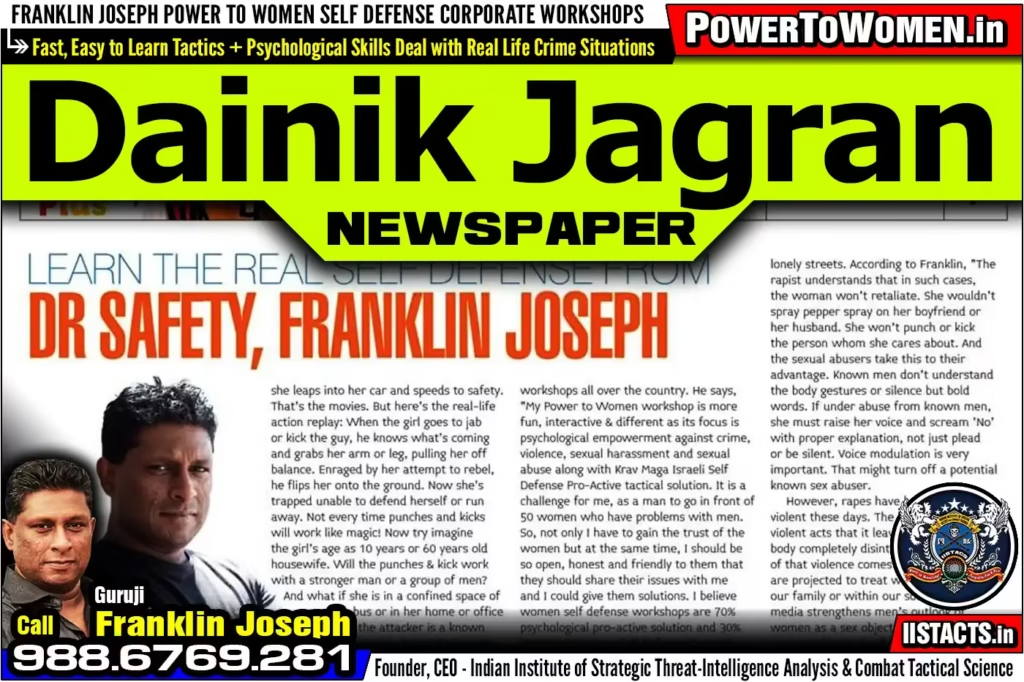
Dainik Jagran Newspaper Article ~ Learn the real self defense from Dr. Safety Franklin Joseph

The New Indian Express Newspaper Article ~ Dr Safety who empowers the psyche
Call 9886769281 for Corporate Workshops From Childhood Trauma to Safety Empowerment: Dr. Safety's Transformational Journey Guruji Franklin Joseph, Founder and CEO of the Indian Institute of Threat-Intelligence Analysis ...
Bangalore Times Newspaper Article ~ Is India really a safe place for women?

Deccan Chronical Newspaper Article ~ Krav Maga Work your mind

Times of India Newspaper Article ~ Women execs learn to defend themselves

Franklin Joseph Article > Why Corporate Self-Defence Training for Women Is Not About Fighting ~ It Is About Coming Home Safe
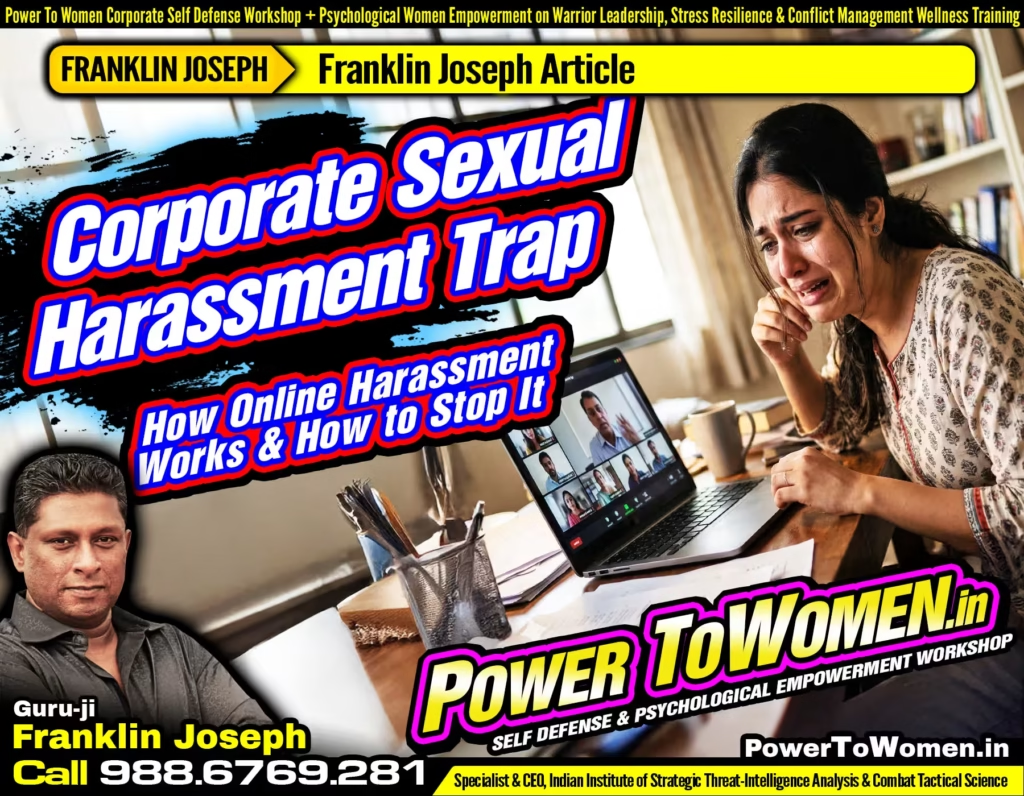
Franklin Joseph Article > Corporate Sexual Harassment During Remote Work and Hybrid Meetings ~ How Online Harassment Works and How to Stop It
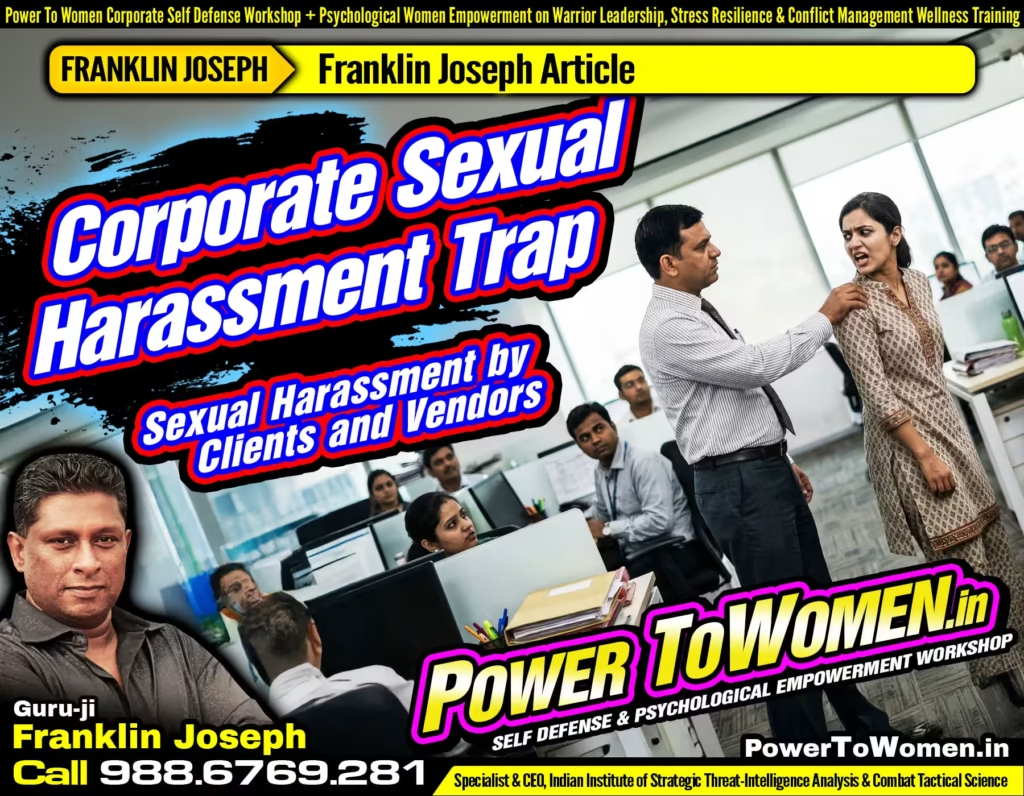
Franklin Joseph Article > Sexual Harassment by Clients and Vendors ~ Legal Rights for Indian Professionals Outside the Office
Franklin Joseph Article > Female Victims of Workplace Sexual Harassment ~ POSH Act Rights ICC Complaint Process and Recovery Strategies in India
Franklin Joseph Article > POSH Act Internal Complaints Committee Process ~ Step by Step Guide for Filing Workplace Sexual Harassment Complaints in India
Franklin Joseph Article > Bystander Intervention in Corporate Sexual Harassment ~ What Colleagues Can Do When They Witness Harassment at Work

Ms. Priyamvada Advocate – Krav Maga Self Defence Training Impact on her Solo Travel Safety ~ Professional Women’s Transformation Through Corporate Empowerment Workshop
About Specialist Franklin Joseph