




















Last updated on May 13th, 2026 at 09:13 pm
Franklin Joseph Article > Sexual Harassment and the Clothing Myth ~ Debunking Victim-Blaming Culture and Building Real Solutions
Article written by Specialist Guruji Franklin Joseph
‘Dr. Safety’, also known as Specialist Guruji Franklin Joseph, serves as CEO of the Indian Institute of Strategic Threat Intelligence Analysis and Combat Tactical Science. Safety Specialist Guruji Franklin Joseph is a Social Entrepreneur and Founder of PowerToWomen.in, specialising in corporate Krav Maga self-defence instruction combined with psychological leadership development, stress resilience coaching, and crisis management training.
Understanding the Root Problem: Are Women Merely Sexual Objects in Contemporary Society?
Through conducting Power to Women Corporate Self-Defence Workshops for Addressing Harassment Culture, we consistently encounter core societal issues regarding women’s objectification and safety. A fundamental reality exists that numerous men habitually view women as sexual objects regardless of their clothing choices. Whether women wear jeans, tops, traditional saris, or conservative burqas, pervasive male tendency toward sexual objectification persists universally. Modern media including newspapers, magazines, music videos, and cinema deliberately exploit this reality. Society increasingly accepts imagery featuring partially or fully undressed women in commercial contexts. Shoe advertisements showcasing women’s bodies, motorcycles marketed with attractive female models, contemporary music videos featuring women in minimal clothing, and widespread celebrity scandal coverage all reflect societal acceptance of female objectification as normalised commercial practice.
However, critical reality also exists that men view mothers, daughters, and loved ones through identical sexual lenses as they view strangers. This creates predictable tension regarding female modesty and clothing choices. Fathers, brothers, boyfriends, and husbands frequently attempt controlling women’s clothing as protective mechanism against male sexual attention directed toward women they care about. Whilst numerous men observe and admire, not all progress to harassment, molestation, or sexual violence.
This psychological dynamic forms cornerstone of discussions within Power to Women Corporate Self-Defence Workshops for Understanding Harassment Dynamics. These specialised women’s empowerment workshops address psychological and cultural foundations of sexual harassment rather than perpetuating harmful victim-blaming myths. By understanding actual harassment causation rooted in cultural attitudes rather than women’s appearance choices, employees develop genuine protection strategies alongside psychological resilience.
Debunking the Clothing Causation Myth: Statistical Evidence and International Comparisons
Emphasis on clothing as sexual harassment or assault causation represents fundamentally misleading narrative primarily attracting attention from individuals lacking genuine issue understanding. Statistical evidence provides no credible support suggesting women’s clothing significantly influences crime prevalence. Geographic and cultural comparisons definitively contradict clothing-causation theories.
Examining international examples reveals striking contradictions to clothing-blame narratives. Within Florida, women routinely wear bikinis and minimal clothing throughout year, yet approximately 5,000 documented sexual assaults occur annually within the state. Conversely, Afghanistan enforces strict burqa requirements covering women completely from head to toe, yet the nation experiences alarming sexual abuse and violence against women prevalence. These stark contrasts demonstrate conclusively that clothing represents negligible causation factor in sexual violence incidence.
Clothing choices certainly merit consideration regarding contextual appropriateness. Individuals of all genders should exercise judgment selecting suitable attire for specific environments and occasions. However, responsibility for determining appropriate clothing standards should rest entirely with individual women themselves, not imposed through victim-blaming rhetoric. Genuine personal knowledge regarding contextually suitable attire exists universally among women without requiring external guidance.
Personal observation suggests traditional saris frequently present more provocative visual impact than contemporary mini-skirts, yet this subjective aesthetic assessment remains irrelevant to harassment causation. Thousands of individuals maintaining outdated mindsets have increasingly resorted to physical abuse alongside verbal and psychological harassment. Individuals positioning themselves as women’s rights advocates by focusing on clothing restrictions fundamentally misunderstand perpetrator psychology. Conservative dressing mandates will not transform perpetrators possessing perverted mindsets into respectful individuals overnight. History demonstrates that meaningful social change invariably involves confronting violence and understanding that individual choices carry serious consequences.
Rather than perpetuating dangerous clothing-blame myths, Power to Women Corporate Self-Defence Workshops for Evidence Based Safety Training emphasise actual harassment causation rooted in cultural attitudes, socialisation patterns, and normalisation of female objectification. These employee safety training programmes provide females comprehensive understanding of genuine risk factors enabling intelligent risk assessment rather than false clothing-based security illusions.
Beyond the Monster Narrative: Understanding Perpetrators as Products of Normalised Culture
Read Franklin Joseph Corporate Women Empowerment / Self Defense ArticlesCall 9886769281 for Corporate WorkshopsSociety frequently characterises sexual assault perpetrators as inhuman monsters existing beyond normal societal bounds. However, genuine understanding requires recognising that perpetrators typically represent ordinary men from normal family backgrounds sharing similar psychological makeup as brothers, fathers, and community members. This uncomfortable reality demands examination of cultural factors producing normalised attitudes toward female objectification and violence.
Family environments provide crucial socialisation contexts shaping attitudes regarding women, respect, and violence. Consider typical family scenario where parents collectively watch contemporary cinema featuring item songs displaying women dancing in minimal or no clothing, male characters committing violence against female characters, or sexual assault depictions. When fathers express no objection to such content, sons receive powerful subconsciousness messaging that objectifying women and employing physical force represents acceptable behaviour. Mothers frequently remain silent, their silence itself demonstrating patriarchal power dynamics within families. The psychological impact on family daughters experiencing this normalisation process remains insufficiently understood and researched.
Young women within such environments may internalise patterns suggesting they must tolerate abuse similar to media depictions. Alternatively, women may believe achieving popularity requires conforming to objectifying beauty standards and dressing according to sexualised clothing codes presented in mass media. This complex psychological conditioning process requires much deeper research and understanding.
Extensive research examining emotional responses to violent and sexually explicit media content demonstrates alarming psychological effects. Repeated exposure to violence and sexual content produces desensitisation, reducing empathy and concern toward actual violence and sexual assault victims. Media consumption patterns increasingly result in victimisation victims being blamed as having “asked for it” rather than receiving sympathy. Research participants demonstrate reduced depression levels and increased enjoyment with repeated exposure to harmful content, suggesting normalisation of violence and sexual objectification through constant media exposure.
Power to Women Corporate Self-Defence Workshops for Addressing Cultural Roots of Harassment deliberately address these deep cultural conditioning processes. These specialised gender safety programmes combine practical self-defence capability development with psychological education regarding harassment causation, victim-blaming myths, and cultural factors normalising female objectification. Rather than victim-focused blame allocation, workplace safety training emphasises perpetrator accountability and cultural transformation necessity.
Media Influence and Desensitisation: How Normalisation Perpetuates Violence Culture
Media messaging profoundly influences societal attitudes regarding women, sexuality, and violence. Contemporary entertainment industry consistently presents female bodies as objects for male consumption, violence as entertaining spectacle, and sexual assault as consequence of female behaviour. This constant messaging gradually normalises harmful attitudes whilst simultaneously desensitising audiences toward victim suffering.
Psychological research demonstrates that sustained media violence and sexual content exposure produces measurable desensitisation effects. Viewers exposed repeatedly to such content develop diminished emotional responses to actual violence victims. Empathy and sympathy toward assault victims decreases with continued exposure, whilst perpetrator blame-shifting becomes increasingly normalised. Research participants demonstrate reduced negative emotions regarding violent content with repeated viewing, suggesting psychological adaptation to previously disturbing material.
This desensitisation process proves particularly concerning regarding sexual violence content. Media repeatedly depicting sexual assault often includes victim-blaming narratives suggesting women “asked for it” through clothing, behaviour, or location choices. Repeated exposure to such narratives produces widespread adoption of these victim-blaming frameworks within general populations. Individuals internalise cultural messages that sexual assault victims bear responsibility rather than perpetrators.
Corporate environments increasingly recognise necessity of addressing media influence and desensitisation within CSR women’s safety initiatives. Power to Women Corporate Self-Defence Workshops for Media Literacy and Attitude Change incorporate media analysis and desensitisation awareness within comprehensive employee safety training. By helping participants recognise how media messaging shapes harmful attitudes, workplace safety programmes enable conscious resistance to victim-blaming narratives and harassment normalisation.
Franklin Joseph TEDx Talk Speaker ~ Video on Combat Science
Recognized on TEDx, Specialist Franklin Joseph challenges the status quo of women’s self-defense. He shares the calculated, evidence-based structure of the Power to Women Corporate Self-Defense Workshop.
The presentation exposes the weaknesses of conventional training and champions a design rooted in criminal psychology. His comprehensive strategy merges Israeli Military Krav Maga with over 21 cognitive skills for maximum real-world effectiveness.
This shift from performative safety to skill-driven transformation has earned high praise from corporate HR and safety leaders.
Access the full presentation here: Specialist Franklin Joseph TEDx Talk on Women’s Safety
Moving Beyond Blame: Creating Cultures of Accountability and Genuine Protection
Victim-blaming represents fundamental failure preventing genuine sexual harassment and assault prevention. Focusing on women’s clothing, behaviour, or location choices whilst ignoring perpetrator accountability and cultural factors normalising violence perpetuates harmful victim-blaming culture. Real solutions require fundamentally different approaches emphasising perpetrator accountability, cultural transformation, and victim support.
Read Franklin Joseph Corporate Women Empowerment / Self Defense ArticlesCall 9886769281 for Corporate WorkshopsGenuine protection strategies must address multiple causation levels simultaneously. Individual women benefit substantially from practical self-defence capability and risk awareness development. However, individual capability development alone proves insufficient without broader cultural changes addressing objectification normalisation and perpetrator accountability. Organisations, media institutions, and government systems must collectively challenge victim-blaming narratives whilst promoting accountability cultures holding perpetrators responsible.
Power to Women Corporate Self-Defence Workshops for Accountability Focused Culture integrate individual empowerment with organisational accountability emphasis. These women’s self defence for corporates programmes teach practical threat recognition and response whilst simultaneously addressing workplace culture, bystander responsibility, and perpetrator accountability. By creating organisational environments rejecting victim-blaming and prioritising genuine protection, CSR women’s safety initiatives generate measurable harassment reduction.
Specialist training addresses media influence on attitudes, desensitisation effects, and normalised objectification. Participants develop awareness regarding how cultural messaging shapes harassment tolerance and victim-blaming adoption. This consciousness enables deliberate rejection of harmful narratives replacing them with accountability-focused perspectives.
Practical Solutions: Workplace Safety Training and Individual Empowerment
Effective harassment prevention requires integrating multiple approaches combining individual capability development with organisational and cultural transformation. Women benefit substantially from practical self-defence training providing genuine threat response capability. However, this physical capability development must accompany psychological empowerment, risk awareness, and stress resilience development.
- Comprehensive employee safety training programmes address:
- Victim-blaming myth debunking and harassment causation understanding
- Media literacy and desensitisation awareness
- Practical threat recognition and response capability
- Psychological resilience and stress management
- Workplace accountability culture development
- Perpetrator accountability emphasis
- Bystander intervention training
- Support system navigation
Power to Women Corporate Self-Defence Workshops for Comprehensive Harassment Prevention integrate all these essential elements within structured workplace safety programmes. These specialised women’s empowerment workshops combine practical Krav Maga training with psychological leadership development, stress resilience coaching, and crisis management instruction addressing complete harassment prevention spectrum.
For individuals requiring intensive personalised instruction addressing specific harassment concerns and threat scenarios, Krav Maga 1-to-1 Fast-Track Training provides customised sessions accelerating competency development whilst addressing individual psychological needs and workplace-specific safety concerns.
Conclusion: Rejecting Victim-Blaming and Building Real Harassment Prevention
Sexual harassment represents serious workplace and societal issue demanding comprehensive solutions extending far beyond victim-blaming narratives focusing on clothing and behaviour. Statistical evidence definitively contradicts clothing-causation myths, whilst media influence research demonstrates desensitisation processes normalising harassment and violence. Real solutions require addressing perpetrator accountability, cultural transformation, and genuine victim support alongside individual protection capability development.
Harassment represents fundamentally cultural and systemic problem, not inevitable consequence of women’s appearance choices. Perpetrators typically represent ordinary men socialised within cultures normalising female objectification, violence entertainment, and victim-blaming. Genuine prevention requires challenging these cultural foundations whilst simultaneously empowering individuals with practical protection capability and psychological resilience.
Contemporary organisations increasingly recognise that effective gender safety programmes must integrate individual empowerment with cultural accountability emphasis. Workplace safety training programmes combining practical self-defence with psychological development, media literacy, and perpetrator accountability messaging create measurable harassment reduction and supportive female employee protection.
Moving beyond harmful victim-blaming requires collective commitment to accountability cultures, media criticism, and genuine perpetrator consequences. Individual women benefit substantially from acquiring practical self-defence and risk awareness capability. However, sustained progress requires organisational and cultural transformation making harassment genuinely unacceptable rather than normalised.
Stop blaming clothing. Stop blaming victims. Start building accountable cultures and genuine protection systems. Contact Specialist Guruji Franklin Joseph at 9886769281 to implement comprehensive Power to Women Corporate Self-Defence Workshops for Transforming Workplace Culture addressing harassment causes rather than perpetuating victim-blaming myths. Invest in real female employee protection through evidence-based workplace safety programmes and CSR women’s safety initiatives creating genuinely supportive, accountable organisational cultures.
Corporate Self Defence Workshops ~ 'Embrace Inner Power'
Our all-encompassing strategy combines state-of-the-art Israeli Military Krav Maga self-defence methods with revolutionary psychological tactics like to help you maintain composure, assertiveness, and control whether you're negotiating a high-pressure boardroom or an unpredictable street or domestic encounter. Don't hesitate; give Specialist Franklin Joseph a call @ 9886769281 right now to learn the most important skills and become a part of the movement towards empowered life.
Connect with Specialist Guruji Franklin Joseph for
Women Emergency All State Helpline Directory Guide
PDF - Click to Download India State-Wise Women Emergency Helpline DirectoryARTICLE - Read Online Basic Corporate Self-Defense & Women Emergency Resource Guide

Corporate Workshops Clients
Other Posts & Articles

Jain International Trade Organisation (JITO) Power To Women Self Defense Workshop
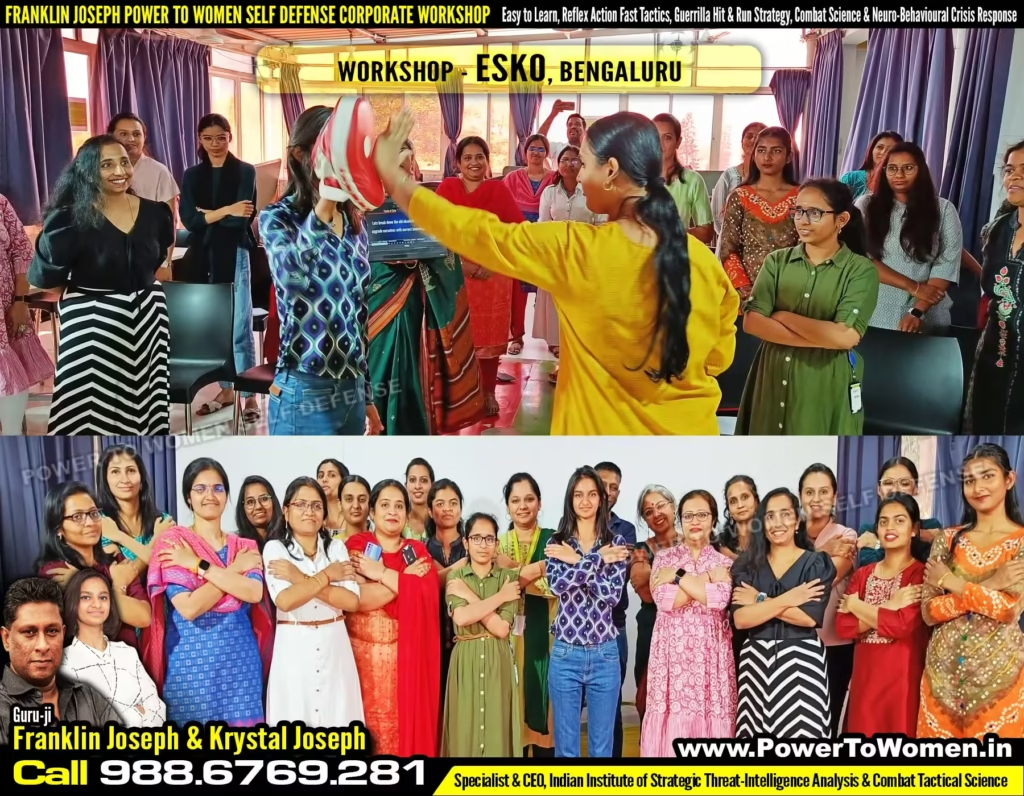
ESKO India International Women’s Day Corporate Self-Defence Workshop Bengaluru
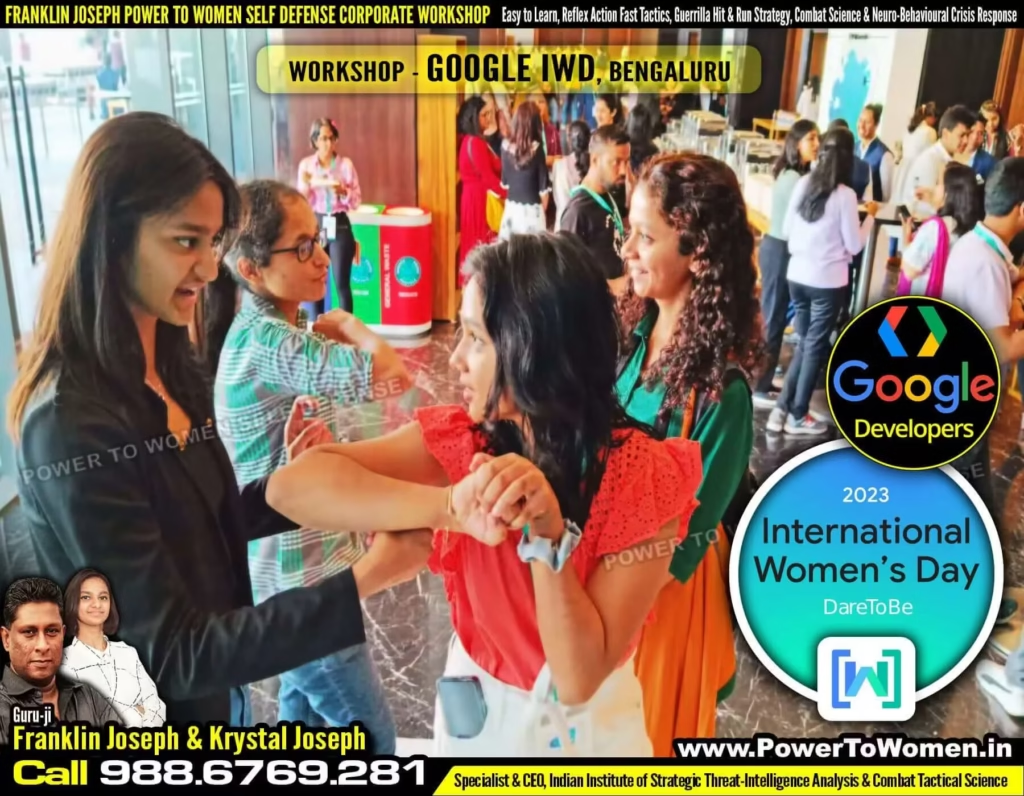
Google Women Techmakers Bengaluru ~ Power To Women Krav Maga Self-Defence and Psychological Women’s Empowerment Workshop by Franklin Joseph
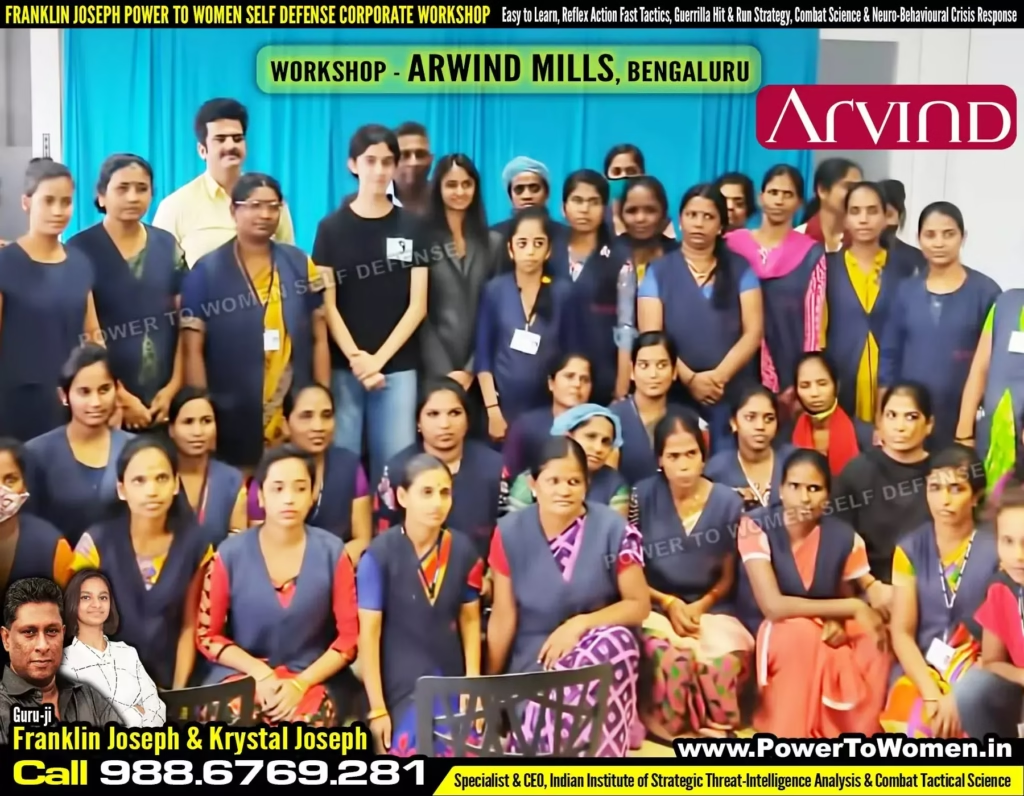
Arvind Mills Women Employee Safety Training ~ Power To Women Corporate Self-Defence Workshop Case Study
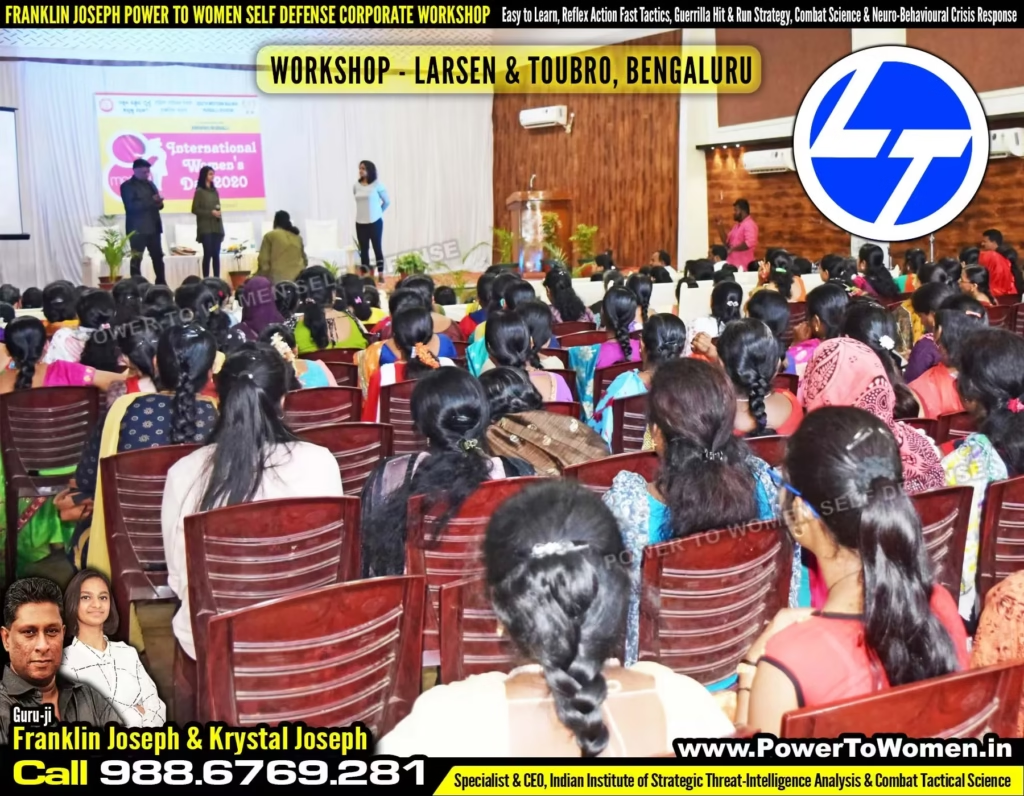
Larsen & Toubro Technology Women’s Empowerment Workshop ~ Corporate Self Defence Training Case Study Bengaluru
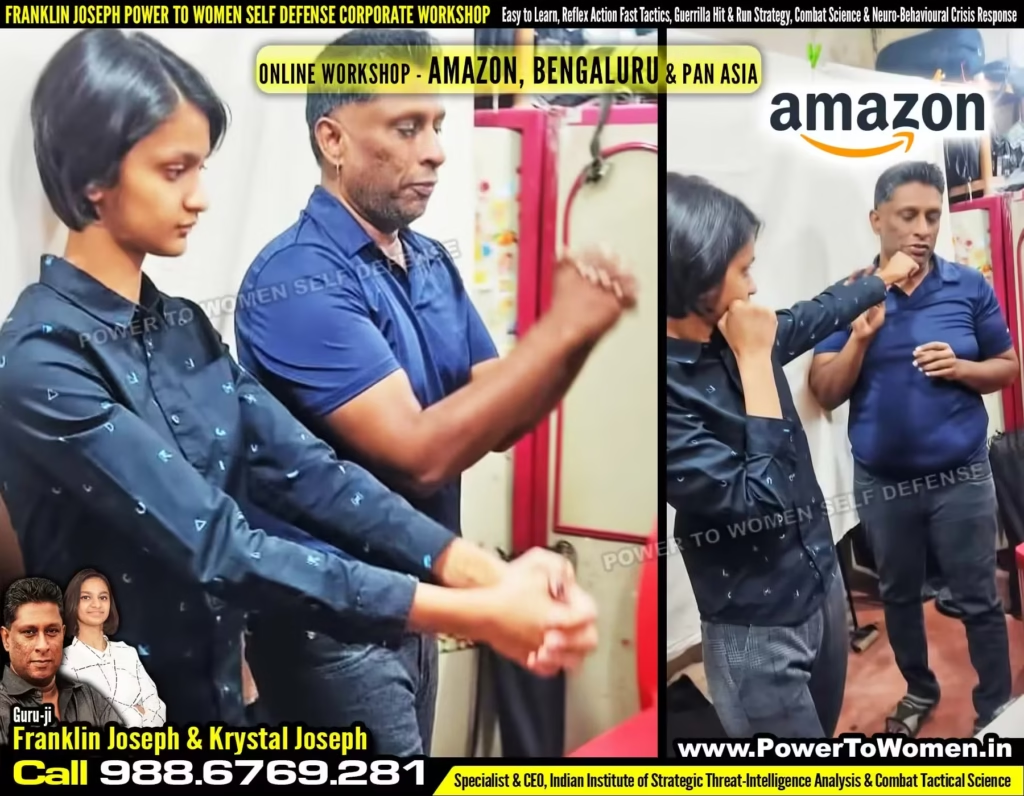
Amazon India Employee Safety Training ~ Online Corporate Women’s Empowerment Workshop Case Study Bengaluru
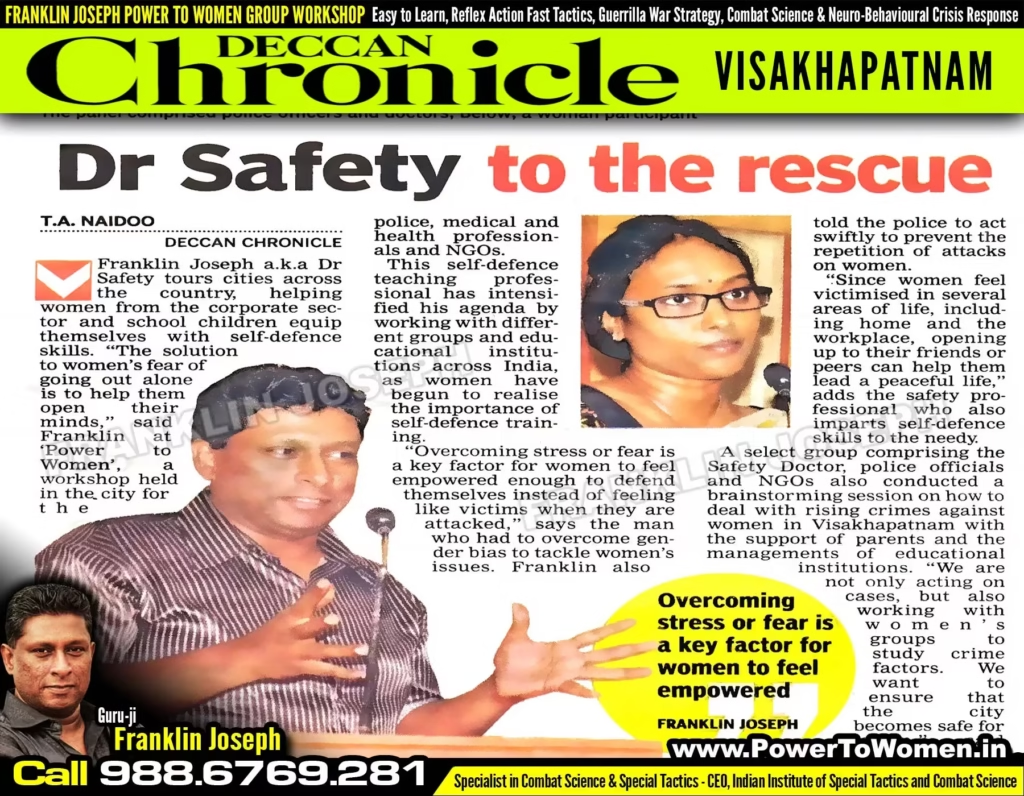
Deccan Chronicle Newspaper Article ~ Dr. Safety Franklin Joseph’s Women Empowerment Initiative Bringing Real Change to Visakhapatnam Communities

Dainik Jagran Newspaper Article ~ Learn the real self defense from Dr. Safety Franklin Joseph
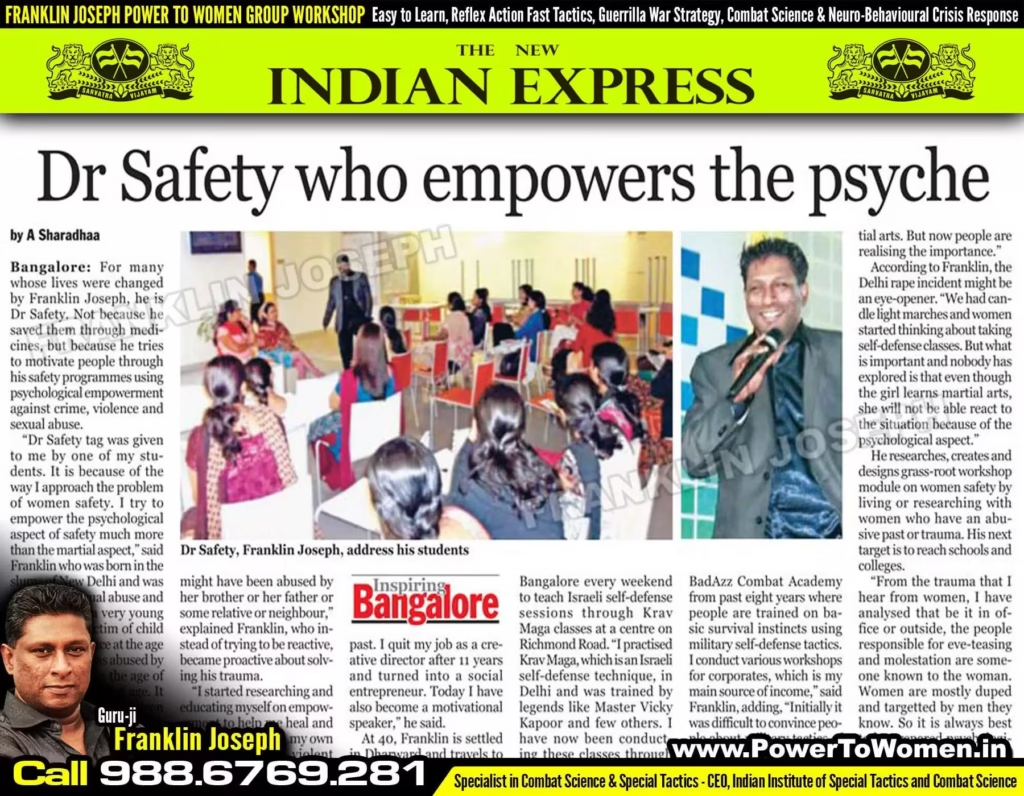
The New Indian Express Newspaper Article ~ Dr Safety who empowers the psyche
Call 9886769281 for Corporate Workshops From Childhood Trauma to Safety Empowerment: Dr. Safety's Transformational Journey Guruji Franklin Joseph, Founder and CEO of the Indian Institute of Threat-Intelligence Analysis ...
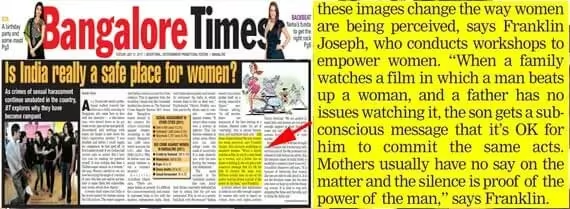
Bangalore Times Newspaper Article ~ Is India really a safe place for women?

Deccan Chronical Newspaper Article ~ Krav Maga Work your mind
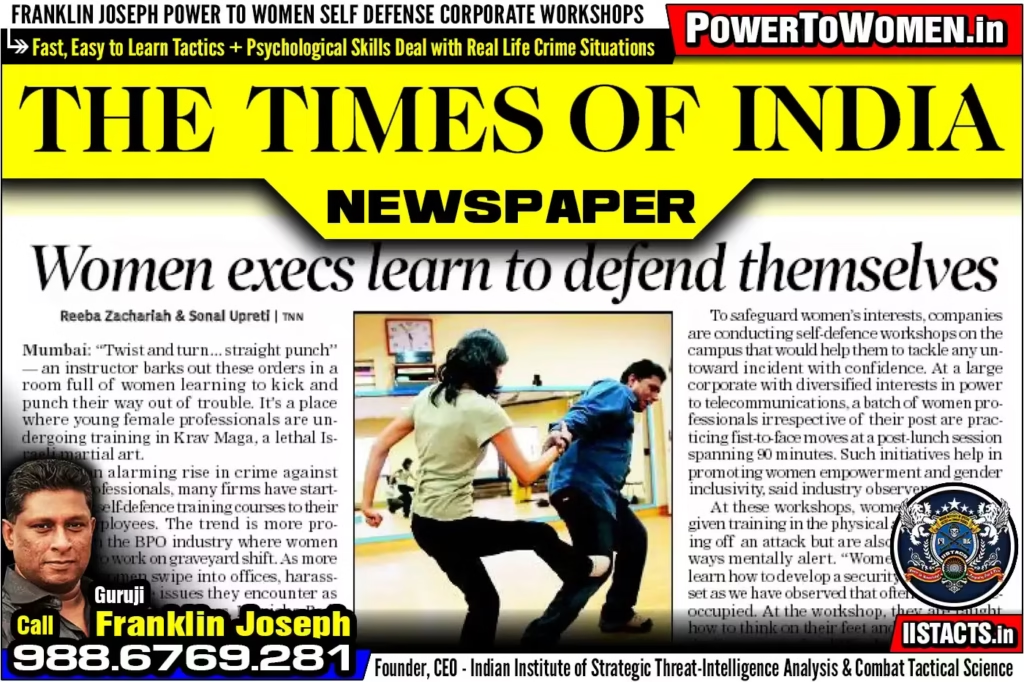
Times of India Newspaper Article ~ Women execs learn to defend themselves

Franklin Joseph Article > Why Corporate Self-Defence Training for Women Is Not About Fighting ~ It Is About Coming Home Safe

Franklin Joseph Article > Corporate Sexual Harassment During Remote Work and Hybrid Meetings ~ How Online Harassment Works and How to Stop It

Franklin Joseph Article > Sexual Harassment by Clients and Vendors ~ Legal Rights for Indian Professionals Outside the Office

Franklin Joseph Article > Female Victims of Workplace Sexual Harassment ~ POSH Act Rights ICC Complaint Process and Recovery Strategies in India

Franklin Joseph Article > POSH Act Internal Complaints Committee Process ~ Step by Step Guide for Filing Workplace Sexual Harassment Complaints in India
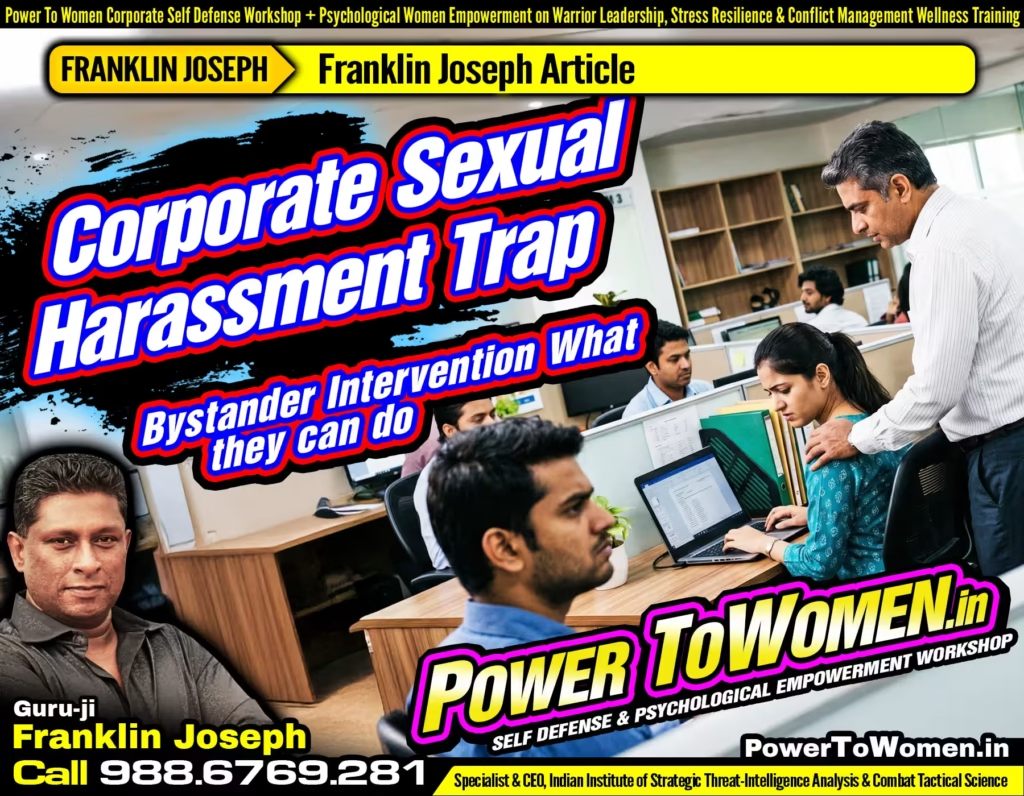
Franklin Joseph Article > Bystander Intervention in Corporate Sexual Harassment ~ What Colleagues Can Do When They Witness Harassment at Work

Ms. Priyamvada Advocate – Krav Maga Self Defence Training Impact on her Solo Travel Safety ~ Professional Women’s Transformation Through Corporate Empowerment Workshop
About Specialist Franklin Joseph