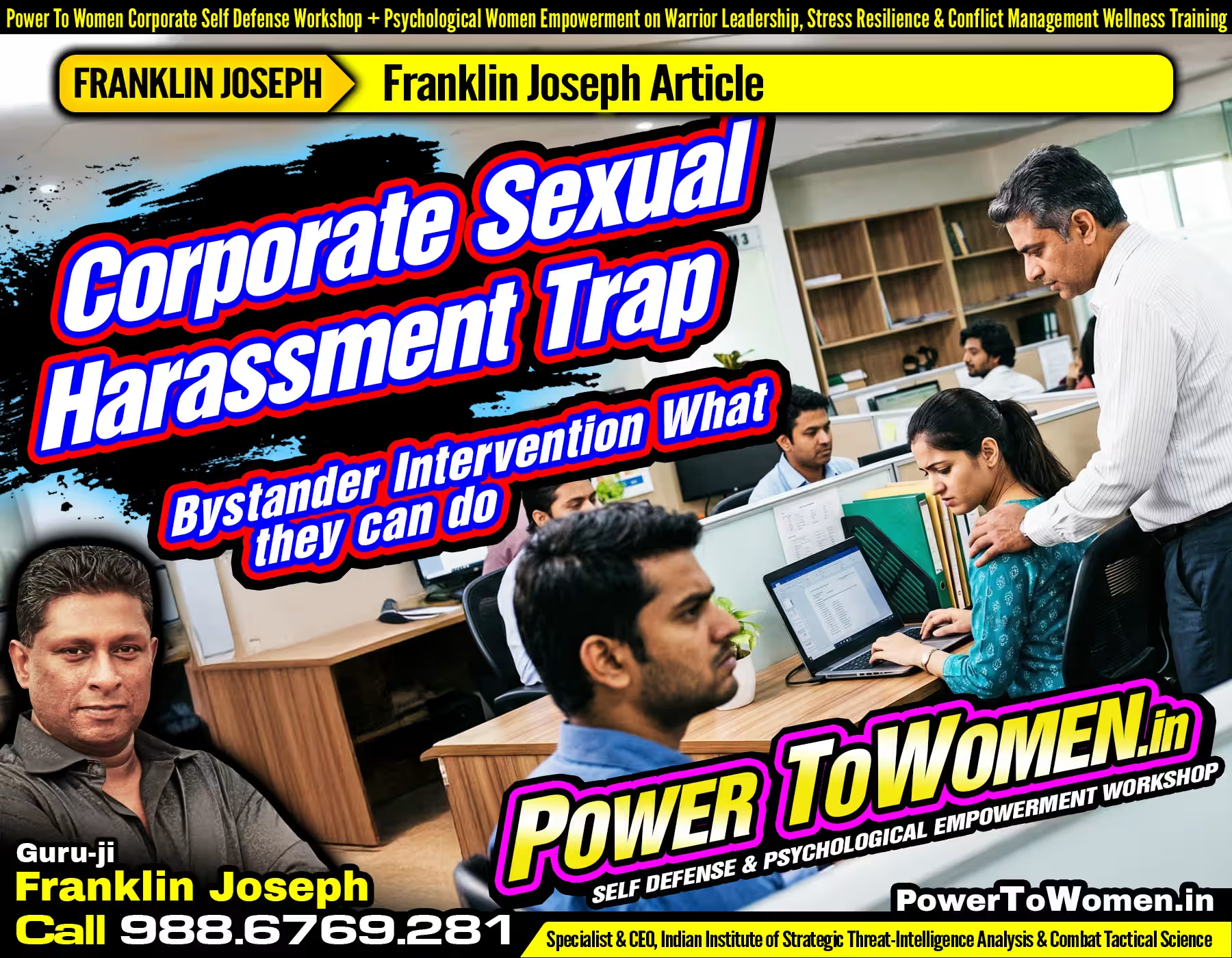




















Franklin Joseph Article > Bystander Intervention in Corporate Sexual Harassment ~ What Colleagues Can Do When They Witness Harassment at Work
By Specialist Franklin Joseph | Specialist, Power to Women Corporate Self Defence Workshop | Franklin Joseph Krav Maga Bengaluru
Practical bystander intervention strategies for colleagues who witness workplace sexual harassment. Evidence-based techniques for Indian corporate professionals who want to support victims and stop harassment cultures.
Why Bystander Intervention in Corporate Sexual Harassment Matters More Than Most People Realize
Most workplace sexual harassment does not happen in complete secrecy. It happens in offices, corridors, meeting rooms, and work events where other people are present, nearby, or aware. Colleagues witness uncomfortable comments. They see someone being isolated repeatedly. They hear rumors about a senior leader’s behavior. They watch a junior employee become increasingly withdrawn after one-on-one meetings with a particular manager.
Most of them do nothing.
Not because they are indifferent. Not because they approve. But because they do not know what to do, they are afraid of the professional consequences of getting involved, or they have convinced themselves that it is not their place to intervene.
This silence is the harasser’s most important resource. It signals that the workplace has no real consequences for their behavior. It tells the victim that no one sees what is happening, or that no one cares enough to act. It allows harassment cultures to persist for years.
Bystander intervention changes this equation. When colleagues know how to intervene safely and effectively, harassment loses its oxygen. The culture shifts from complicit silence to active accountability.
“The harasser depends on two silences: the victim’s and everyone else’s. When colleagues learn to break their silence safely and strategically, the entire harassment dynamic changes.”
Specialist Franklin Joseph, Power To Women Corporate Workshop, Bengaluru
What Bystanders Actually See: Recognizing Harassment When You Witness It
Direct Witnessing: Obvious Harassment in Plain Sight
Direct witnessing occurs when you are physically present and observe harassment happening in real time. Examples include:
- A senior colleague making explicit sexual comments to a junior employee in a meeting
- A manager touching a subordinate in a way that makes the subordinate visibly uncomfortable
- A colleague repeatedly invading another person’s personal space despite visible discomfort
- Someone making degrading comments about a colleague’s gender, appearance, or sexual behavior
- A superior pressuring a subordinate to attend a private social event despite repeated refusals
Indirect Witnessing: Pattern Recognition Over Time
Indirect witnessing occurs when you observe the pattern of harassment rather than a single incident. Examples include:
- Noticing that a specific manager always finds reasons to be alone with a specific junior employee
- Observing that a colleague becomes visibly distressed after every interaction with a specific senior person
- Hearing from multiple sources about a particular individual’s behavior toward subordinates
- Noticing that a colleague has stopped speaking up in meetings, changed their route through the office, or begun arriving and leaving at unusual times to avoid someone
- Witnessing the aftermath of harassment: a colleague who is visibly shaken, tearful, or withdrawn after a private meeting
Witnessing Retaliation
Sometimes bystanders witness not the harassment itself but the retaliation that follows a victim’s report. Examples include:
- A colleague who recently reported harassment being suddenly excluded from important projects
- A victim being given negative performance reviews immediately after filing a complaint
- A reporting victim being mocked, socially isolated, or publicly discredited by colleagues or management
- A victim being transferred to a less desirable role after reporting
Witnessing retaliation is as important as witnessing the original harassment. Retaliation is illegal and witnessing it makes you a potential witness for the victim’s legal case.
Bystander Intervention Method 1: The Direct Approach
What the Direct Approach Involves
The direct approach involves naming what you observe directly and calmly in the moment. This is the most powerful form of bystander intervention because it disrupts the harassment in real time and signals to both the harasser and the victim that a witness is present and paying attention.
When to Use the Direct Approach
Use the direct approach when:
- You witness explicit harassment (a sexually explicit comment, unwanted physical contact, or overt threat)
- You are confident that speaking up will not create physical danger for you or the victim
- The harasser and victim are both present and the incident is ongoing
- You have professional standing to speak without being immediately dismissed
What the Direct Approach Sounds Like
Direct approach does not mean aggressive confrontation. It means calm, clear, professional naming of what you observed. Examples:
- “That comment was not appropriate. Let’s keep this meeting professional.”
- “[Victim’s name], are you okay? [To harasser]: That contact looked unwanted. Please give them space.”
- “I just heard what you said. That is not acceptable here. We need to keep this workplace respectful.”
- “[To the victim, in front of the harasser]: Do you need to step out? I will come with you.”
The goal of the direct approach is not to start an argument with the harasser. It is to name the behavior, signal witness presence, and give the victim an immediate exit or support option.
What to Do After Direct Intervention
After you intervene directly, follow up with the victim privately. “I saw what happened. Are you okay? Do you want to talk? Do you need help documenting this?” This follow-up is as important as the intervention itself. It tells the victim they are not alone and that what they experienced was real and witnessed.
Document what you witnessed as soon as possible after the incident: date, time, location, exact words, who was present, and what you observed. Your witness documentation may be critical if the victim later files a complaint.
Bystander Intervention Method 2: The Distraction Approach
What the Distraction Approach Involves
The distraction approach involves creating an interruption that breaks the harassment dynamic without directly naming or confronting the harasser. This is a lower-risk intervention strategy useful in situations where direct confrontation might escalate the situation or create professional consequences for the bystander or victim.
When to Use the Distraction Approach
Use the distraction approach when:
- Direct confrontation might put you or the victim at professional risk
- The harasser is significantly more senior than both you and the victim
- You are not certain what you witnessed qualifies as harassment but want to disrupt it anyway
- The victim appears to need a way out of the situation but not necessarily a direct witness statement
What the Distraction Approach Looks Like
- Walk up to the group and ask the victim a completely unrelated question: “Hey [name], can I get your input on something? Sorry to interrupt.” This gives the victim an immediate exit.
- Pretend you need the victim urgently elsewhere: “There’s a call waiting for you. Come with me.”
- Create a reason for the harasser to leave the situation: “The meeting is starting. Everyone needs to head to the conference room.”
- Start a group conversation that forces the interaction to become public and group-focused, removing the private dynamic the harasser was creating.
Following Up After Distraction
After using the distraction approach, follow up with the victim privately. Let them know you noticed what was happening and offer support. “I saw what was going on. Are you alright? Do you need anything?” Give the victim the choice of whether to disclose further or not.
Hire Specialist Franklin Joseph: Power To Women Corporate Self Defense Workshop for Bystander Training
Bystander intervention is a skill. Like any skill, it requires training to perform under pressure. Specialist Franklin Joseph’s Power To Women Corporate Self Defense Workshop trains entire teams, not just potential victims, to recognize harassment and intervene effectively.
What the Corporate Workshop Covers for Bystander Training:
- Tactic 1: Pre-Crime Indicator Recognition – Train your team to identify harassment patterns before single incidents escalate. Learn to read the behavioral signals that indicate a harassment dynamic is developing.
- Tactic 2: Verbal Intervention and De-Escalation – Practice the exact language of direct and distraction intervention. Develop confidence to speak up in the moment without escalating conflict or creating professional risk.
- Tactic 3: Witness Documentation and Evidence Support – Learn how to document what you witness so your observation becomes useful evidence if the victim files a complaint. Understand your role as a supporting witness in an investigation.
- Tactic 4: Creating an Accountable Team Culture – Develop team norms that make harassment harder to sustain. Build the shared language and mutual accountability that changes a workplace culture from complicit to protective.
Also Available: Krav Maga 1:1 Fast-Track Coaching for Individual Professionals
For individuals who want personal safety training beyond group bystander skills, Specialist Franklin Joseph offers 4-Hour 1:1 Krav Maga Fast-Track Coaching. This personal coaching session covers 4 core tactics:
- Tactic 1: Boundary Recognition and Verbal Confidence
- Tactic 2: Personal Space Control and Physical Awareness
- Tactic 3: Safe Escape and Distance Creation
- Tactic 4: Evidence Building and Psychological Resilience
This fast-track is available for individuals who want one-on-one attention tailored to their specific workplace situation and personal safety needs.
Contact Specialist Franklin Joseph:
Call or WhatsApp: 9886769281
Read Franklin Joseph Corporate Women Empowerment / Self Defense ArticlesCall 9886769281 for Corporate WorkshopsWebsite: PowerToWomen.in
Locations: Bengaluru, Dharwad, Hubballi, Mysuru, Chennai, Hyderabad, Mumbai, Delhi, Pune, Goa, and across India on request.
Bystander Intervention Method 3: The Delegate Approach
What the Delegate Approach Involves
The delegate approach involves reporting what you witnessed to someone with authority to act: HR, a senior leader, the ICC, or another trusted figure. This is not the same as gossiping or spreading rumors. It is a deliberate, documented report from a witness who observed concerning behavior.
When to Use the Delegate Approach
Use the delegate approach when:
- Direct or distraction intervention is not possible or safe
- You have witnessed a pattern of behavior over time rather than a single incident
- You are in a very junior position relative to the harasser and direct intervention would put you at significant professional risk
- The victim has already asked you to support them by reporting what you witnessed
- You witnessed retaliation following a victim’s complaint
How to Report as a Witness
When you report as a witness, be specific. Do not report general concerns or vague impressions. Report what you actually observed: specific dates, times, locations, exact words if you remember them, and the behavior you witnessed. Send your report in writing so there is a timestamped record.
“I am writing to report something I personally witnessed on [date] at approximately [time] in [location]. I observed [specific description of what happened]. I am reporting this because I believe the behavior I witnessed may constitute harassment. I am available to discuss this further as part of any investigation.”
This written report is far more useful to an investigator than a verbal secondhand account. It creates a record. It names you as a witness willing to cooperate. It provides specific facts the investigator can follow up on.
What to Do If You Are Asked to Be a Witness in an ICC or Legal Investigation
If the victim files a POSH complaint or civil lawsuit and you are contacted as a witness, cooperate fully with the investigation. Provide the documentation you maintained. Be truthful and specific in your account. Do not minimize what you witnessed to protect colleagues or avoid conflict.
Being a witness in a harassment investigation can feel uncomfortable. But your testimony may be the corroborating evidence that allows a victim to be believed. Your discomfort is temporary. The victim’s experience is not.
Bystander Intervention Method 4: Support the Victim After the Incident
Why Post-Incident Support Is a Form of Intervention
Bystander intervention is not only about stopping harassment in the moment. It is also about supporting the victim in the aftermath. Many victims are most in need of support not during the incident but in the hours, days, and weeks after it, when they are processing what happened and deciding whether to report.
What Effective Post-Incident Support Looks Like
- Check in with the victim privately and without pressure. “I noticed something seemed off after your meeting with [person]. Are you okay? You do not have to tell me anything, but I am here if you want to talk.”
- Believe them without requiring proof. A victim who chooses to disclose to you does not need to justify or prove their experience to receive your support.
- Do not advise them on what to do unless they ask. Saying “You should report it” or “It’s probably not a big deal” imposes your judgment on their decision. Ask instead: “Is there anything I can do to help?”
- Offer to help with documentation. “I witnessed [specific incident]. Would it be helpful if I wrote down what I saw in case you need it later?”
- Keep their disclosure confidential unless they ask you to share it or unless you are legally required to report.
- Follow up over time. Recovery from harassment is not a single conversation. Check in periodically without pressuring them to take action.
What Not to Do as a Supporting Bystander
- Do not share what the victim tells you with colleagues without their permission
- Do not confront the harasser on the victim’s behalf without the victim’s knowledge and agreement
- Do not minimize the harassment (“Maybe they did not mean it that way”)
- Do not pressure the victim to report if they have decided not to
- Do not promise outcomes you cannot guarantee (“HR will definitely take this seriously”)
Why Bystanders Do Not Intervene: Overcoming the Barriers
Barrier 1: The Bystander Effect
The bystander effect is a well-documented psychological phenomenon in which individuals are less likely to offer help when others are present. In corporate settings, this manifests as everyone assuming that someone else will handle the situation. “HR knows about this. Someone must have reported it. It is not my place.”
The antidote to the bystander effect is personal responsibility. Tell yourself specifically: “If I do not act, no one might. I am a witness. This is my responsibility.”
Barrier 2: Fear of Professional Consequences
Read Franklin Joseph Corporate Women Empowerment / Self Defense ArticlesCall 9886769281 for Corporate WorkshopsMany bystanders fear that intervening will mark them as difficult, as someone who “creates problems,” or as someone who is not a team player. They fear being associated with the harassment complaint and experiencing professional consequences for speaking up.
This fear is not irrational. Intervening in workplace harassment can create professional friction. But the professional friction of speaking up is almost always less damaging than the professional and human cost of staying silent while a colleague is harmed. And increasingly, organizations that value culture and compliance are recognizing bystander reporting as positive leadership behavior, not problematic interference.
Barrier 3: Uncertainty About What You Witnessed
Many bystanders hesitate because they are not certain what they witnessed qualifies as harassment. “Maybe that comment was a joke. Maybe the touch was accidental. Maybe I am reading too much into it.”
This uncertainty is often valid. Not every uncomfortable interaction is harassment. But the distraction approach allows you to intervene without making an accusation. You are not saying “that was harassment.” You are saying “I noticed something and I am checking in.” That is always appropriate regardless of whether what you witnessed was definitively harassment.
Barrier 4: Not Knowing What to Say or Do
Many bystanders want to intervene but freeze because they do not know the right words or actions. This is exactly the gap that bystander intervention training fills. When you have practiced specific language and specific actions before you need them, you can deploy them under pressure without freezing.
Bystander Intervention and Indian Corporate Culture
Hierarchy and Its Effect on Bystander Behavior
Indian corporate culture operates within significant hierarchical structures. Junior employees rarely challenge senior ones, even when they witness behavior that is clearly inappropriate. The cultural norm of deference to seniority makes bystander intervention particularly difficult in Indian workplaces.
However, hierarchy is not an excuse for silence. It is a context that shapes how intervention should be delivered. In highly hierarchical settings, the distraction approach and the delegate approach are often more practical than the direct approach. If you cannot directly challenge a senior harasser, you can still offer the victim an exit, document what you witnessed, and report to someone at your level or above who has the authority to act.
Gender Dynamics and Male Bystanders
Male colleagues are particularly important bystanders in corporate sexual harassment situations. Research consistently shows that harassment cultures are sustained by male bystander silence more than any other factor. When male colleagues normalize inappropriate comments, laugh at sexual jokes at a colleague’s expense, or look away from unwanted physical contact, they signal to the harasser that his behavior is acceptable.
When male colleagues speak up, the signal is equally powerful. A senior male colleague saying “That comment is not appropriate” or “Leave her alone” to a harassing peer sends a message that the harasser’s network will not protect him. This disrupts the social permission that harassment cultures depend on.
Supporting Colleagues Across Gender Lines
If you are a male colleague supporting a female victim, be careful not to make the support about you or your role as a protector. Ask the victim what they need. Follow their lead. Your role is to support their agency, not to replace it with your own. Effective male bystander support looks like: “I saw what happened. What do you need from me?” Not: “I will take care of this for you.”
What Organizations Can Do to Support Bystander Intervention
Organizational Bystander Support Structures
Bystander intervention is more effective when organizations create structures that make it easier and safer to report. These structures include:
- Anonymous reporting mechanisms that allow witnesses to report without identifying themselves
- Explicit policies protecting witnesses from retaliation for reporting harassment they observed
- Clear communication about what witnessing behavior should be reported and to whom
- Regular bystander intervention training for all employees, not just management
- Public acknowledgment that bystander reporting is valued and protected
HR and Leadership as Bystanders
HR leaders and senior managers are often the most important bystanders in an organization. When they witness inappropriate behavior and say nothing, they signal institutional acceptance. When they name what they see and act on it, they signal that harassment has consequences.
Read Franklin Joseph Corporate Women Empowerment / Self Defense ArticlesCall 9886769281 for Corporate WorkshopsIf you are in HR or leadership and you witness a colleague being harassed, you have additional responsibility: not only to intervene immediately but to document what you witnessed and to initiate an investigation if necessary. Your seniority means your bystander action carries institutional weight.
Hire Specialist Franklin Joseph: Corporate Bystander Training and Individual Krav Maga Coaching
Both corporate teams and individual professionals benefit from specialist training on harassment intervention. Specialist Franklin Joseph offers two distinct programs to meet your specific needs.
Power To Women Corporate Self Defense Workshop for Teams:
Trusted by Fortune 500 companies including Google, Amazon, Goldman Sachs, and DRDO. Rated 4.9 stars from 200+ verified reviews. This workshop trains entire teams to recognize, interrupt, and report workplace harassment.
Contact for Corporate Booking:
Call or WhatsApp: 9886769281
Website: PowerToWomen.in
Krav Maga 1:1 Fast-Track Coaching for Individuals:
A focused 4-hour personal coaching session with Specialist Franklin Joseph. Designed for individuals who want personal safety confidence beyond group training. Four core tactics covered:
- Tactic 1: Boundary Recognition and Verbal Confidence in Real Workplace Situations
- Tactic 2: Physical Awareness and Personal Space Defense
- Tactic 3: Safe Escape and Distance Creation Without Escalation
- Tactic 4: Evidence Documentation and Psychological Resilience Under Pressure
Contact for Individual 1:1 Coaching:
Call or WhatsApp: 9886769281
Website: PowerToWomen.in
Locations: Bengaluru and across India on request.
Whether you are training a team or protecting yourself, Specialist Franklin Joseph delivers knowledge that changes outcomes.
Bystander Intervention Legal Considerations in India
Are Bystanders Legally Required to Report Harassment in India?
Under the POSH Act, there is no explicit legal requirement for bystanders to report harassment they witness. However, there are important legal considerations:
- If you are an ICC member or HR professional and you witness harassment, you have institutional responsibilities to act under the POSH framework.
- If you witness harassment and choose not to report it, and the victim subsequently suffers further harm, there may be situations where your inaction contributes to the organization’s liability.
- If you are contacted as a witness during an ICC investigation or civil lawsuit and you lie or withhold information, you may face legal consequences for obstructing investigation.
Witness Protection
If you report harassment you witnessed and face retaliation for doing so, that retaliation is illegal under Indian labor law. Document any retaliation against you as a witness immediately and consult an employment lawyer about your options.
Confidentiality as a Witness
If you are asked to participate in an ICC investigation as a witness, the ICC is required to maintain confidentiality of the process. Your identity as a witness should be protected to the extent the investigation allows.
Quick Reference: Bystander Intervention Checklist
In the Moment
- Assess whether direct or distraction approach is safer in this situation
- Use direct approach: name the behavior calmly and professionally
- Use distraction approach: create an interruption that gives the victim an exit
- Make eye contact with the victim to signal you see what is happening
Immediately After
- Check in with the victim privately
- Document what you witnessed: date, time, location, words, behavior
- Ask the victim what they need from you
- Offer to support their documentation if they want it
If You Cannot Intervene Directly
- Use the delegate approach: report to HR or ICC in writing
- Document what you witnessed for future use as evidence
- Follow up with the victim to offer support
- Continue to monitor and document the situation
Over Time
- Keep following up with the victim without pressure
- Cooperate fully if asked to participate in an investigation
- Speak up if you witness retaliation against the victim
- Advocate for organizational bystander training and anonymous reporting systems
Key Takeaways: Bystander Intervention in Corporate Sexual Harassment
- Most workplace harassment occurs in the presence of witnesses. Bystander silence sustains harassment cultures.
- Direct approach: name the behavior calmly and professionally in the moment.
- Distraction approach: create an interruption that gives the victim an exit without confronting the harasser directly.
- Delegate approach: report what you witnessed to HR or ICC in writing.
- Post-incident support: check in with the victim, offer documentation help, follow their lead.
- Document what you witnessed from the moment you observe it. Your witness account may be critical evidence.
- Indian hierarchical culture shapes how intervention should be delivered but does not excuse silence.
- Male bystanders have particular power to disrupt harassment cultures by refusing to normalize inappropriate behavior.
- Organizations must create structures that make bystander reporting safe and valued.
Related Articles in This Series
- 3 Ways to Avoid Corporate Sexual Harassment at Work: Prevention Guide for Indian Professionals
- 3 Ways to Exit Corporate Sexual Harassment: Evidence-Based Recovery Guide for Workplace Victims
- Male Victims of Workplace Sexual Harassment: Legal Rights, Recovery Strategies, and Civil Action in India
- Racial Harassment Combined With Sexual Coercion: Compound Trauma, Legal Recognition, and Documentation Strategy
- POSH Act Internal Complaints Committee Process: Step by Step Guide for Filing Workplace Sexual Harassment Complaints
- Sexual Harassment by Clients and Vendors: Legal Rights for Indian Professionals Outside the Office
- Corporate Sexual Harassment During Remote Work and Hybrid Meetings: How Online Harassment Works and How to Stop It
Corporate Self Defence Workshops ~ 'Embrace Inner Power'
Our all-encompassing strategy combines state-of-the-art Israeli Military Krav Maga self-defence methods with revolutionary psychological tactics like to help you maintain composure, assertiveness, and control whether you're negotiating a high-pressure boardroom or an unpredictable street or domestic encounter. Don't hesitate; give Specialist Franklin Joseph a call @ 9886769281 right now to learn the most important skills and become a part of the movement towards empowered life.
Connect with Specialist Guruji Franklin Joseph for
Women Emergency All State Helpline Directory Guide
PDF - Click to Download India State-Wise Women Emergency Helpline DirectoryARTICLE - Read Online Basic Corporate Self-Defense & Women Emergency Resource Guide

Corporate Workshops Clients
Other Posts & Articles

Ms. Priyamvada Advocate – Krav Maga Self Defence Training Impact on her Solo Travel Safety ~ Professional Women’s Transformation Through Corporate Empowerment Workshop
About Specialist Franklin Joseph