



















Last updated on February 25th, 2026 at 01:14 pm
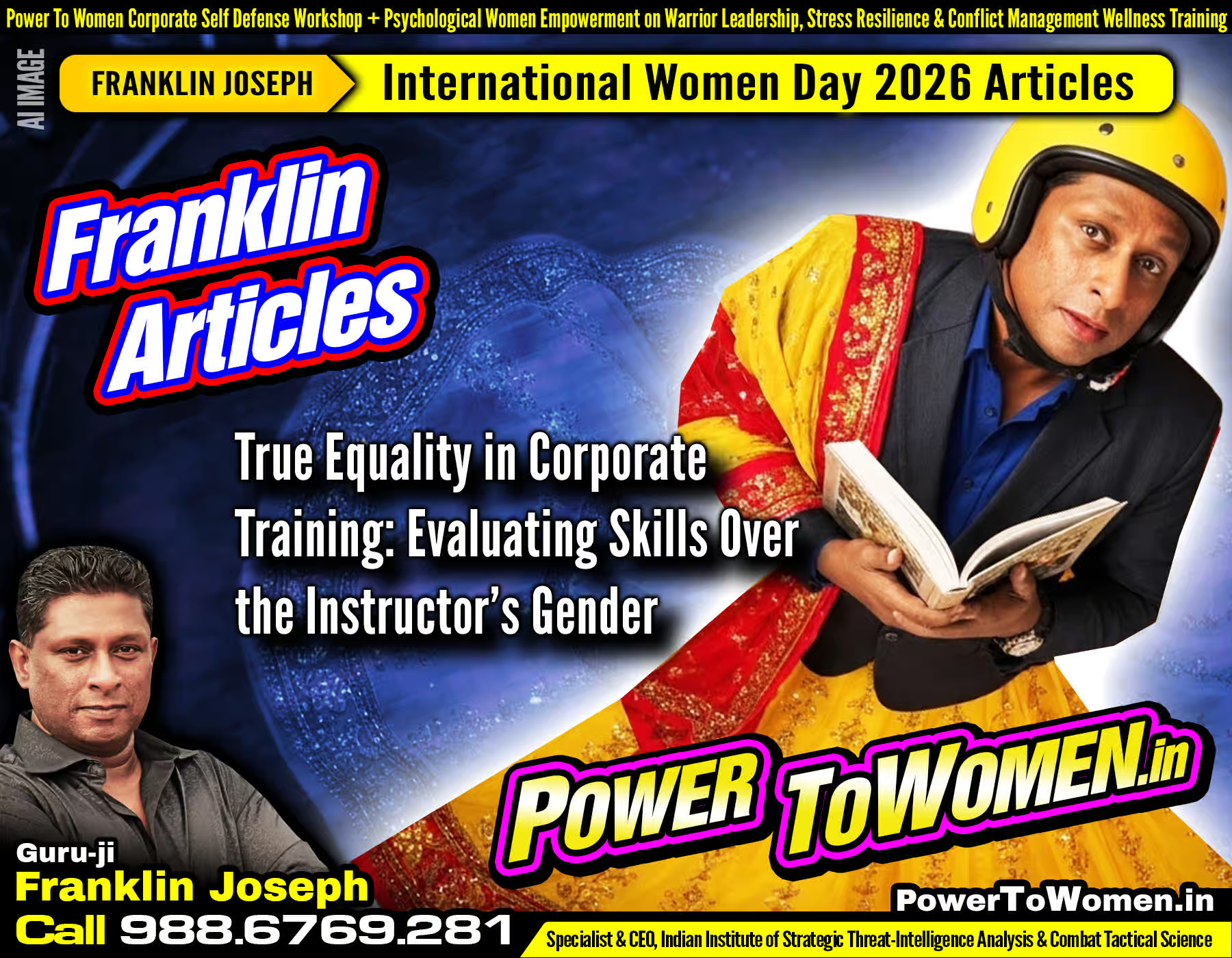
How to Hire a Corporate Self-Defense Expert Without Violating Your DEI Policy
By Specialist Franklin Joseph | Power to Women Corporate Self-Defense Workshop
Why DEI Compliance Extends to Training Vendor Selection
Every year, I see more corporates investing in Diversity, Equity, and Inclusion. DEI committees are formed. Policies are drafted. Town halls are conducted. And rightly so. These efforts matter.
But here is something that often goes unnoticed. The very same companies that have robust DEI policies sometimes send out vendor requirement emails that read something like this: “We are looking for a female self-defense instructor for our women employees.”
On the surface, this looks thoughtful. It looks like the company cares about the comfort of its women employees. And I have no doubt that the intention behind it is genuine.
But let us take a step back and look at this through the lens of your own DEI policy. Because if your policy says you do not discriminate based on gender in hiring, that principle should extend to how you engage trainers, consultants, and service providers as well. Otherwise, the policy has a blind spot. And blind spots, however well-intentioned, can become liabilities.
Indian Laws Governing Gender-Neutral Professional Engagement
This is not about creating fear. It is about creating awareness. Let us look at the legal landscape together, because informed decisions are always better decisions.
Constitutional Provisions for Equality in Professional Services
- Article 14 guarantees equality before law for every person.
- Article 15(1) prohibits discrimination on grounds of sex. While originally directed at state action, Indian courts have extended its spirit to private entities, especially in employment and service engagement.
- Article 16(1) and 16(2) guarantee equality of opportunity in employment and prohibit discrimination on the ground of sex.
Employment Laws Prohibiting Gender-Based Discrimination
Equal Remuneration Act, 1976 (Section 5): This Act prohibits discrimination in recruitment for the same work or work of a similar nature. The principle is straightforward: competence determines suitability, not gender.
Code on Wages, 2019 (Section 3): The Code reinforces the prohibition of gender-based discrimination. While it specifically addresses wages, its philosophy extends to conditions of engagement and procurement.
POSH Act Requirements for Workplace Safety Training
Here is something many HR teams overlook. The POSH Act mandates that employers organise awareness and training programs for workplace safety. However, the Act does not specify that such training must be delivered by a person of any particular gender. The emphasis is on quality, relevance, and effectiveness of the program. Not on the gender of the facilitator.
In fact, the POSH Act is fundamentally about eliminating gender-based bias and stereotyping. Requiring a female-only trainer could, ironically, reinforce the very stereotypes the Act seeks to dismantle.
Understanding Bona Fide Occupational Qualification in Training
Read Franklin Joseph Corporate Women Empowerment / Self Defense ArticlesCall 9886769281 for Corporate WorkshopsIn employment law, there is a recognised concept called Bona Fide Occupational Qualification, or BFOQ. This allows gender to be specified as a requirement only when it is genuinely essential to the nature of the work. For example, a female attendant for a women’s changing room, or an actor required for a gender-specific role.
Self-defense instruction does not fall into this category. Teaching crime awareness, situational response, and personal safety requires knowledge, skill, and experience. None of these are determined by gender.
SEBI Corporate Governance Guidelines on Vendor Selection
Under the Companies Act, 2013 and SEBI’s corporate governance guidelines, companies are expected to uphold fairness, transparency, and non-discrimination. Many companies also have internal procurement policies that mirror these principles. Specifying the gender of a service provider, when the service has no inherent gender requirement, could be inconsistent with these standards.
International Conventions on Gender Equality in Professional Services
- ILO Convention No. 111, ratified by India, prohibits any distinction or exclusion based on sex that impairs equality of opportunity.
- CEDAW, also ratified by India, aims to eliminate gender stereotyping. Insisting on a female instructor because “women feel more comfortable with women” is itself a form of stereotyping.
- UN Sustainable Development Goal 5 calls for gender equality and the empowerment of all women. Empowerment is about building strength, not reinforcing comfort zones.
Why Physical Tricks Alone Cannot Prepare Women for Real Crime Situations
Most people assume that self-defense training is simply about learning a few physical tricks or techniques. This common misconception leads many organisations to believe that a female instructor would naturally teach women better because women would feel more comfortable practising these moves with another woman.
However, this thinking fundamentally misunderstands how crime actually works and what effective self-defense truly requires.
The majority of these physical techniques focus on reaction-based tactics. This means they only come into play after a crime has already started. When you consider the significant differences in size, strength, and physical capability between most attackers and targets, relying solely on reactive physical techniques places women on an extremely difficult path once an attack is already underway.
Crime is rarely spontaneous or random. Most criminal acts are planned in advance. This means criminals carefully select their target location and environment, develop their method of approach and attack, choose their weapons or tools, coordinate with accomplices if involved, and time their actions for maximum advantage. Therefore, an instructor’s knowledge must extend far beyond martial arts techniques or self-defense tricks. The instructor must possess deep understanding of criminal psychology, pre-crime indicators, environmental assessment, threat behaviour patterns, and the complete lifecycle of how crimes develop and unfold.
Effective women’s safety training is not just about learning physical responses. It is scientifically designed to focus on four critical phases: preventing crime before it develops by recognising warning signs early, avoiding dangerous situations through heightened awareness, diffusing threatening encounters through psychological and verbal strategies, and escaping harmful situations efficiently when prevention and avoidance fail.
The Science Behind Israeli Krav Maga and Psychological Self-Defense Training
The Power to Women Corporate Self-Defense Workshop was created by merging two powerful disciplines that address both the physical and psychological dimensions of personal safety.
The first foundation is the Israeli Military Krav Maga self-defense system, renowned worldwide for its practical, real-world effectiveness in neutralising threats quickly and efficiently. Unlike traditional martial arts that were developed for sport or spiritual practice, Krav Maga was developed for survival in real combat situations where rules do not exist and anything can happen.
The second foundation incorporates over 21 psychological skills that transform how women perceive, process, and respond to danger. These psychological components are what separate effective self-defense training from simple technique instruction.
This integrated approach ensures that participants develop not just physical capabilities but also the mental architecture required to stay calm, make rapid decisions, and take decisive action under extreme stress.
21+ Tactical and Psychological Skills Taught in Corporate Self-Defense Programs
- Pro-Active Combat Science: Seizing control of threatening situations before opponents can establish their attack patterns.
- Guerrilla Hit and Run Deception: Reversing predatory strategies and using them as protective countermeasures.
- Neuro-Behavioral Crisis Management: Conditioning mental responses to function optimally during extreme threat scenarios.
- Warrior Mindset Development: Building the internal framework that distinguishes those who overcome from those who freeze.
- Fear Counterinsurgency: Redirecting panic responses into immediate protective action.
- Pro-Failure Conversion Technique: Converting unsuccessful attempts into valuable learning experiences for future situations.
- Critical Decision Life Safety Skills: Developing rapid decision-making abilities when delays create danger.
- Psychological Anti-Stress Conditioning: Training composure under pressure as a systematic skill.
- Dynamic Scenario Analysis Strategy: Processing evolving threats accurately during chaotic circumstances.
- Pre-Conflict Situational Awareness: Recognising danger indicators before they develop into active threats.
- Threat Perception Training: Detecting hostile intent through behavioural cues before physical aggression begins.
- Post-Battle Quick Response: Taking effective action in the critical moments immediately following violent encounters.
- Stealth and Evasive Tactics: Achieving safety through strategic avoidance rather than confrontation.
- Active Warfare Emotional Balance: Maintaining mental clarity when stress hormones surge through the body.
- Verbal Modulation Instructions: Using voice and language strategically as primary de-escalation tools.
- Violence De-Escalation Techniques: Resolving threatening situations before physical contact becomes necessary.
- Crime Radar Deterrence Manoeuvre: Projecting awareness signals that cause predators to select other targets.
- Criminal Profiling and Crime Psychology: Understanding how attackers think, select targets, and plan their actions.
- Pain Compliance and Pressure Methodology: Using anatomical knowledge to overcome physical disadvantages.
- Emergency Risk Analysis and Management: Making life-saving choices in fractions of a second.
- Decrypting Pre-Crime Sequence: Interpreting the brief warning signals that precede most attacks.
Merit-Based Criteria for Evaluating Corporate Self-Defense Trainers
So if gender is not the right filter, what is? Here is a practical checklist that aligns with both good training outcomes and good governance.
- Does the instructor specialise in crime psychology? Real self-defense is not just about physical techniques. It is about understanding how criminals think, how they select targets, and how they exploit fear and hesitation.
- Does the program cover pre-crime, during-crime, and post-crime responses? Most martial arts programs focus only on the physical confrontation. But the majority of personal safety happens before and after the physical moment.
- Does the instructor address psychological barriers? Freeze responses, social conditioning, the fear of being rude, the reluctance to cause a scene. These are the real obstacles women face in crisis situations, and they require specialised expertise to address.
- Is the training scenario-based and rooted in real-world crime data? Kicking pads and punching bags may look impressive in photos, but they have very little to do with how real attacks happen.
- Does the instructor have verifiable credentials and a track record? Client testimonials, years of experience, documented outcomes. These matter far more than the instructor’s gender.
- Does the program align with your POSH compliance requirements? A good program should complement your existing workplace safety framework, not exist in isolation from it.
“The right question is never ‘Is your instructor male or female?’ The right question is ‘Can your instructor prepare our employees to handle real danger?’ That is the question that leads to real safety.”
Read Franklin Joseph Corporate Women Empowerment / Self Defense ArticlesCall 9886769281 for Corporate Workshops– Specialist Franklin Joseph
Why Comfort-Based Training Decisions Undermine Real Safety Outcomes
Let me share a perspective that comes from decades of working in personal safety and crime psychology.
The idea behind asking for a female instructor is often rooted in the belief that women employees will feel more comfortable. And yes, comfort matters. No one learns well in an environment where they feel unsafe or disrespected.
But there is a difference between creating a respectful, professional learning environment and creating an environment that avoids all discomfort. Because here is the difficult truth: crime is uncomfortable. Violence is uncomfortable. Confrontation is uncomfortable.
If a woman cannot even engage with an instructor in a controlled, professional, safe classroom setting, how is she expected to respond to a violent attacker on a dark street? Or to a domestic abuser she has to face every single day in her own home?
The purpose of self-defense training is not to keep women in their comfort zones. It is to expand those zones. It is to help women build the capacity to function effectively even when they are uncomfortable, even when they are scared, even when the situation is unfamiliar and threatening.
“Empowering women means helping them discover their strength, not designing the world around their fears. When we over-prioritise comfort, we accidentally reinforce the idea that women are fragile. And that is the opposite of empowerment.”
– Specialist Franklin Joseph
TEDx Talk: Specialist Franklin Joseph on Redefining Women’s Safety Training
Specialist Franklin Joseph’s groundbreaking approach to women’s safety has been recognised on prestigious platforms including TEDx. In his TEDx presentation, he challenges the conventional thinking that has dominated self-defense training for decades and presents the evidence-based methodology that forms the foundation of the Power to Women Corporate Self-Defense Workshop.
The talk explores why traditional approaches consistently fail women, how understanding criminal psychology must inform every aspect of training design, and what it truly takes to prepare women for the unpredictable nature of real-world threat scenarios. It demonstrates how the integration of Israeli Military Krav Maga with over 21 psychological skills creates a comprehensive safety system that goes far beyond physical techniques.
Watch the full TEDx presentation here: Specialist Franklin Joseph TEDx Talk on Women’s Safety
Building DEI-Compliant Self-Defense Training Procurement Practices
Hiring a self-defense expert for your team is a wonderful investment. It shows that your organisation genuinely cares about the safety and well-being of your employees. That intention deserves respect.
Read Franklin Joseph Corporate Women Empowerment / Self Defense ArticlesCall 9886769281 for Corporate WorkshopsBut the execution matters as much as the intention. And the execution should be consistent with the values your company already champions: fairness, equality, non-discrimination, and merit-based decision-making.
Choose your trainer based on what they know, what they have done, and what they can deliver. Not based on their gender. That is how you get the best training for your employees. And that is how you stay true to your DEI policy at the same time.
“When you choose a self-defense trainer based on competence instead of gender, you are not just following the law. You are teaching your employees, by example, that competence matters more than stereotypes. And that lesson alone is worth the entire workshop.”
– Specialist Franklin Joseph
Corporate Self Defence Workshops ~ 'Embrace Inner Power'
Our all-encompassing strategy combines state-of-the-art Israeli Military Krav Maga self-defence methods with revolutionary psychological tactics like to help you maintain composure, assertiveness, and control whether you're negotiating a high-pressure boardroom or an unpredictable street or domestic encounter. Don't hesitate; give Specialist Franklin Joseph a call @ 9886769281 right now to learn the most important skills and become a part of the movement towards empowered life.
Connect with Specialist Guruji Franklin Joseph for
Women Emergency All State Helpline Directory Guide
PDF - Click to Download India State-Wise Women Emergency Helpline DirectoryARTICLE - Read Online Basic Corporate Self-Defense & Women Emergency Resource Guide

Corporate Workshops Clients
Other Posts & Articles

Quest towards a Warrior Mindset – Ms. Priyamvada, Advocate
About Specialist Franklin Joseph