




















What Should You Look For When Hiring a Corporate Self-Defense Instructor?
By Specialist Franklin Joseph | Power to Women Corporate Self-Defense Workshop
The Question That Determines Everything
Read Franklin Joseph Corporate Women Empowerment / Self Defense ArticlesCall 9886769281 for Corporate WorkshopsWhen your company decides to organise a self-defense workshop for women employees, the single most important decision you will make is who conducts it. The instructor determines everything: the quality of the content, the depth of the learning, the lasting impact on participant behaviour, and ultimately, whether your employees are genuinely safer after the workshop or just feel like they are.
And yet, in my experience, the selection process at most companies begins and sometimes ends with one question: “Is the instructor female?”
That question tells you nothing about training quality. Nothing about content depth. Nothing about the instructor’s understanding of crime. Nothing about whether your employees will walk away with real, usable knowledge or just a pleasant memory and some photographs.
This post is a practical guide to what you should actually be asking. Think of it as a hiring checklist, one that focuses on the qualities and qualifications that actually predict whether the training will be effective.
Qualification One: Expertise in Crime Psychology
This is the single most important qualification, and it is the one most commonly absent.
Self-defense is fundamentally about crime. It is about understanding how criminals think, how they select targets, how they plan approaches, and how they exploit human psychology. Without this understanding, self-defense training is just physical exercise with a different label.
What to ask:
- “Can you explain how criminals typically select their targets?”
- “What psychological tactics do attackers use before a physical assault?”
- “How does your program address the differences between stranger attacks, acquaintance-based violence, and domestic violence?”
What to watch out for:
Read Franklin Joseph Corporate Women Empowerment / Self Defense ArticlesCall 9886769281 for Corporate WorkshopsIf the instructor cannot answer these questions in depth, if their knowledge begins and ends with physical techniques, then their program is not self-defense. It is martial arts in a corporate setting. And while martial arts has many benefits, preparing someone for a real crime is not one of them.
“Ask a self-defense instructor about crime psychology. If they look at you blankly and then demonstrate a kick, you have your answer. That is a martial arts instructor, not a self-defense specialist. There is a world of difference.”
– Specialist Franklin Joseph
Qualification Two: Coverage of All Three Phases of Crime
Real crime is not just the moment of the attack. It has three distinct phases, and effective training must address all of them.
Pre-Crime (Before the Attack)
This is where the vast majority of personal safety actually happens. Pre-crime training covers situational awareness, target selection awareness, boundary-setting, recognising pre-attack indicators, and understanding how social conditioning creates vulnerability. A woman who can recognise danger before it reaches her has already won the most important battle.
During-Crime (The Attack Itself)
This is what most people think of as self-defense: the physical response. But even here, effective training looks very different from martial arts. It focuses on gross motor movements that work under extreme stress, freeze response management, decision-making under impaired cognitive function, escape strategies, and environmental use. The goal is not to win a fight. The goal is to create an opportunity to escape.
Post-Crime (After the Incident)
Read Franklin Joseph Corporate Women Empowerment / Self Defense ArticlesCall 9886769281 for Corporate WorkshopsThis is the phase that almost nobody teaches, and it is critical. Post-crime training covers immediate safety protocols, evidence preservation, legal rights and reporting options, psychological first response, and strategies for preventing re-victimisation, especially in ongoing situations like domestic violence or workplace harassment.
What to ask:
- “Does your program cover pre-crime awareness, or does it begin at the point of physical attack?”
- “How do you address what participants should do after an incident?”
- “What percentage of your program is dedicated to each phase?”
What to watch out for:
If the program is 90% physical techniques and 10% everything else, it is missing the parts that matter most. The physical confrontation is the smallest window in the crime cycle. Pre-crime and post-crime together account for far more of the real-world experience of danger, and ignoring them means your employees are prepared for the least likely scenario and unprepared for the most likely ones.
Qualification Three: Freeze Response Expertise
If I could choose just one thing to evaluate a self-defense instructor on, it would be this. Do they understand the freeze response? And do they have a specific methodology for helping participants manage it?
The freeze response is the single biggest reason why people fail to defend themselves in real attacks. It is not cowardice. It is not a choice. It is a neurological response to perceived mortal danger. When the brain’s threat detection system is overwhelmed, it can literally shut down the body’s ability to move, speak, or think clearly.
This happens to trained fighters. It happens to military personnel. It happens to police officers. And it absolutely happens to women with a few hours of karate training.
Unless the training programme specifically addresses the freeze response, teaches participants what it is, why it happens, and how to break through it, then no amount of kick-and-punch technique will help when a real threat triggers it.
What to ask:
- “How does your program address the freeze response?”
- “What specific techniques do you teach for breaking through a freeze state under real threat?”
- “Do you address the neurological basis of fear responses?”
What to watch out for:
Read Franklin Joseph Corporate Women Empowerment / Self Defense ArticlesCall 9886769281 for Corporate WorkshopsIf the instructor has never heard of the freeze response, or if they dismiss it by saying “we teach people to fight, not freeze,” you are looking at someone who does not understand the single most important factor in real-world self-defense.
“You can teach a woman every martial arts technique ever invented. If she freezes when a real attacker grabs her, none of those techniques exist anymore. They are locked behind a wall of neurological shutdown that no one taught her to get past. That is the gap that gets people hurt.”
– Specialist Franklin Joseph
Qualification Four: Understanding of Social Conditioning
Women are socialised from a very young age to be polite, accommodating, agreeable, and non-confrontational. These qualities serve well in social and professional settings. But they become serious liabilities in dangerous situations.
A woman who has been conditioned to never be rude, to never make a scene, to always give people the benefit of the doubt, is a woman who will hesitate at exactly the moment when hesitation is most dangerous. She will let a stranger get too close because she does not want to seem impolite. She will not scream in a crowded place because she does not want to draw attention. She will not fight back because she has been taught that aggression is unladylike.
Criminals know this. They exploit it deliberately. They use charm, authority, guilt, and social pressure to manipulate women into compliance. And they count on the fact that social conditioning will prevent their victim from resisting until it is too late.
Read Franklin Joseph Corporate Women Empowerment / Self Defense ArticlesCall 9886769281 for Corporate WorkshopsAn effective self-defense instructor understands this dynamic thoroughly and builds specific components into their program to help women recognise when their conditioning is being used against them, and to give them explicit permission and practice to override it.
What to ask:
- “How does your program address the social conditioning that prevents women from acting in dangerous situations?”
- “Do you teach participants how to recognise when politeness is being exploited?”
- “What techniques do you use to help women override conflict-avoidance conditioning?”
Qualification Five: Scenario-Based, Reality-Grounded Training
Here is a question that will immediately tell you a lot about the quality of a self-defense program: Is the training based on real crime scenarios, or is it based on martial arts drills?
Real attacks do not look like martial arts demonstrations. They do not happen in well-lit gyms with flat floors and ample space. They happen in parking garages, elevators, stairwells, public transport, homes, and offices. They involve surprise, fear, confined spaces, and an attacker who does not follow any rules.
Training that is based on real crime data and real-world scenarios prepares participants for what they will actually face. Training that is based on martial arts drills prepares participants for a controlled sparring match that will never happen.
What to ask:
- “Are your training scenarios based on actual crime case studies?”
- “How do you simulate real-world conditions like confined spaces, low visibility, and surprise attacks?”
- “Do you differentiate between stranger attacks, acquaintance attacks, domestic violence, and workplace harassment in your scenarios?”
Qualification Six: Professionalism and Communication Skills
A self-defense instructor is dealing with sensitive subject matter. Violence, fear, trauma, body autonomy, and personal safety are not light topics. The instructor needs to handle these subjects with maturity, empathy, and professionalism.
This has nothing to do with gender. A male instructor can be deeply sensitive and professional. A female instructor can be insensitive and unprofessional. The quality of communication and the ability to create a safe, respectful learning space are individual traits, not gender traits.
What to ask:
- “How do you create a safe learning environment for participants who may have personal experiences with violence?”
- “How do you handle participants who become emotionally triggered during the session?”
- “Can you describe your communication approach for sensitive topics?”
Qualification Seven: Track Record and Verifiable Outcomes
Read Franklin Joseph Corporate Women Empowerment / Self Defense ArticlesCall 9886769281 for Corporate WorkshopsThis is the qualification that separates professionals from performers. Anyone can put together a flashy workshop. Not everyone can point to years of consistent delivery, satisfied clients, and measurable behavioural change in participants.
What to ask:
- “How many corporate workshops have you conducted?”
- “Can you share client testimonials or references?”
- “What feedback do you typically receive from participants?”
- “How do you measure the effectiveness of your training?”
What Is Notably Absent From This List
You will notice that gender does not appear anywhere on this checklist. That is not an oversight. It is the point.
Gender does not predict training quality. Gender does not determine expertise in crime psychology. Gender does not affect the ability to teach freeze response management, or situational awareness, or post-crime recovery protocols. Gender does not make someone more or less professional, more or less sensitive, more or less effective.
What does predict training quality? Knowledge. Experience. Methodology. Communication. Track record. These are the things that determine whether your employees will be genuinely safer after the workshop. And these are the things your selection process should focus on.
Beyond being irrelevant to training quality, gender-based selection also creates potential conflicts with your DEI policies, with Indian employment law (Articles 14, 15, 16 of the Constitution; Equal Remuneration Act; Code on Wages), with the spirit of the POSH Act, with BFOQ standards, and with international frameworks including ILO Convention 111, CEDAW, and ESG reporting standards.
The simpler, legally sound, and more effective approach is to evaluate everyone on the same merit-based criteria. That gives your employees the best possible training. And it keeps your organisation aligned with its values.
Read Franklin Joseph Corporate Women Empowerment / Self Defense ArticlesCall 9886769281 for Corporate Workshops“The checklist for hiring a self-defense instructor should have one guiding principle: will this person make my employees safer? Everything on the list should serve that principle. Gender does not serve it. Knowledge does. Experience does. Methodology does. Focus on those, and you will make the right choice every time.”
– Specialist Franklin Joseph
Corporate Workshops ~ 'Embrace Inner Power'
Our all-encompassing strategy combines state-of-the-art Israeli Military Krav Maga self-defence methods with revolutionary psychological tactics like to help you maintain composure, assertiveness, and control whether you're negotiating a high-pressure boardroom or an unpredictable street or domestic encounter. Don't hesitate; give Specialist Franklin Joseph a call @ 9886769281 right now to learn the most important skills and become a part of the movement towards empowered life.
Connect with Specialist Guruji Franklin Joseph for

Corporate Workshops Clients
Other Posts & Articles

Jain International Trade Organisation (JITO) Power To Women Self Defense Workshop
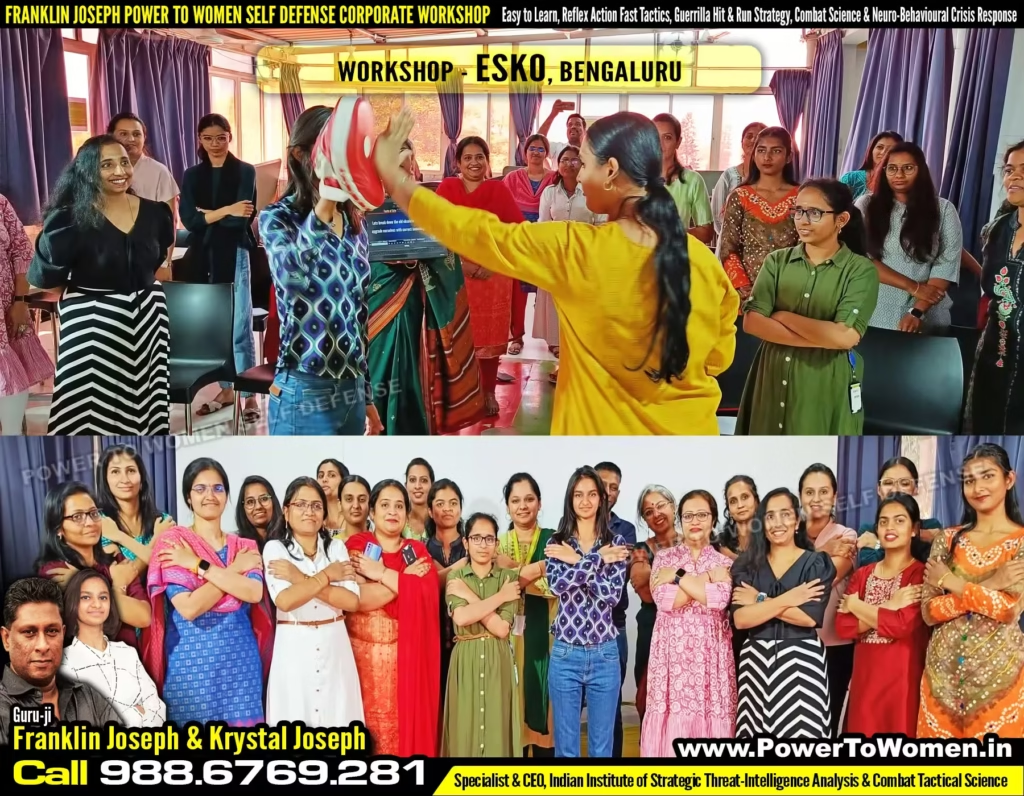
ESKO India ~ International Women Day Self Defense Workshop

Google Women Techmakers ~ Krav Maga Self Defense + Psychological Women Empowerment

Arvind Mills – Power To Women Corporate Self Defense Workshop
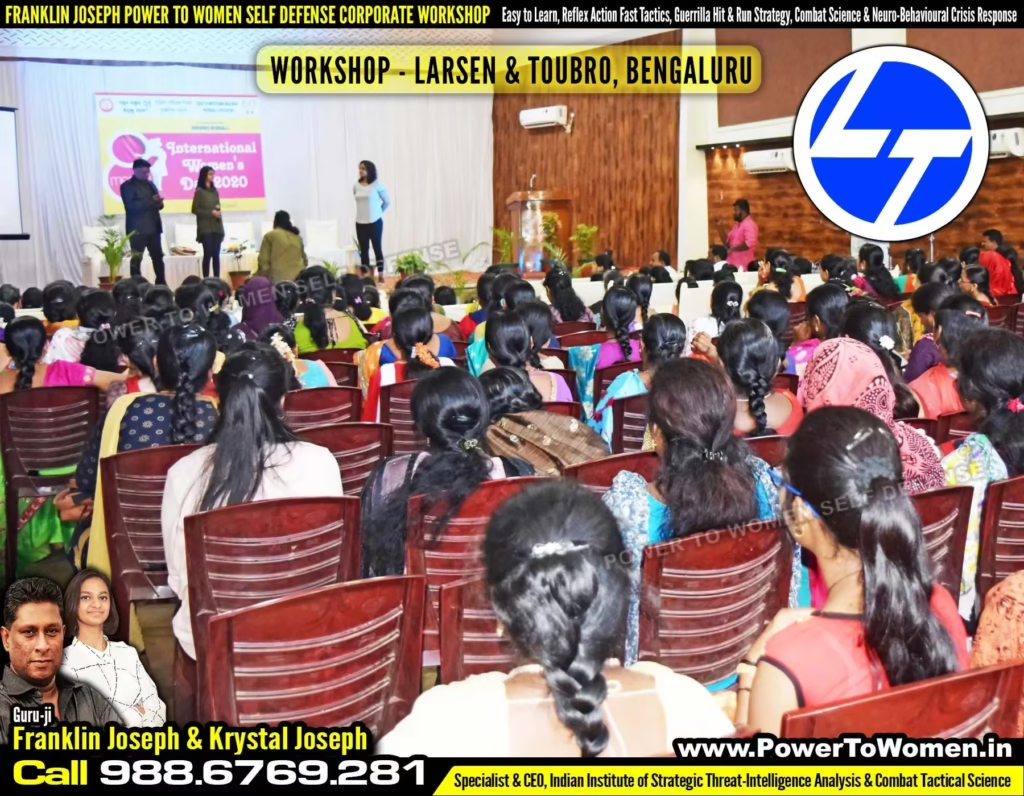
Larsen & Toubro Technology Self Defense Workshop, Bengaluru

Amazon India – Power To Women Corporate Self Defense Workshop
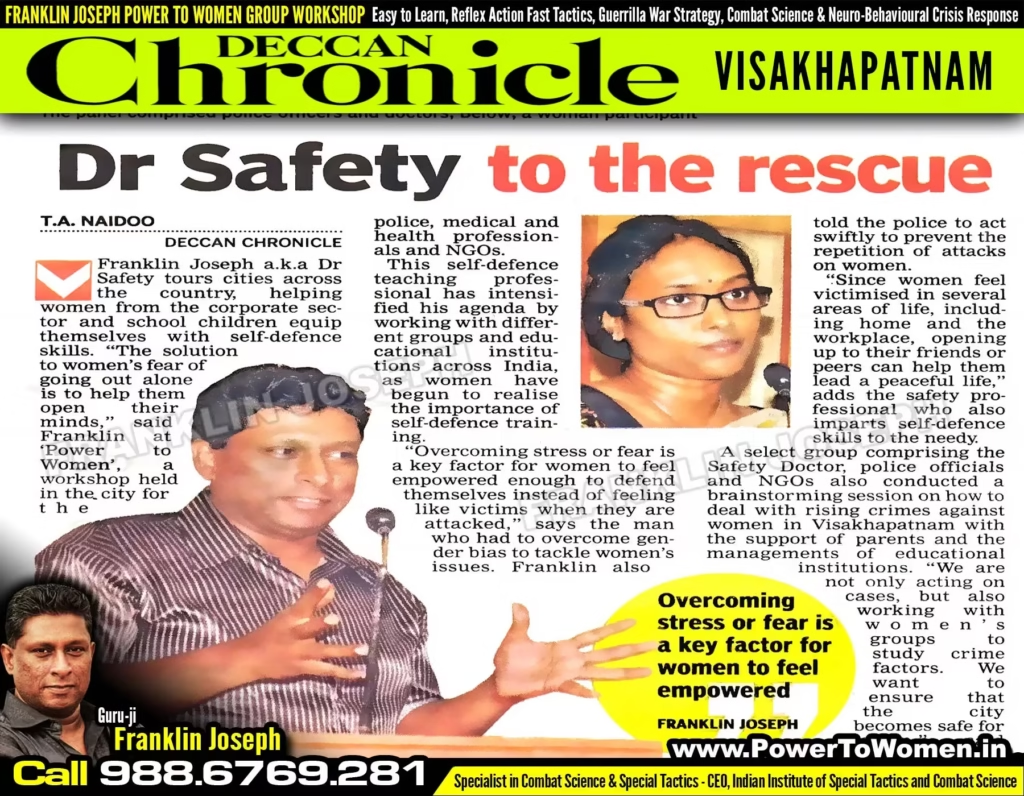
Deccan Chronicle – Newspaper – Dr. Safety to the rescue
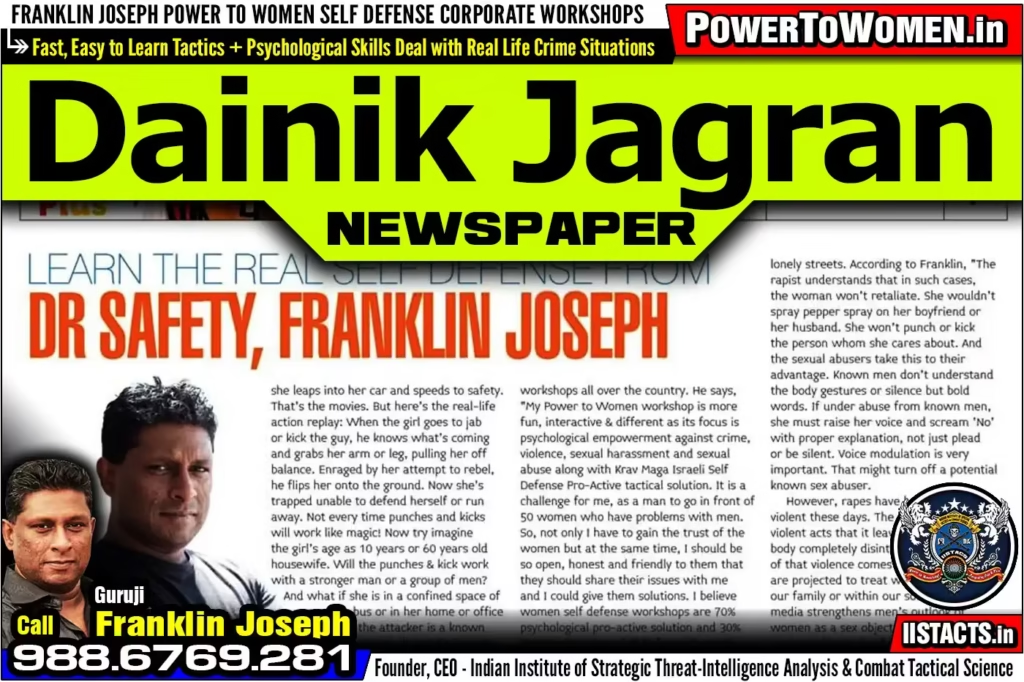
Dainik Jagran Newspaper ~ Learn the real self defense from Dr. Safety, Franklin Joseph
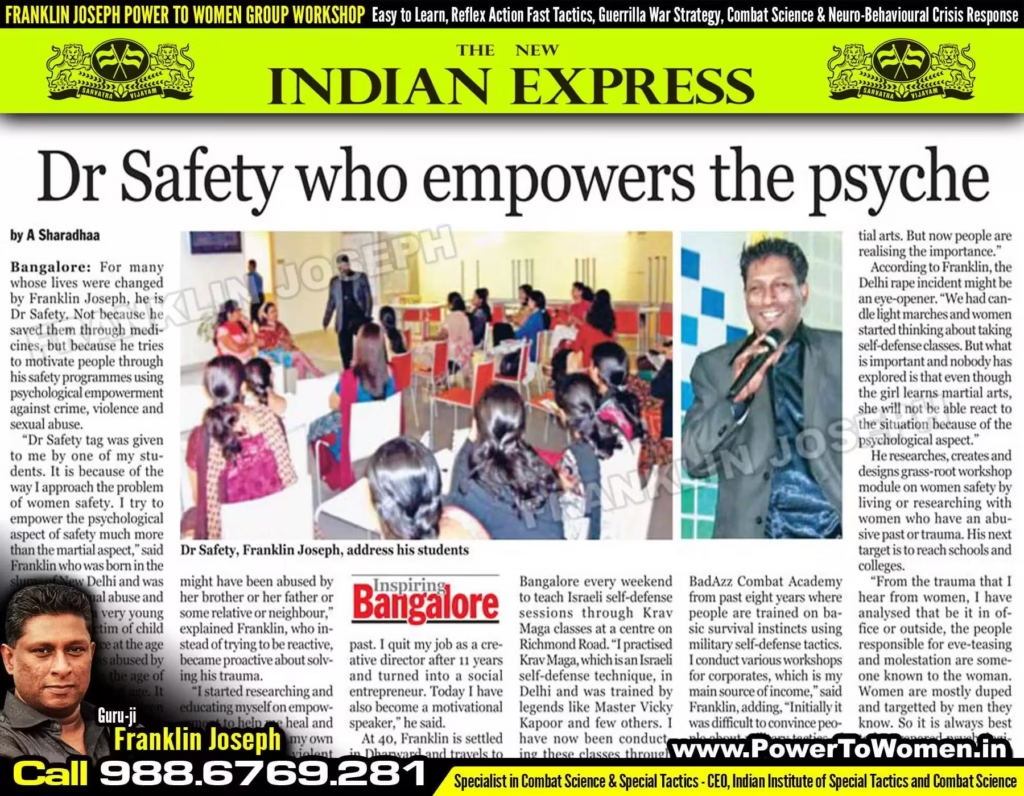
The New Indian Express Newspaper ~ Dr Safety who empowers the psyche
Bangalore Times Newspaper ~ Is India really a safe place for women?

Deccan Chronical Newspaper ~ Krav Maga Work your mind
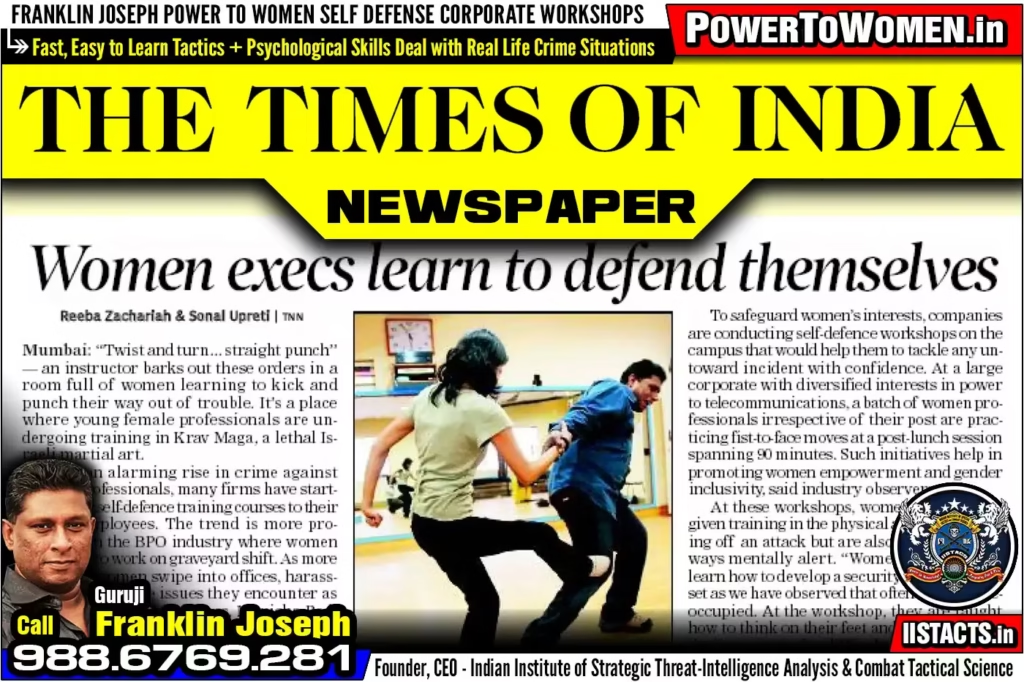
Times of India Newspaper ~ Women execs learn to defend themselves

International Women’s Day 2026 is about POWER TO WOMEN
The new syllabus must teach women to NEVER be caught off guard — physically, digitally, legally, or psychologically ...
Female Empowerment or Female Fragility? What Your Self-Defense Workshop Choice Says About How You See Women
Women’s Self-Defense Is Not About Gender. It Is About Surviving Crime.
Corporate Women’s Self-Defense Workshop: 10 Red Flags That Your Program Is Failing Your Employees
Does the Indian POSH Act Require Female Trainers for Women’s Safety Programs?
What Should You Look For When Hiring a Corporate Self-Defense Instructor?

Quest towards a Warrior Mindset – Ms. Priyamvada, Advocate

Indian Institute of Management, Bengaluru – Women Self Defense Workshop
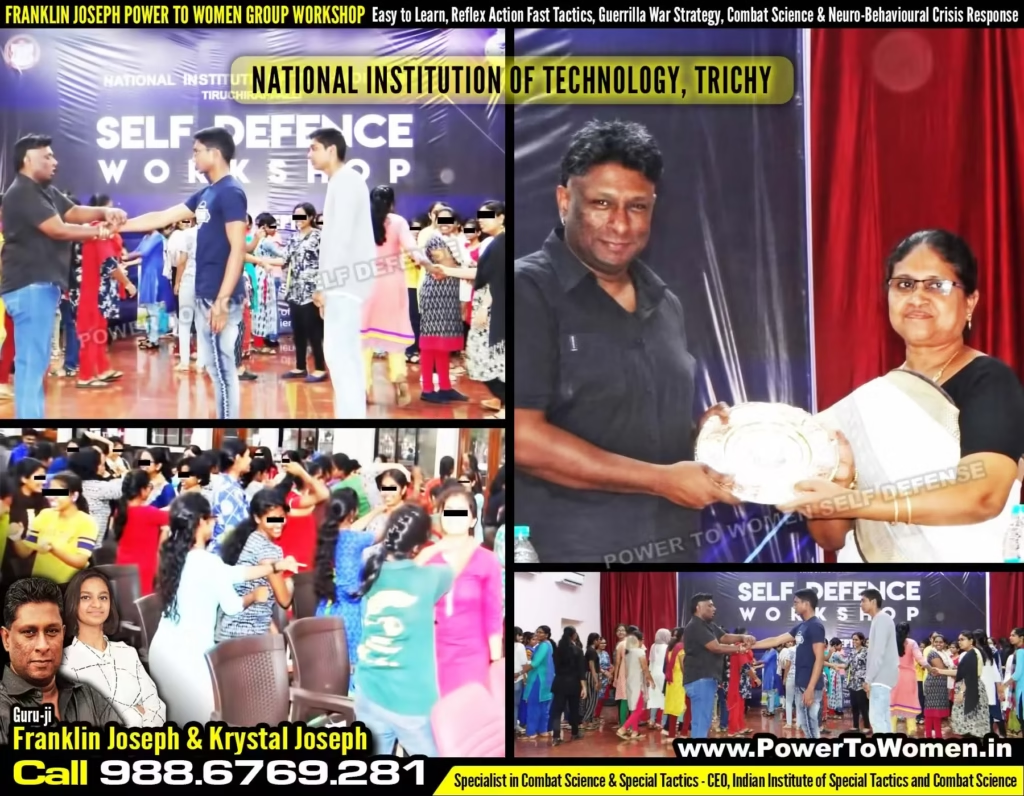
National Institute of Technology, Tiruchirappalli – Women Self Defense Workshop

Car Tactics – Power To Women Corporate Self Defense Workshop with Psychological Women Empowerment Workshop

Titan ~ 4 Cities – Power To Women Corporate Self Defense Workshop with Psychological Women Empowerment
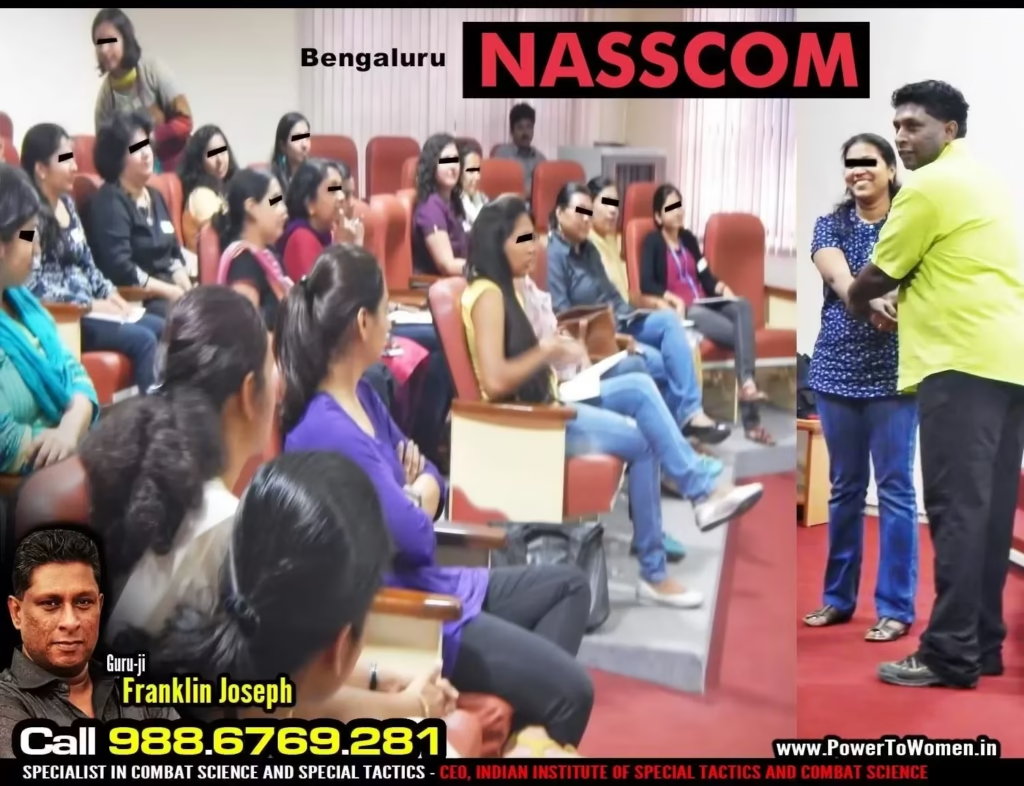
NASSCOM – Power To Women Corporate Self Defense Workshop with Psychological Women Empowerment
About Specialist Franklin Joseph