




















Understanding BFOQ: Is Gender Essential for Teaching Corporate Self-Defense?
By Specialist Franklin Joseph | Power to Women Corporate Self-Defense Workshop
What Is BFOQ and Why Should Your Company Know About It?
Read Franklin Joseph Corporate Women Empowerment / Self Defense ArticlesCall 9886769281 for Corporate WorkshopsBFOQ stands for Bona Fide Occupational Qualification. It is a legal concept that allows an employer to specify a particular gender, religion, or national origin as a requirement for a job, but only when that characteristic is genuinely essential to performing the work. The key word here is “essential.” Not preferred. Not convenient. Not more comfortable. Essential.
Under U.S. law, specifically Title VII of the Civil Rights Act of 1964, BFOQ exceptions are interpreted very narrowly. Courts have consistently ruled that an employer must demonstrate that the job simply cannot be performed by someone of the excluded gender. The bar is intentionally high because the default legal position is that gender should not be a factor in hiring or procurement.
While BFOQ is a concept rooted in American employment law, its underlying logic applies universally. In India, the Constitution (Articles 14, 15, and 16), the Equal Remuneration Act, the Code on Wages 2019, and various corporate governance guidelines all reflect the same principle: gender-based exclusion in professional engagement requires genuine justification, not just good intentions.
When Does BFOQ Actually Apply?
Let us look at some examples where gender as a job requirement is legally defensible:
- A female attendant for a women’s changing room or restroom. Privacy and modesty norms make gender genuinely essential here.
- An actor required for a specific gender role in a film or theatre production. Artistic authenticity makes gender essential to the performance.
- A counsellor in a gender-specific rehabilitation facility where residents have experienced trauma and clinical protocols require same-gender staff for therapeutic reasons, backed by documented psychological assessments.
In each of these cases, the nature of the work itself requires a person of a specific gender. Remove the gender requirement, and the job fundamentally cannot be done.
Now ask yourself: does teaching self-defense fall into this category?
Applying the BFOQ Test to Self-Defense Instruction
Read Franklin Joseph Corporate Women Empowerment / Self Defense ArticlesCall 9886769281 for Corporate WorkshopsLet us walk through this honestly. For gender to be a BFOQ for self-defense instruction, you would need to demonstrate that:
- A male instructor is fundamentally incapable of teaching women how to protect themselves.
- The knowledge, skills, and methodologies involved in self-defense training are inherently gender-specific.
- No amount of professional expertise, experience, or sensitivity can compensate for the instructor being male.
None of these hold up under even basic scrutiny.
Self-defense instruction is built on knowledge of crime psychology, situational awareness, threat assessment, physical response techniques, and the ability to communicate complex concepts in an accessible way. These are professional competencies. They are not determined by chromosomes.
A male surgeon operates on female patients. A female attorney defends male clients. A male psychologist helps female trauma survivors process their experiences. In every professional field, we accept that competence transcends gender. Self-defense instruction is no exception.
“If gender were a BFOQ for self-defense, then no male doctor could treat a female patient, no male therapist could counsel a female survivor, and no male teacher could educate a female student. We do not apply that logic anywhere else because it does not hold up. It does not hold up here either.”
– Specialist Franklin Joseph
The Real Reason Behind the Request
Read Franklin Joseph Corporate Women Empowerment / Self Defense ArticlesCall 9886769281 for Corporate WorkshopsWhen companies ask for a female self-defense instructor, the reason is almost never rooted in BFOQ analysis. Nobody in the procurement team is sitting down with a legal framework and concluding that gender is essential to the job. The real reason, in my experience, is one word: comfort.
Companies want their female employees to feel comfortable. And they assume, often without actually asking those employees, that a female instructor will automatically create more comfort.
I understand this impulse. It comes from a place of care. But let me share something that decades of working in crime psychology and self-defense training have taught me.
Comfort and safety are not the same thing. In fact, in the context of crime, an overemphasis on comfort can actually make someone less safe.
Here is why. Crime is inherently uncomfortable. It is chaotic, frightening, and disorienting. A criminal does not ask for permission. A criminal does not create a safe space. A criminal exploits the exact comfort zones, fears, and insecurities that a person has never been challenged to confront.
If a woman has never practiced engaging with a male presence in a training context, where everything is safe and controlled, she is even less prepared to engage with a male threat in a real-world context, where nothing is safe or controlled.
Read Franklin Joseph Corporate Women Empowerment / Self Defense ArticlesCall 9886769281 for Corporate Workshops“The classroom is the safest place a woman will ever face a man she is uncomfortable with. If she cannot do it here, with rules and boundaries and support, how will she do it on a dark street at midnight with none of those things? Training should build bridges to strength, not walls around weakness.”
– Specialist Franklin Joseph
What Happens When We Get the Focus Wrong
The history of women’s safety training in India is, unfortunately, a history of misplaced focus.
In the beginning, the focus was on the victim. What was she wearing? Why was she out late? Did she provoke the situation? This was victim-blaming dressed up as safety advice, and thankfully, society has largely moved past it.
Then the focus shifted to martial arts. Companies started booking karate instructors and kickboxing coaches to run women’s self-defense workshops. The assumption was that if women could punch and kick, they would be safe. But martial arts, while valuable as disciplines, are designed for sport and structured combat. They do not address the psychology of a criminal, the freeze response that occurs in real assaults, or the social conditioning that makes many women hesitate to fight back even when their life depends on it.
Now the focus has shifted once more. This time, to the gender of the instructor. And once again, the actual subject, which is crime and how to survive it, is being pushed to the side.
Read Franklin Joseph Corporate Women Empowerment / Self Defense ArticlesCall 9886769281 for Corporate WorkshopsEach of these shifts shares something in common. They all avoid the uncomfortable truth that effective self-defense training requires women to confront difficult realities. It requires them to think about crime, to understand how criminals think, to practice responses under pressure, and to face their own psychological barriers. None of that is comfortable. All of it is necessary.
Domestic Violence: A Case That Challenges the Comfort Argument
Consider domestic violence, which remains one of the most widespread forms of violence against women in India and around the world. In a domestic violence situation, the aggressor is not a stranger. He is a husband, a partner, someone the woman lives with and interacts with every single day.
A woman in this situation cannot choose to only interact with people she is comfortable with. She cannot request a female version of her husband. She must find the internal strength, awareness, and practical knowledge to deal with a threatening male presence that is part of her daily life.
If our self-defense training does not prepare women to face, assess, and respond to male aggression, then we have failed them. And if the very first decision we make about the training is to remove the male presence from the classroom, we are already heading in the wrong direction.
“Domestic violence does not offer a safe space. Street crime does not offer a safe space. The only safe space that exists is the one inside a woman’s own mind, built on knowledge, awareness, and the quiet confidence that she knows what to do. That is what training should build. Not a comfortable room. A capable mind.”
– Specialist Franklin Joseph
What BFOQ Analysis Actually Tells Us to Do
Read Franklin Joseph Corporate Women Empowerment / Self Defense ArticlesCall 9886769281 for Corporate WorkshopsIf we apply genuine BFOQ analysis to the question of hiring a self-defense instructor, here is what we should be evaluating:
- Does the instructor have deep knowledge of how crime actually works, including the psychological tactics criminals use?
- Does the training methodology go beyond physical techniques to include pre-crime awareness, during-crime psychology, and post-crime legal and emotional support?
- Has the instructor demonstrated the ability to work effectively with women from diverse backgrounds and varying levels of confidence?
- Does the program produce measurable changes in participants’ awareness, confidence, and practical readiness?
- Can the instructor create a professional, respectful, and supportive learning environment regardless of gender dynamics?
These are the bona fide qualifications for this job. Gender is not one of them. And pretending that it is does not serve the law, the company, or the women the training is meant to protect.
Moving Forward with Clarity
I share all of this not as a challenge but as an invitation to think more carefully about what we are really looking for when we book a self-defense workshop. The goal is to protect women. The method should be to find the most qualified, most experienced, most psychologically informed instructor available.
If that instructor happens to be female, wonderful. If that instructor happens to be male, equally wonderful. Because the only thing that matters is whether the women who walk out of that training are genuinely better prepared for the realities of the world they live in.
“Empowerment is not about surrounding women with comfort. It is about equipping them with capability. When a woman knows she can face any situation, any person, any threat, and handle it with awareness and composure, that is empowerment. And that has nothing to do with whether her instructor was male or female. It has everything to do with whether her instructor was excellent.”
– Specialist Franklin Joseph
Corporate Workshops ~ 'Embrace Inner Power'
Our all-encompassing strategy combines state-of-the-art Israeli Military Krav Maga self-defence methods with revolutionary psychological tactics like to help you maintain composure, assertiveness, and control whether you're negotiating a high-pressure boardroom or an unpredictable street or domestic encounter. Don't hesitate; give Specialist Franklin Joseph a call @ 9886769281 right now to learn the most important skills and become a part of the movement towards empowered life.
Connect with Specialist Guruji Franklin Joseph for

Corporate Workshops Clients
Other Posts & Articles

Jain International Trade Organisation (JITO) Power To Women Self Defense Workshop
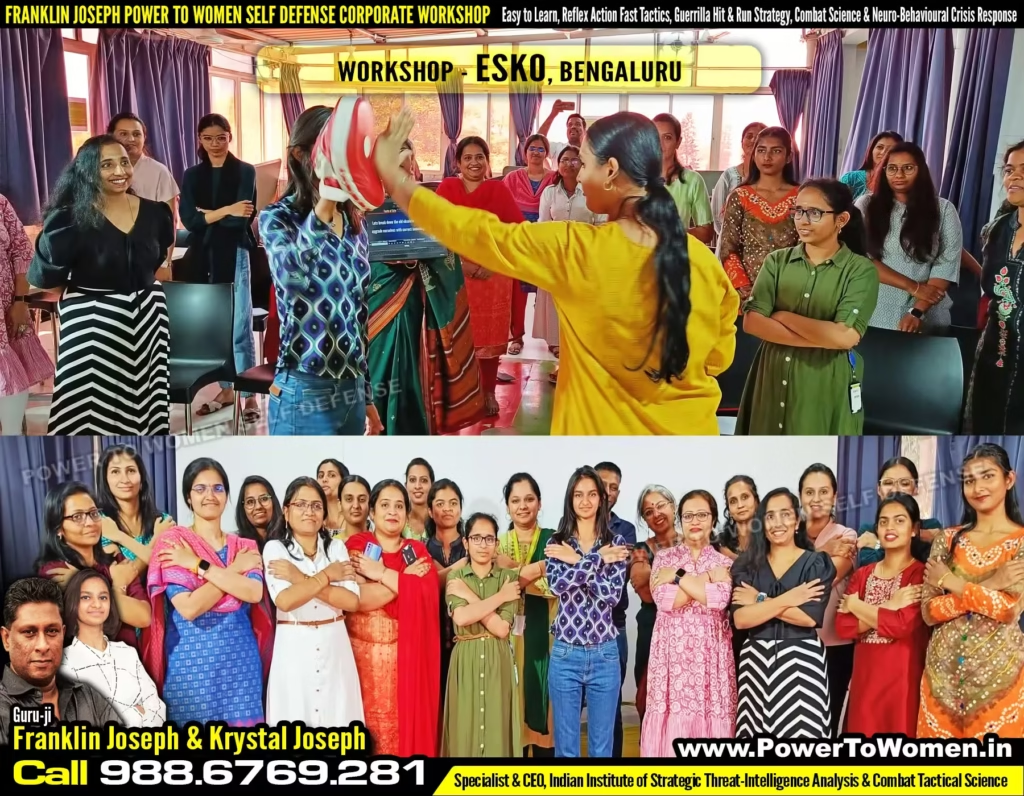
ESKO India ~ International Women Day Self Defense Workshop
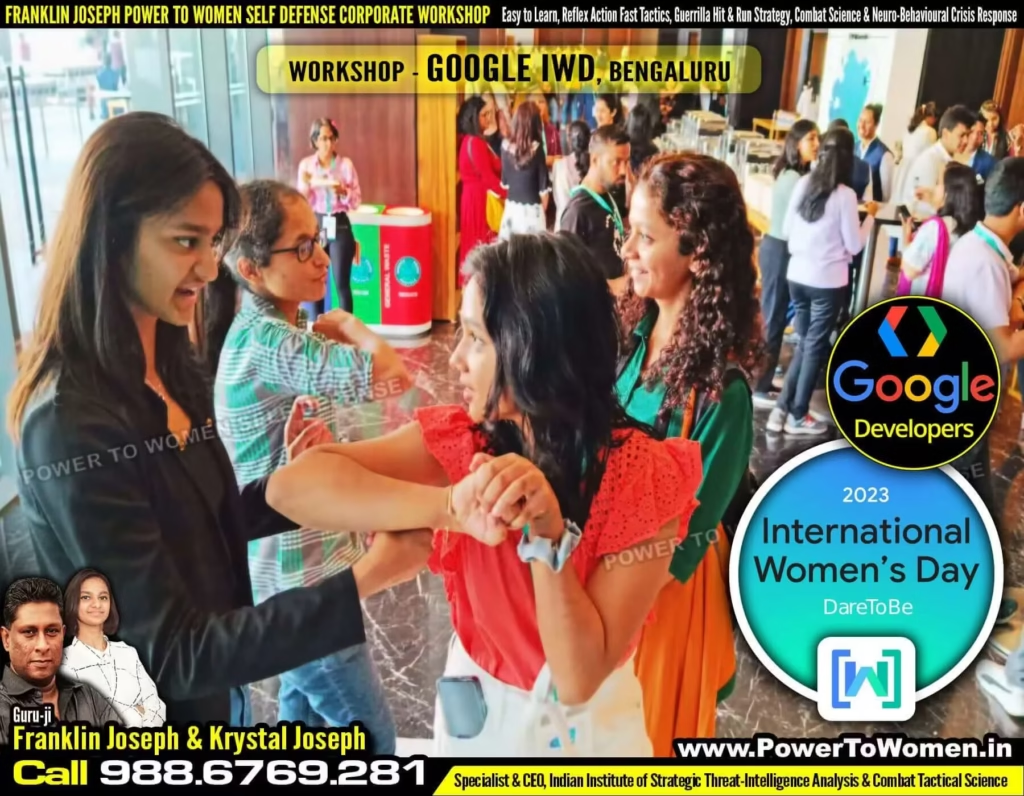
Google Women Techmakers ~ Krav Maga Self Defense + Psychological Women Empowerment
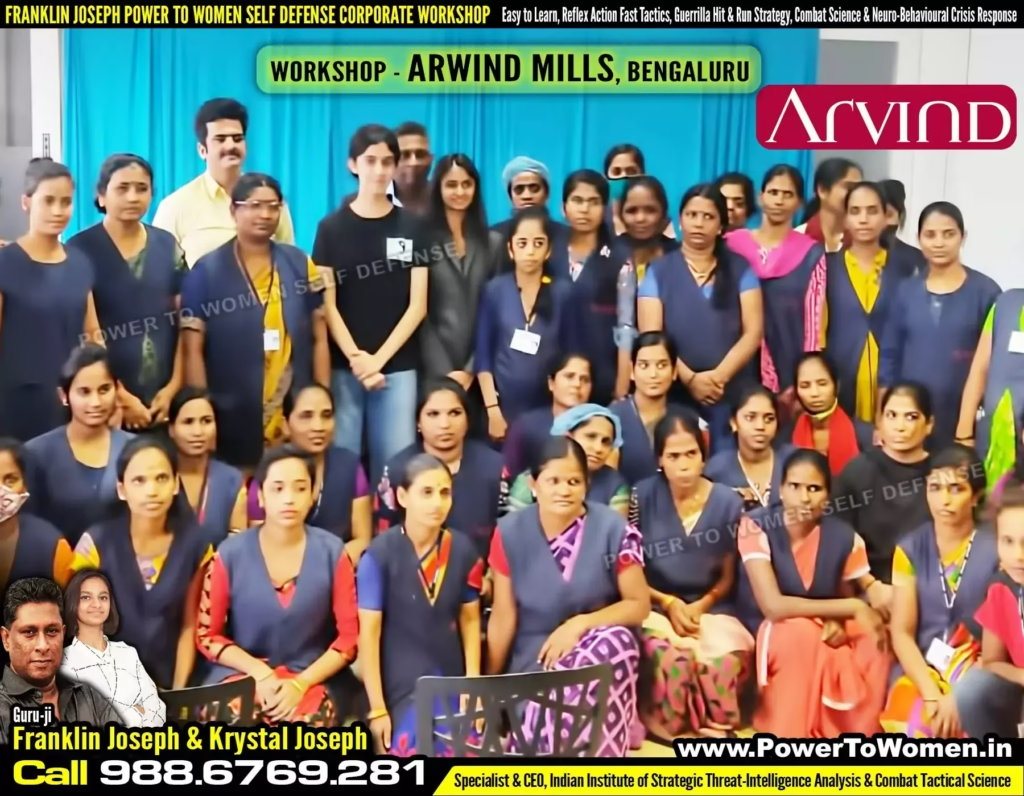
Arvind Mills – Power To Women Corporate Self Defense Workshop
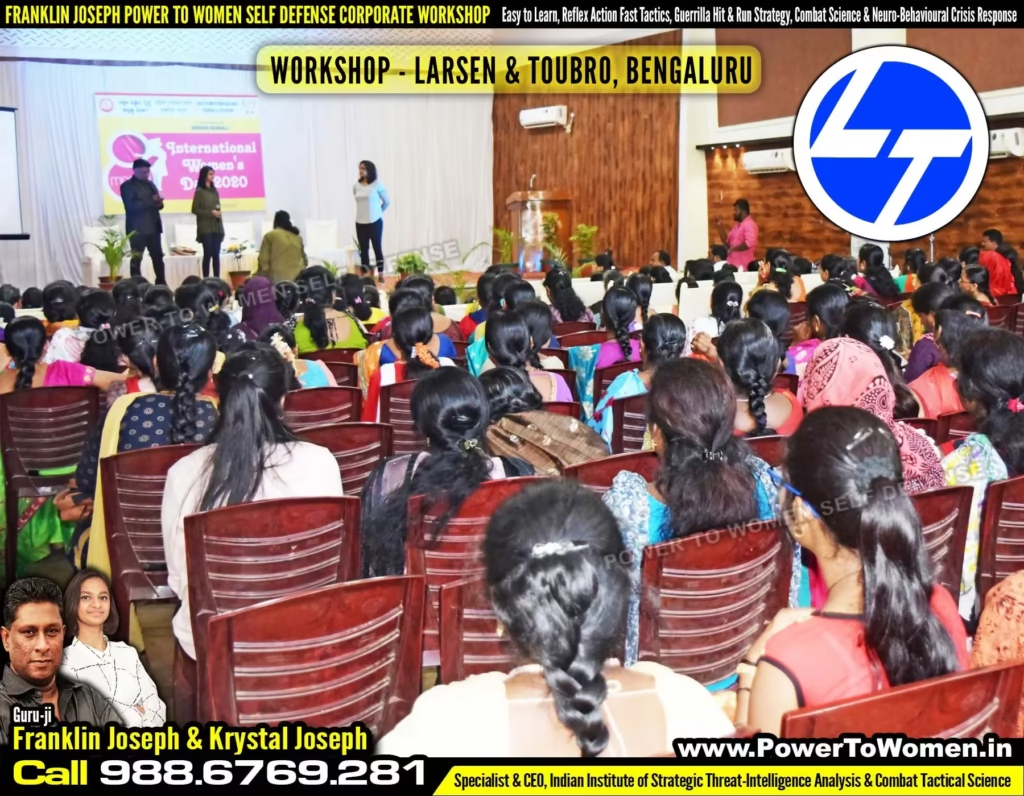
Larsen & Toubro Technology Self Defense Workshop, Bengaluru

Amazon India – Power To Women Corporate Self Defense Workshop

Deccan Chronicle – Newspaper – Dr. Safety to the rescue

Dainik Jagran Newspaper ~ Learn the real self defense from Dr. Safety, Franklin Joseph
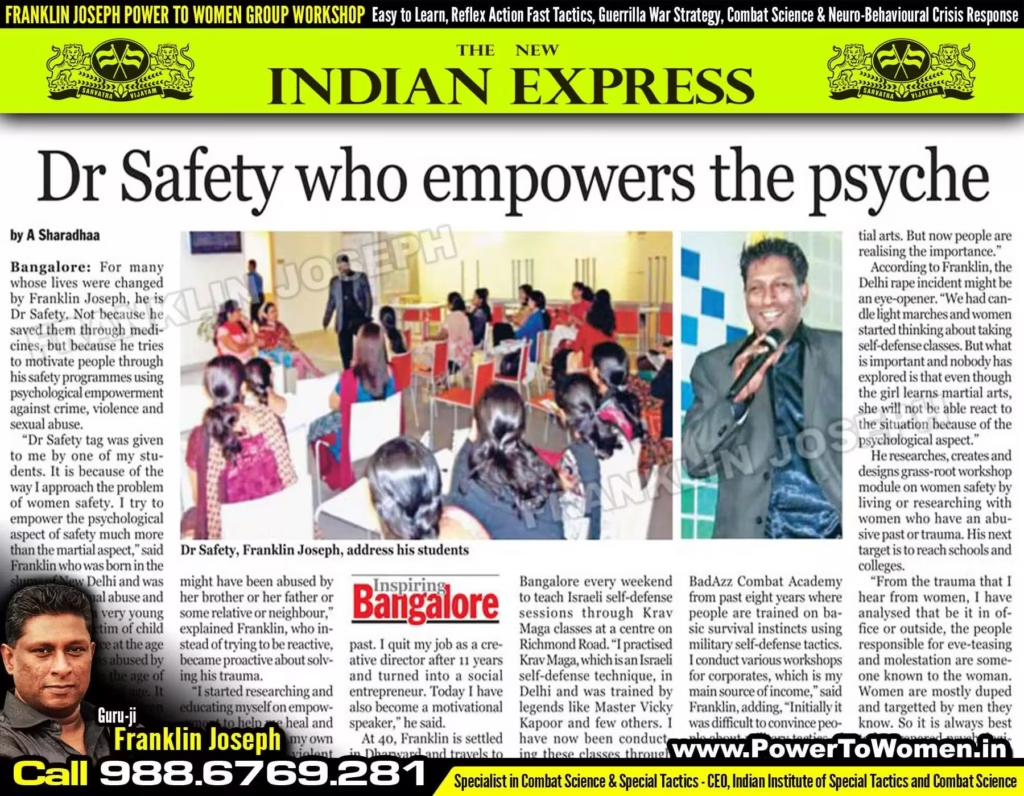
The New Indian Express Newspaper ~ Dr Safety who empowers the psyche
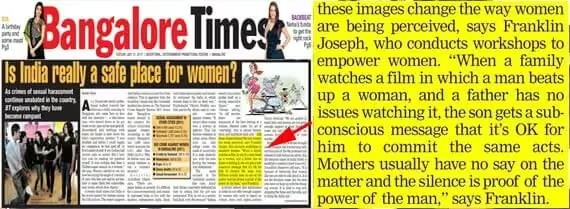
Bangalore Times Newspaper ~ Is India really a safe place for women?

Deccan Chronical Newspaper ~ Krav Maga Work your mind
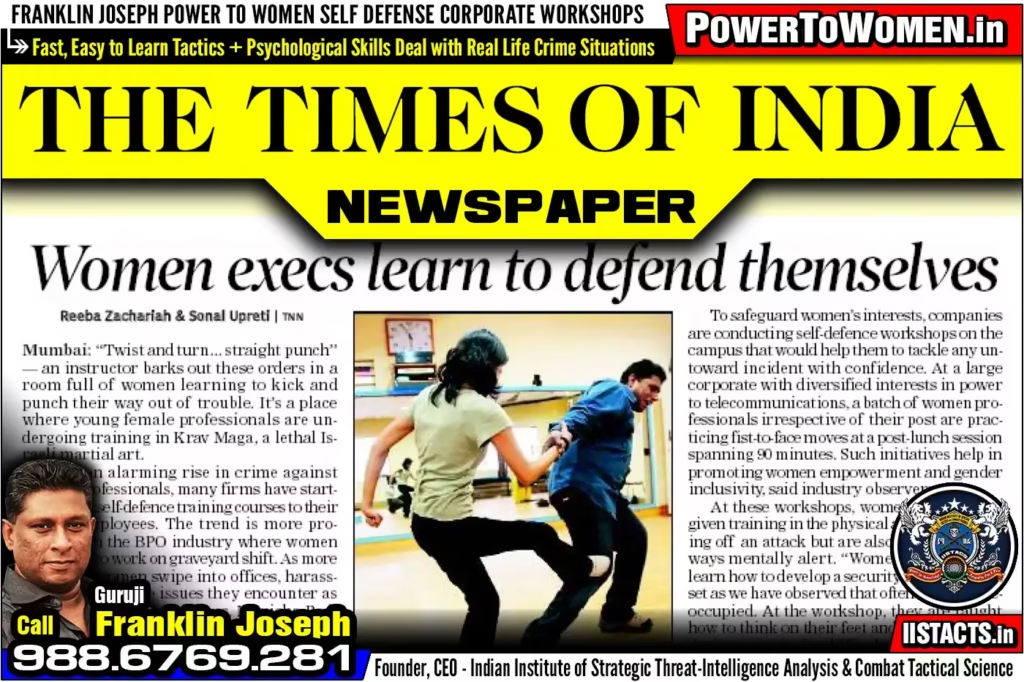
Times of India Newspaper ~ Women execs learn to defend themselves

International Women’s Day 2026 is about POWER TO WOMEN
The new syllabus must teach women to NEVER be caught off guard — physically, digitally, legally, or psychologically ...
Female Empowerment or Female Fragility? What Your Self-Defense Workshop Choice Says About How You See Women
Women’s Self-Defense Is Not About Gender. It Is About Surviving Crime.
Corporate Women’s Self-Defense Workshop: 10 Red Flags That Your Program Is Failing Your Employees
Does the Indian POSH Act Require Female Trainers for Women’s Safety Programs?
What Should You Look For When Hiring a Corporate Self-Defense Instructor?

Quest towards a Warrior Mindset – Ms. Priyamvada, Advocate

Indian Institute of Management, Bengaluru – Women Self Defense Workshop
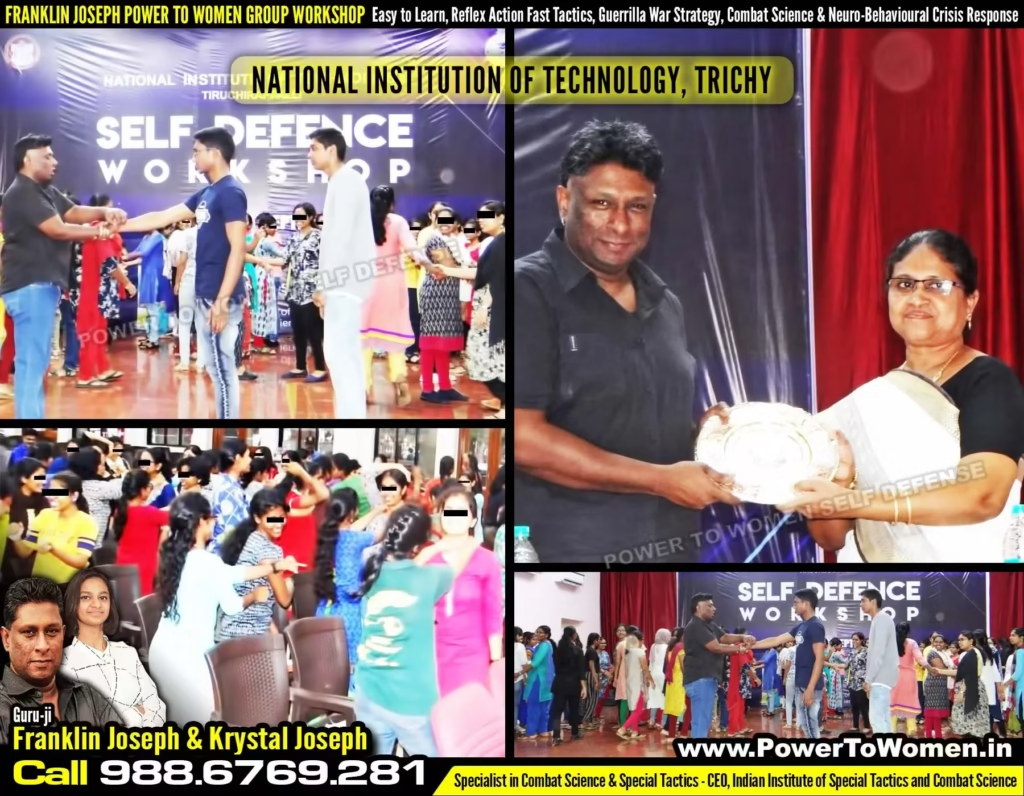
National Institute of Technology, Tiruchirappalli – Women Self Defense Workshop

Car Tactics – Power To Women Corporate Self Defense Workshop with Psychological Women Empowerment Workshop

Titan ~ 4 Cities – Power To Women Corporate Self Defense Workshop with Psychological Women Empowerment
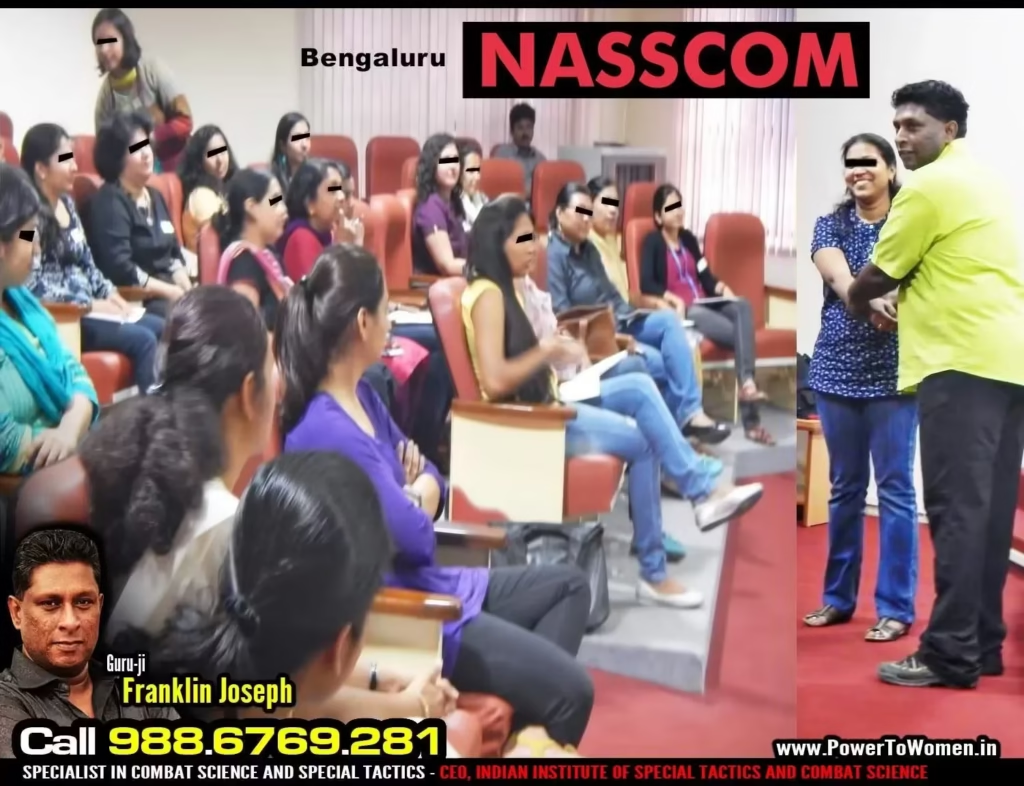
NASSCOM – Power To Women Corporate Self Defense Workshop with Psychological Women Empowerment
About Specialist Franklin Joseph
