



















Is Requesting a Female Self-Defense Instructor Considered Workplace Discrimination?
By Specialist Franklin Joseph | Power to Women Corporate Self-Defense Workshop
A Question Most HR Teams Have Never Asked Themselves
Read Franklin Joseph Corporate Women Empowerment / Self Defense ArticlesCall 9886769281 for Corporate WorkshopsHere is something interesting about the way corporate decisions are made. If an HR team received a hiring request that said “only male candidates for this role,” alarm bells would ring immediately. The DEI team would be notified. Legal would weigh in. The request would be rejected or significantly revised.
But when an HR team sends out a training vendor request that says “we prefer a female instructor for our women’s self-defense workshop,” nobody blinks. It goes out as a routine email. The assumption is that this is a thoughtful, employee-friendly decision.
The question is: why does the same type of gender-based specification trigger very different reactions depending on the context? And the follow-up question is: should it?
I believe the answer is no. And I think once you look at this issue clearly, you will see why.
Understanding What Workplace Discrimination Actually Means
Workplace discrimination, in its simplest form, is treating a person differently in a professional context based on a characteristic that has no bearing on their ability to do the job. When that characteristic is gender, it is gender-based discrimination.
Let us apply that definition to the scenario at hand.
Read Franklin Joseph Corporate Women Empowerment / Self Defense ArticlesCall 9886769281 for Corporate WorkshopsA company needs a self-defense instructor. The job requires expertise in crime psychology, personal safety methodology, communication skills, and the ability to create meaningful behavioural change in participants. These are the competencies that determine whether the training will be effective.
Now, the company adds one more requirement: the instructor must be female.
Is gender a competency? Does being female make someone inherently better at teaching crime awareness, threat response, or freeze management? Does being male make someone inherently incapable of teaching these subjects?
The answer to all three questions is no. Which means that gender, in this context, is a characteristic that has no bearing on the ability to do the job. And specifying it as a requirement meets the definition of discrimination.
“Discrimination is not defined by its intention. It is defined by its structure. When you exclude a professional from a job based on a characteristic that has nothing to do with that job, the structure is discriminatory. No matter how kind the intention behind it.”
– Specialist Franklin Joseph
The Flip Test
Read Franklin Joseph Corporate Women Empowerment / Self Defense ArticlesCall 9886769281 for Corporate WorkshopsI find that the simplest way to test whether a decision is discriminatory is to flip the genders and see how it sounds.
Original statement: “We want a female self-defense instructor because our women employees will feel more comfortable.”
Flipped statement: “We want a male leadership trainer because our male employees will feel more comfortable.”
The second statement sounds immediately problematic. It sounds regressive. It sounds like something from a workplace culture that has not evolved. No modern HR professional would approve it.
But the logic is identical. The reasoning is identical. The only difference is which gender is being specified. And if the flipped version is unacceptable, the original version should be held to the same standard.
Equality means applying the same rules regardless of which gender is involved. If a gender specification is wrong in one direction, it is wrong in both directions. That is not a radical position. That is the basic definition of equality.
Where This Fits in Indian Law
Read Franklin Joseph Corporate Women Empowerment / Self Defense ArticlesCall 9886769281 for Corporate WorkshopsLet me walk through the relevant legal framework, because I think many HR professionals will find this eye-opening.
Constitutional Protection Against Sex-Based Discrimination
Articles 14, 15(1), and 16 of the Indian Constitution collectively establish that no person should face discrimination based on sex in matters of equality, opportunity, or employment. While these articles directly address state action, Indian courts have progressively applied their underlying principles to private sector employment practices, particularly through judicial interpretations that recognise the constitutional right to equality as a pervasive standard.
The Equal Remuneration Act and Code on Wages
Section 5 of the Equal Remuneration Act, 1976 explicitly prohibits discrimination in recruitment for the same or similar work. Section 3 of the Code on Wages, 2019 reinforces this. The consistent legal message is that professional engagement should be based on competence, not on gender.
The POSH Act Does Not Mandate Gender-Specific Trainers
This is worth emphasising because it is a common misconception. The POSH Act requires workplace safety awareness and training. It does not, anywhere in its text, specify that such training must be delivered by a person of a particular gender. The Act focuses on content quality, organisational compliance, and outcomes. The Act also exists to dismantle gender stereotyping in the workplace. Insisting on a female trainer based on gendered assumptions about comfort actually contradicts the Act’s objectives.
BFOQ Does Not Apply
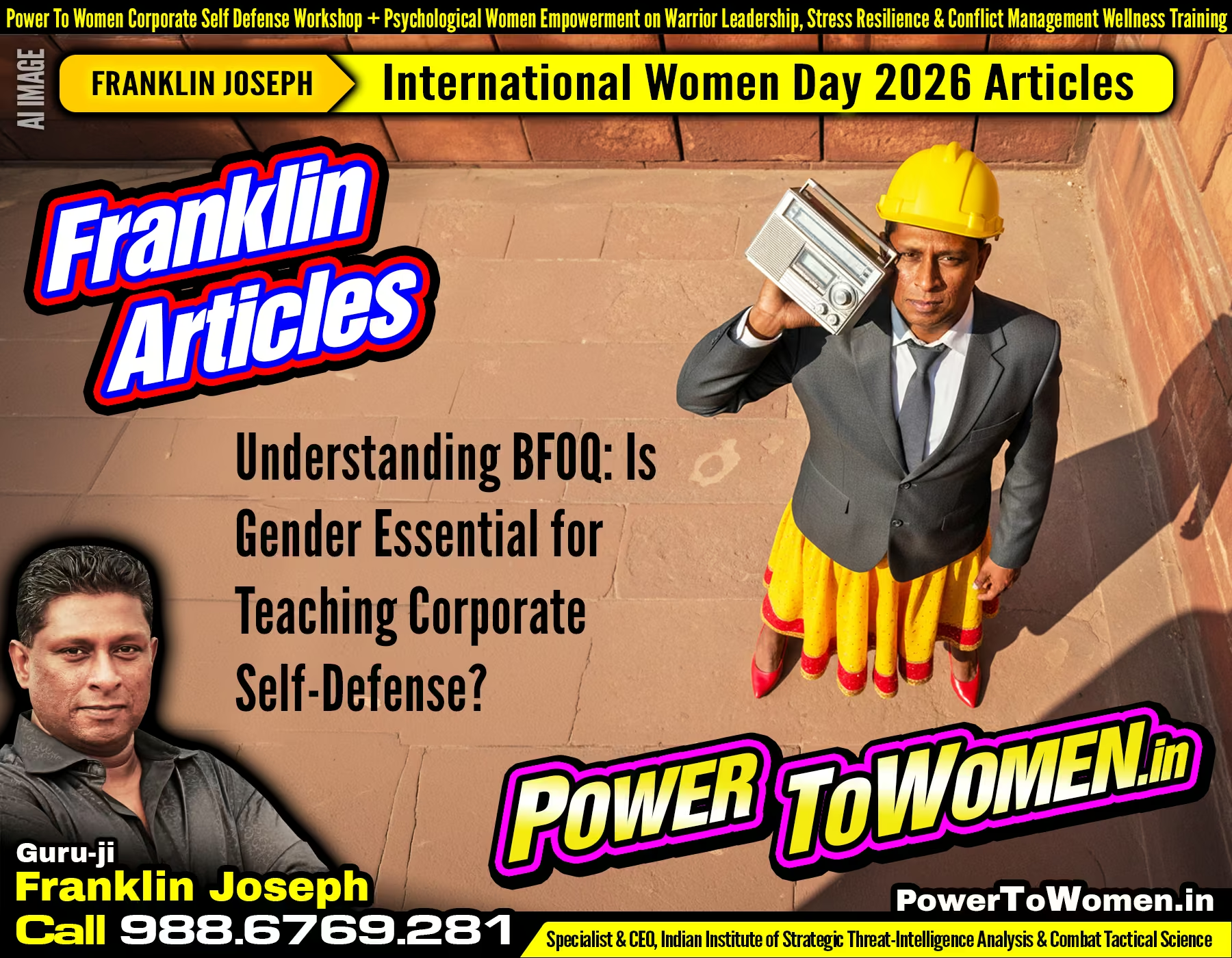
The Bona Fide Occupational Qualification exception allows gender to be a requirement only when it is genuinely essential to the nature of the work. Examples include same-gender intimate care providers and actors for gender-specific roles. Teaching self-defense is a knowledge-based profession where the instructor’s gender has no impact on their ability to deliver the service. BFOQ does not cover this scenario.
DEI Policy Conflicts
Most corporates with formal DEI policies include language prohibiting gender-based discrimination in all forms of hiring and engagement. A requirement specifying a female-only trainer creates a direct conflict with these policies. If the DEI policy is meaningful, it should apply consistently across all engagement decisions, including vendor and trainer procurement.
The Discriminatory Procurement Angle
Read Franklin Joseph Corporate Women Empowerment / Self Defense ArticlesCall 9886769281 for Corporate WorkshopsHere is an angle that rarely gets discussed but is legally significant.
When a company issues a service requirement that excludes professionals based on gender, it is not just making a training decision. It is making a procurement decision. And procurement decisions are subject to fairness, transparency, and non-discrimination standards under corporate governance frameworks.
Under the Companies Act, 2013 and SEBI’s corporate governance guidelines, companies are expected to conduct their operations, including procurement, with integrity and without arbitrary discrimination. A gender-based exclusion in vendor selection, when gender is not a genuine occupational requirement, is difficult to justify under these standards.
For companies that report under ESG frameworks, the Social component specifically assesses equal opportunity and non-discrimination across all business operations. Gender-based vendor exclusion can be flagged as an inconsistency during ESG audits or stakeholder reviews.
Internationally, ILO Convention No. 111 (ratified by India) prohibits sex-based discrimination in employment and occupation. CEDAW (also ratified by India) specifically addresses gender stereotyping. The UN Guiding Principles on Business and Human Rights expect businesses to respect the right to non-discrimination in all their operations.
The Practical Problem With the Comfort Argument
Most companies justify the female instructor requirement using a single argument: comfort. “Our women employees will feel more comfortable with a female instructor.”
Read Franklin Joseph Corporate Women Empowerment / Self Defense ArticlesCall 9886769281 for Corporate WorkshopsLet us examine this argument practically.
The women in your organisation handle complex negotiations with male clients. They work under male supervisors. They collaborate with male colleagues. They attend conferences led by male speakers. They consult with male doctors, male lawyers, and male financial advisors. In none of these situations does comfort based on the other person’s gender become a deciding factor.
Why is a self-defense workshop different? What is it about this particular context that suddenly makes the professional’s gender the most important variable?
The unstated assumption is that self-defense involves physical proximity, body-related topics, or discussions of violence, and that these subjects are somehow too sensitive for a male instructor to handle professionally. But this assumption is not only unfounded, it is itself a form of gender bias. It implies that a male professional cannot conduct himself with sensitivity and professionalism around women. It also implies that women cannot engage professionally with a male instructor in a structured, supervised environment.
Both of these implications are problematic. And both undermine the people they are supposed to protect.
“The comfort argument assumes two things: that men cannot be professional and that women cannot be resilient. Both assumptions are wrong. Both are forms of gender stereotyping. And both have no place in a modern workplace.”
Read Franklin Joseph Corporate Women Empowerment / Self Defense ArticlesCall 9886769281 for Corporate Workshops– Specialist Franklin Joseph
What This Means for Self-Defense Training Quality
Beyond the legal and ethical dimensions, there is a practical consequence of gender-based trainer selection that directly affects your employees’ safety.
When gender becomes the primary filter, competence becomes secondary. Companies end up selecting trainers who meet the gender requirement but may lack the specialised expertise that makes self-defense training genuinely effective.
Effective self-defense training covers crime psychology and how criminals select and approach victims. It addresses the freeze response and how to overcome it. It teaches pre-crime awareness skills that prevent most dangerous situations before they escalate. It covers post-incident protocols including legal rights, evidence preservation, and psychological recovery. And it deals with the social conditioning patterns, politeness training, conflict avoidance, and reluctance to cause a scene, that prevent women from acting decisively in dangerous moments.
A trainer selected primarily for gender rather than for this kind of specialised expertise is unlikely to cover all of these areas. And a program that misses any of these areas is leaving gaps in your employees’ preparedness. Those gaps do not show up in workshop photographs. They show up in real crisis situations.
A Clearer Way Forward
The good news is that the right approach is both simpler and more effective than the current one.
Read Franklin Joseph Corporate Women Empowerment / Self Defense ArticlesCall 9886769281 for Corporate WorkshopsInstead of starting with “What gender is the instructor?”, start with “What does this instructor know, and can they prepare our people for real danger?”
Evaluate every potential trainer, male or female, on the same criteria:
- Depth of expertise in crime psychology and criminal behaviour patterns.
- Comprehensive coverage of pre-crime, during-crime, and post-crime phases.
- Specific methodology for addressing the freeze response and psychological barriers.
- Scenario-based training grounded in real-world crime data.
- Demonstrated professionalism and sensitivity in creating safe learning environments.
- Verifiable track record with corporate clients and documented participant outcomes.
This approach is gender-neutral. It is legally sound. It is consistent with your DEI policy. And it produces better results for the people who matter most: your employees.
“The irony is that by removing the gender filter, you actually improve the quality of your selection. You open yourself up to the full pool of qualified professionals instead of artificially limiting it. Better pool. Better choice. Better training. Better safety. It is not complicated.”
– Specialist Franklin Joseph
To Answer the Question Directly
Is requesting a female self-defense instructor considered workplace discrimination?
Read Franklin Joseph Corporate Women Empowerment / Self Defense ArticlesCall 9886769281 for Corporate WorkshopsIf the request excludes a qualified professional from a service engagement based solely on gender, and if gender is not a genuine occupational requirement for the role, then yes, it meets the structural definition of gender-based discrimination. It may not be intended as discrimination. It may come from a place of genuine care. But the structure of the decision, excluding based on gender when gender is irrelevant to competence, is discriminatory regardless of intent.
The better path is to make gender-neutral decisions based on competence, and to trust that your women employees are strong enough to learn from the best professional available, whoever that professional happens to be.
“Intent does not define discrimination. Structure does. And when the structure says ‘only this gender may apply,’ the intent behind it does not change what it is.”
– Specialist Franklin Joseph
Corporate Workshops ~ 'Embrace Inner Power'
Our all-encompassing strategy combines state-of-the-art Israeli Military Krav Maga self-defence methods with revolutionary psychological tactics like to help you maintain composure, assertiveness, and control whether you're negotiating a high-pressure boardroom or an unpredictable street or domestic encounter. Don't hesitate; give Specialist Franklin Joseph a call @ 9886769281 right now to learn the most important skills and become a part of the movement towards empowered life.
Connect with Specialist Guruji Franklin Joseph for

Corporate Workshops Clients
Other Posts & Articles

Jain International Trade Organisation (JITO) Power To Women Self Defense Workshop
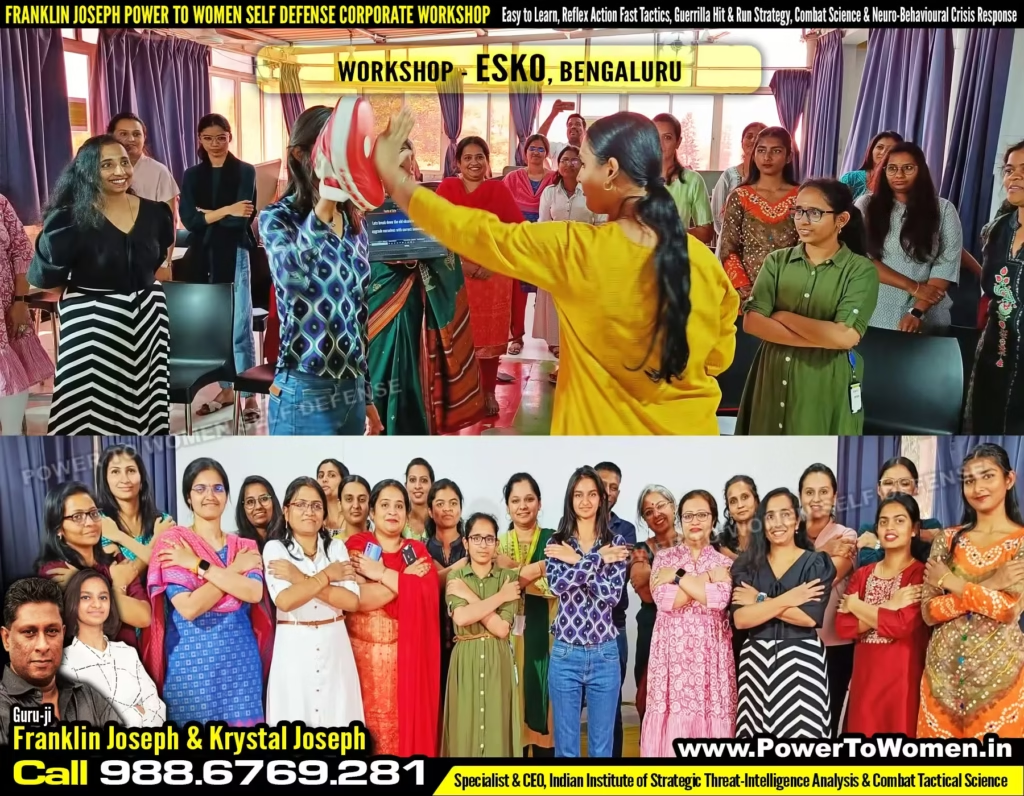
ESKO India ~ International Women Day Self Defense Workshop
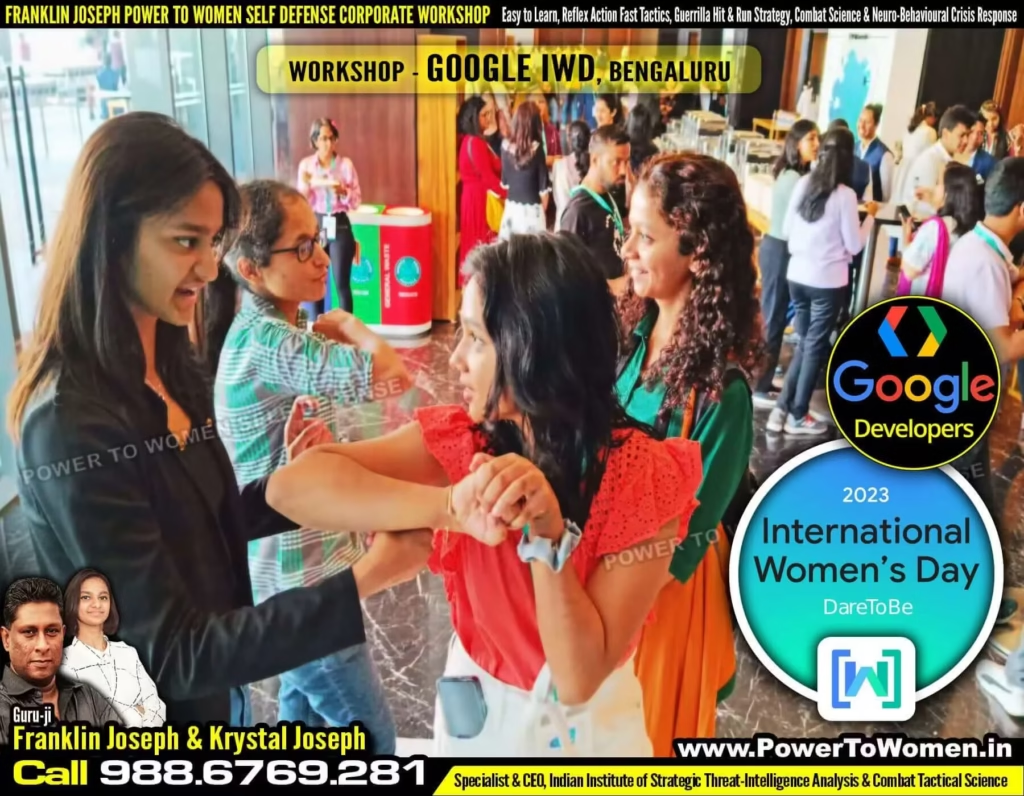
Google Women Techmakers ~ Krav Maga Self Defense + Psychological Women Empowerment
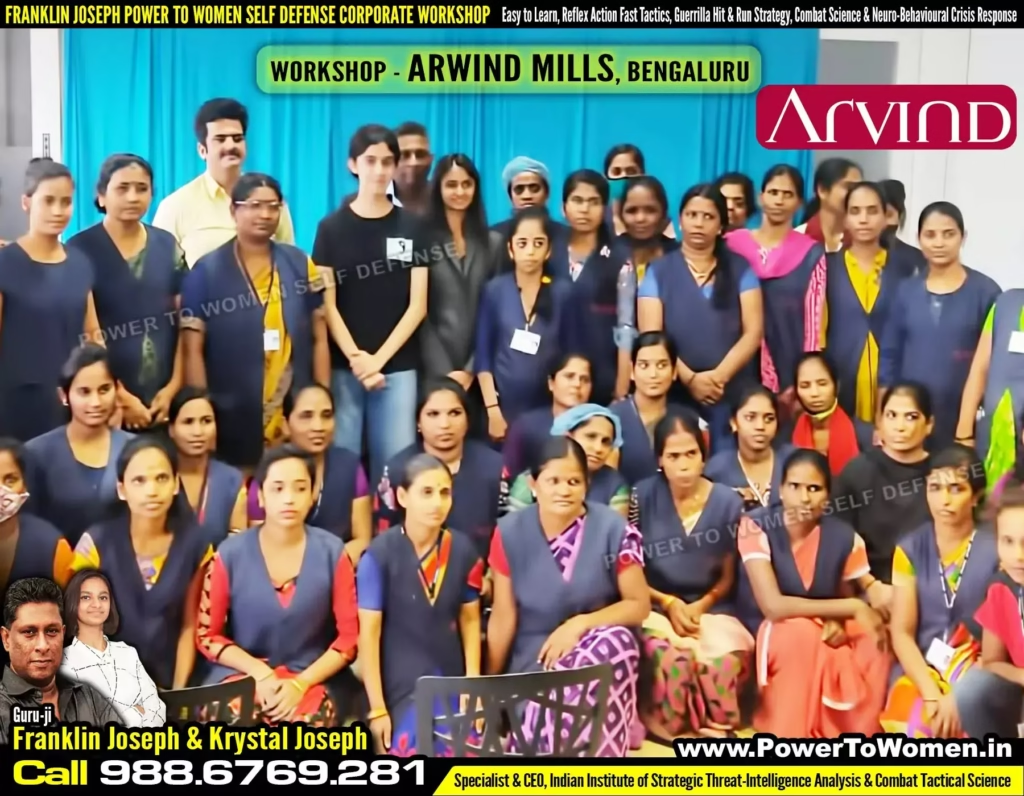
Arvind Mills – Power To Women Corporate Self Defense Workshop
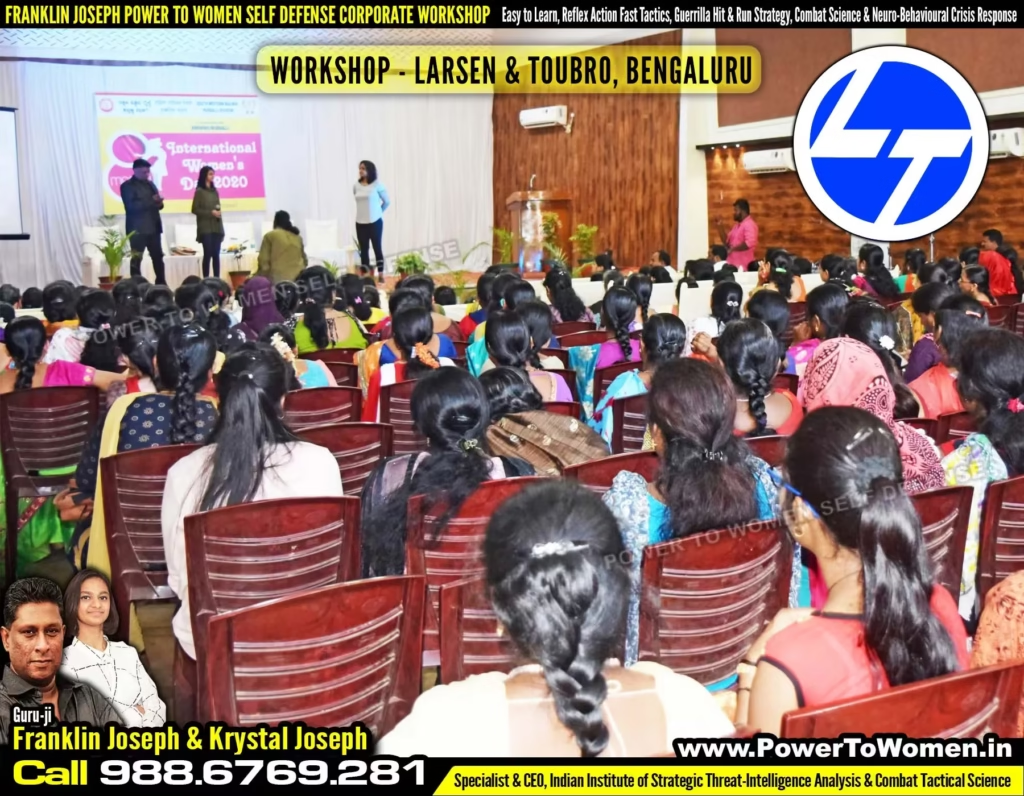
Larsen & Toubro Technology Self Defense Workshop, Bengaluru

Amazon India – Power To Women Corporate Self Defense Workshop

Deccan Chronicle – Newspaper – Dr. Safety to the rescue
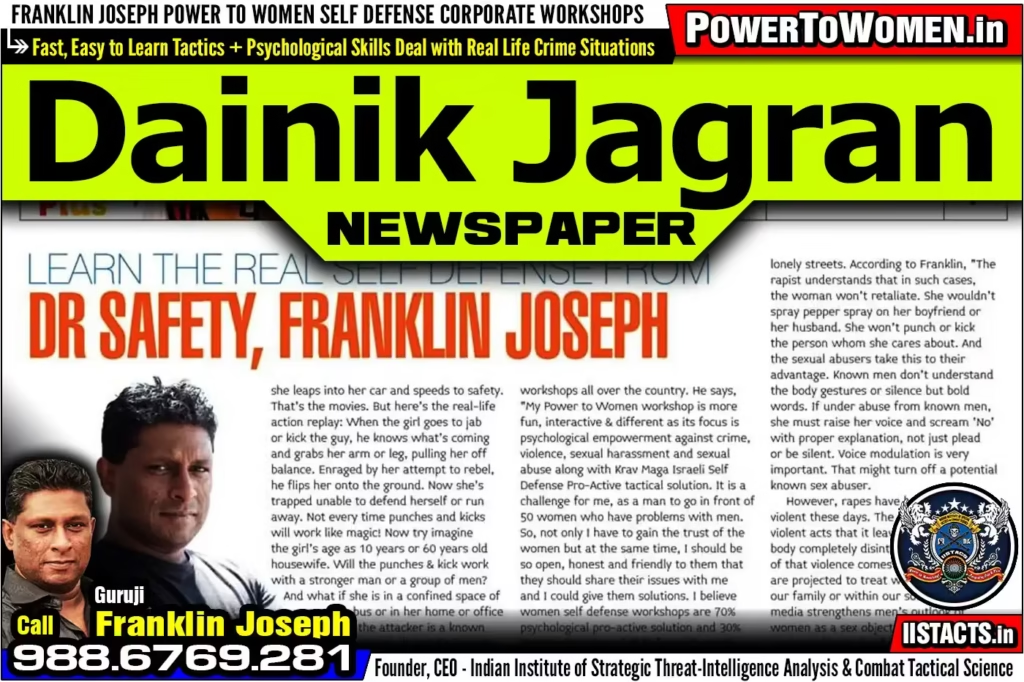
Dainik Jagran Newspaper ~ Learn the real self defense from Dr. Safety, Franklin Joseph
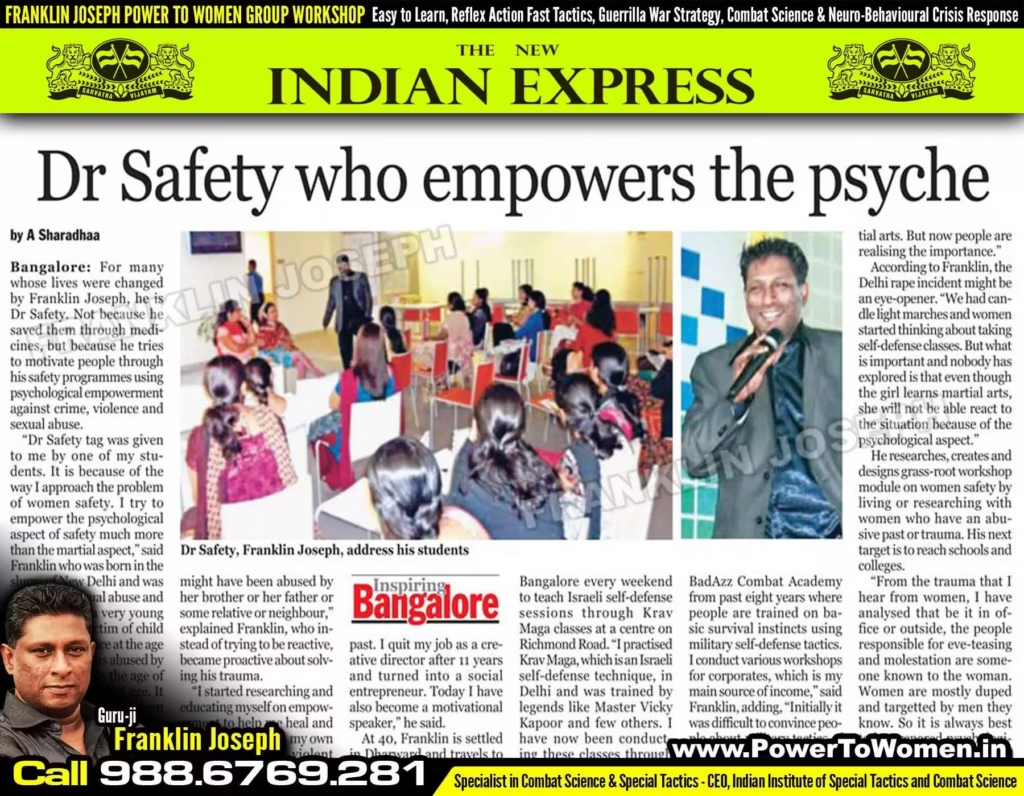
The New Indian Express Newspaper ~ Dr Safety who empowers the psyche
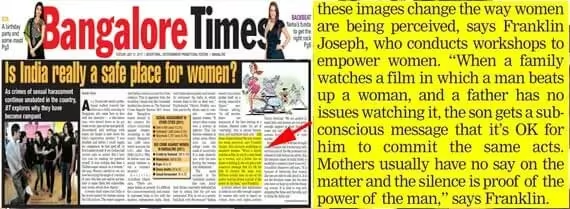
Bangalore Times Newspaper ~ Is India really a safe place for women?

Deccan Chronical Newspaper ~ Krav Maga Work your mind
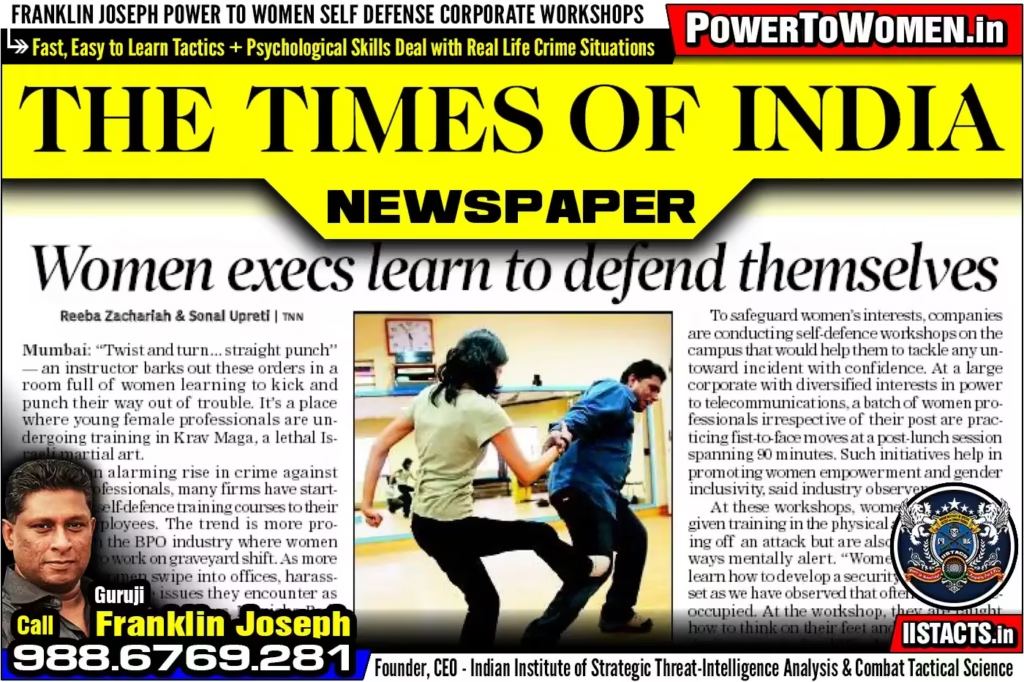
Times of India Newspaper ~ Women execs learn to defend themselves
International Women’s Day 2026 is about POWER TO WOMEN
The new syllabus must teach women to NEVER be caught off guard — physically, digitally, legally, or psychologically ...
Female Empowerment or Female Fragility? What Your Self-Defense Workshop Choice Says About How You See Women
Women’s Self-Defense Is Not About Gender. It Is About Surviving Crime.
Corporate Women’s Self-Defense Workshop: 10 Red Flags That Your Program Is Failing Your Employees
Does the Indian POSH Act Require Female Trainers for Women’s Safety Programs?
What Should You Look For When Hiring a Corporate Self-Defense Instructor?

Quest towards a Warrior Mindset – Ms. Priyamvada, Advocate

Indian Institute of Management, Bengaluru – Women Self Defense Workshop

National Institute of Technology, Tiruchirappalli – Women Self Defense Workshop

Car Tactics – Power To Women Corporate Self Defense Workshop with Psychological Women Empowerment Workshop

Titan ~ 4 Cities – Power To Women Corporate Self Defense Workshop with Psychological Women Empowerment
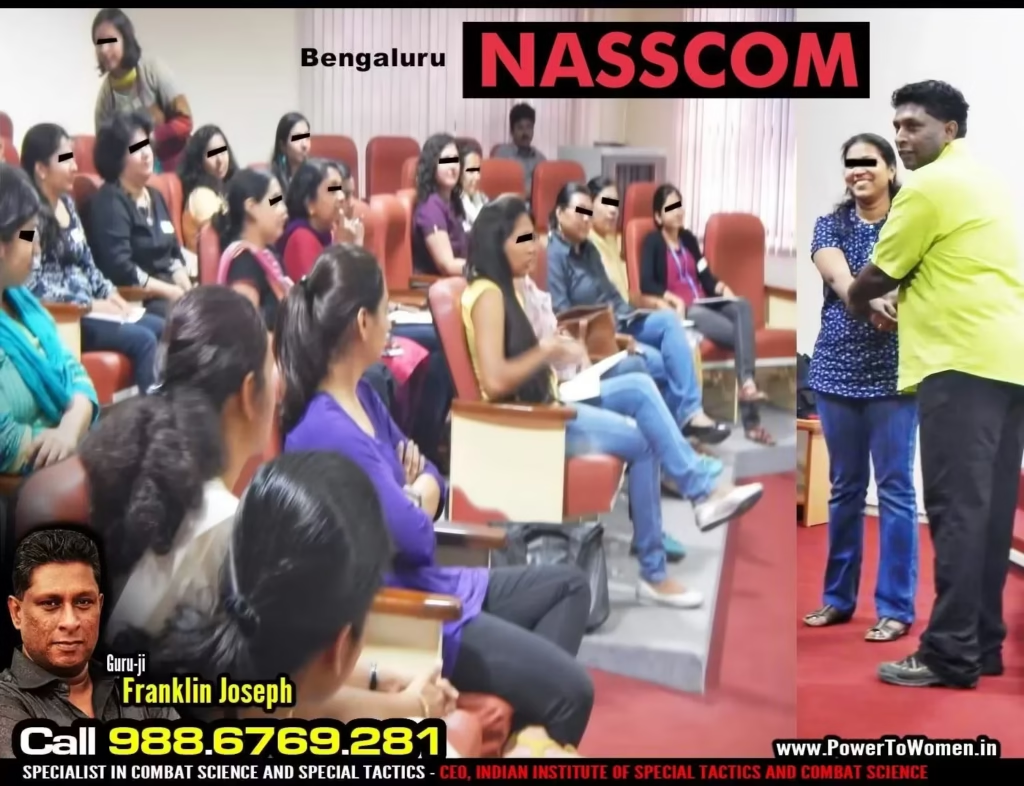
NASSCOM – Power To Women Corporate Self Defense Workshop with Psychological Women Empowerment
About Specialist Franklin Joseph
