



















Last updated on February 24th, 2026 at 07:02 pm
Does the Indian POSH Act Require Female Trainers for Women’s Safety Programs?
Read Franklin Joseph Corporate Women Empowerment / Self Defense ArticlesCall 9886769281 for Corporate WorkshopsBy Specialist Franklin Joseph | Power to Women Corporate Self-Defense Workshop
POSH Act Trainer Gender Requirement: What the Law Actually Says
No. The POSH Act does not require female trainers for women’s safety programs. It does not mention the gender of the trainer at all.
Now, let me explain why this matters, why so many companies get it wrong, and what the Act actually does require.
POSH Act Training Mandate: Legal Requirements for Awareness Programs and Workshops
The Sexual Harassment of Women at Workplace (Prevention, Prohibition and Redressal) Act, 2013 is a landmark piece of legislation. It was created to ensure that workplaces are safe for women, that sexual harassment is taken seriously, and that organisations have mechanisms for prevention, redressal, and awareness.
Under the Act, employers are required to organise awareness programs and workshops related to workplace safety. This is clearly stated and is a non-negotiable compliance obligation.
However, and this is the part that most people miss, the Act specifies what the training should cover and what it should achieve. It does not specify who should deliver it, in terms of gender.
Read Franklin Joseph Corporate Women Empowerment / Self Defense ArticlesCall 9886769281 for Corporate WorkshopsThe emphasis in the legislation is entirely on:
- The relevance of the content to workplace safety.
- The quality and comprehensiveness of the awareness program.
- The effectiveness of the training in creating a safer workplace culture.
- Compliance with the procedural requirements of the Act.
Nowhere in the Act, its rules, or its guidelines does it say: “The trainer conducting the awareness session must be female.”
This is not an ambiguity. It is not a gap in the legislation. It is a deliberate focus on outcomes over demographics. The lawmakers understood that the quality of the training matters far more than the gender of the person delivering it.
“The POSH Act cares about whether your employees understand their rights and are safer at work. Content determines compliance. Expertise determines effectiveness. Gender does not.”
– Specialist Franklin Joseph
Why Companies Wrongly Assume POSH Requires Female Trainers: Common Misconceptions Explained
If the Act does not require a female trainer, why do so many companies assume it does? There are several understandable reasons.
Conflating POSH Committees With POSH Training
Read Franklin Joseph Corporate Women Empowerment / Self Defense ArticlesCall 9886769281 for Corporate WorkshopsThe POSH Act does have specific requirements about the Internal Complaints Committee (ICC). The Act mandates that the ICC must be headed by a woman, and at least half of its members must be women. This is a clear, explicit gender requirement written into the law for a specific structural reason.
Many professionals extend this logic to the training component, reasoning: “If the committee needs to be led by a woman, surely the trainer should also be a woman.”
But this is a conflation. The ICC is a quasi-judicial body that handles sensitive complaints, and the legislation determined female representation was essential for creating trust in the investigative process. The trainer, on the other hand, is an educational facilitator delivering critical safety skills. These are structurally different roles. The Act is specific about where gender composition is required (the ICC) and focuses purely on capability where it is not (the trainer).
Vendor Marketing Strategies
Many training vendors market themselves specifically as “female-led POSH training providers,” creating the impression that this is a regulatory requirement. It is important to distinguish between a vendor’s marketing strategy and an actual legal mandate.
Why Self-Defense Is Not Just About Learning Physical Tricks: Crime Expertise vs. Technique Demos
There is another deep-rooted misconception that drives the demand for gender-specific trainers: the belief that women’s safety is just about learning a few physical “tricks” to escape a hold. This oversimplification leads to the assumption that a female instructor is naturally better suited to teach women, simply because she can physically demonstrate how a woman might execute those specific moves.
But here is the critical flaw in that logic: relying on physical tricks is entirely reaction-based. These tactics only come into play after the crime has already started.
Read Franklin Joseph Corporate Women Empowerment / Self Defense ArticlesCall 9886769281 for Corporate WorkshopsConsidering the raw biological realities of size, weight, and strength disparities between a male attacker and a female victim, fighting back after a physical assault is underway is an incredibly difficult and dangerous path. Real crime is rarely a spontaneous, fair fight. Crime is highly planned. A predator carefully chooses the ambience, the method of ambush, the weapons, and the timing to ensure they have the absolute advantage.
Therefore, an effective trainer’s knowledge must extend far beyond martial arts techniques or physical self-defense tricks. They must possess a deep, tactical understanding of how crime is orchestrated, how predators think, and how to disrupt a planned ambush before it becomes physical. This level of threat-assessment and crime psychology is a highly specialised skill set, and skill sets have no gender.
This is precisely why the Power to Women Self-Defense Workshop was designed by merging two critical domains: the battle-tested tactical framework of Israeli military Krav Maga self-defense and a deep layer of psychological conditioning skills drawn from crisis behaviour science. The result is a system that goes far beyond physical tricks. It is scientifically designed to help women prevent, avoid, diffuse, and escape crime across every phase of a threat, not merely react after one has already begun.
The psychological architecture embedded in the Power to Women program includes skills such as:
- Pro-Active Combat Science: Conditioning participants to dictate the terms of an encounter from the opening second, rather than surrendering the initiative to an attacker.
- Guerrilla Hit and Run Deception: Reversing the asymmetric ambush strategies that predators rely on and deploying them as defensive tools.
- Neuro-Behavioral Crisis Management: Building a brain that executes trained responses under extreme threat instead of collapsing into confusion.
- Warrior Mindset: Developing the internal psychological architecture that separates those who act decisively from those who are acted upon.
- Fear Counterinsurgency: Intercepting the raw flood of panic and redirecting it into focused, usable tactical energy.
- Pro-Failure Conversion Technique: Turning every training error into a data point that strengthens the next response cycle.
- Critical Decision Life Safety Skills: Building the capacity to select the correct action in the compressed moment where hesitation translates directly into harm.
- Psychological Anti-Stress Conditioning: Installing composure in high-chaos environments as a trained, repeatable skill rather than an innate personality trait.
- Dynamic Scenario Analysis Strategy: Developing the ability to interpret and adapt to rapidly evolving danger cues in real time.
- Pre-Conflict Situational Awareness: Sharpening perception to detect danger while it is still forming, long before it becomes an incident.
- Threat Perception: Training the senses to register hostile intent through body language and environmental cues before any weapon becomes visible.
- Post-Battle Quick Response: Preparing for the critical half-minute immediately after violence, a window that frequently determines whether a survivor reaches safety or encounters secondary danger.
- Stealth and Evasive Tactics: Mastering the discipline of neutralising confrontations by ensuring they never escalate to a physical encounter.
- Active Warfare Emotional Balance: Preserving cognitive clarity and decision-making ability even when the body is saturated with adrenaline.
- Verbal Modulation Instructions: Deploying tone, volume, pacing, and language as precision instruments of boundary-setting and de-escalation.
- Violence De-Escalation Techniques: Collapsing a threat’s forward momentum through psychological and verbal intervention before any physical contact occurs.
- Crime Radar Deterrence Manoeuvre: Reshaping posture, movement, and awareness patterns so that a predator’s risk calculus rejects the participant as a viable target.
- Criminal Profiling / Crime Psychology: Mapping how attackers evaluate opportunities, weigh risks, and commit to a course of action.
- Pain Compliance / Pressure Methodology: Exploiting precise anatomical knowledge to generate disproportionate effect when physical size and strength are not an advantage.
- Emergency Risk Analysis and Management: Executing high-stakes decisions in compressed time frames where every second carries life-altering consequences.
- Decrypting Pre-Crime Sequence: Identifying the brief, often invisible behavioural signals that appear in the one-to-three seconds before an attack is launched.
When a program is built on this depth of tactical and psychological architecture, the question of who delivers it shifts entirely to whether the instructor possesses the expertise to teach these layered survival systems. The focus belongs on capability, not on demographics.
How Using POSH to Mandate Trainer Gender Contradicts the Act’s Own Anti-Discrimination Purpose
The POSH Act was created to combat gender-based bias, stereotyping, and discrimination in the workplace. Its entire purpose is to ensure that workplaces are free from gendered assumptions about capabilities and behaviour.
Read Franklin Joseph Corporate Women Empowerment / Self Defense ArticlesCall 9886769281 for Corporate WorkshopsWhen a company uses the POSH Act to mandate a female-only trainer, they are operating on a stereotype: the assumption that a male professional cannot handle sensitive topics with appropriate skill, empathy, and expertise. This is exactly the kind of gendered thinking the POSH Act was designed to dismantle.
Using an anti-discrimination law to justify a discriminatory hiring practice is a contradiction. The focus should always remain on the individual’s qualifications, track record, and subject matter expertise.
POSH Act Compliance Checklist: What Employers Are Actually Required to Do for Workplace Safety
Since we have established what the Act does not require, let us focus on what it does require, because this is where corporates should be directing their attention.
Awareness and Education
The Act requires that employees understand what constitutes sexual harassment, what their rights are, what the complaints process looks like, and what the organisation’s obligations are. Effective training should cover all of this clearly and thoroughly.
Prevention-Focused Culture
The Act’s framework is proactive, creating conditions where harassment is less likely to occur. Training should address awareness, behavioural standards, and organisational culture.
This proactive philosophy aligns directly with how the Power to Women program approaches personal safety. Rather than waiting for an incident and reacting to it, the program trains Pre-Conflict Situational Awareness, the discipline of spotting danger while it is still gathering shape and has not yet become an event. It builds Crime Radar Deterrence Manoeuvre, teaching participants to project awareness and presence in a way that causes a predator to abandon them as a target entirely. And it develops Decrypting Pre-Crime Sequence, giving participants the ability to read the brief warning signals that appear in the seconds before an attack crystallises. Prevention is always more effective than reaction, and both the POSH Act and serious self-defense training share this foundational principle.
Comprehensive Understanding of Safety
Read Franklin Joseph Corporate Women Empowerment / Self Defense ArticlesCall 9886769281 for Corporate WorkshopsThe broader goal of these mandates is workplace safety for women. Many companies extend their training to include personal safety, threat recognition, and crime prevention. When they do this, the same principle applies: the depth, quality, and real-world relevance of the training are what truly matter.
Indian Constitutional and Legal Framework: Why Trainer Selection Must Be Merit-Based, Not Gender-Based
Even setting the POSH Act aside, the broader Indian legal framework prioritises merit and equality over gender-based requirements for professional services.
- Article 14 of the Constitution: Equality before law.
- Article 15(1): Prohibition of sex-based discrimination.
- Article 16: Equal opportunity in employment.
- Equal Remuneration Act, Section 5: No gender discrimination in recruitment for similar work.
The conclusion across all legal frameworks is consistent: the selection of a professional trainer must be based on their capability and effectiveness in delivering the required education.
How to Evaluate a POSH and Self-Defense Trainer: Skills, Expertise, and Tactical Depth That Actually Matter
If you want your training to genuinely serve the objectives of the POSH Act and overall women’s safety, here is what to focus on when evaluating a trainer’s skills:
- Deep understanding of the legal framework: The trainer should know the POSH Act thoroughly, including employer obligations and employee rights.
- Ability to address real-world scenarios: Training should use scenario-based learning that helps participants recognise harassment, understand boundaries, and know how to respond effectively.
- Integration of crime psychology: If the training includes personal safety, the trainer must have expertise in threat recognition and predator behaviour. This is specialised knowledge that goes far beyond basic physical “tricks.”
- Psychological depth: Effective training addresses the psychological barriers that prevent action: the freeze response, social conditioning, and fear of retaliation.
- Professionalism and sensitivity: The trainer must navigate sensitive discussions with maturity and empathy. Evaluate this through references, past client feedback, and their methodological approach.
- Track record of measurable impact: Results are the ultimate measure of training quality. Do past participants report increased awareness, changed behaviour, and greater confidence?
When personal safety is included as part of the training scope, the evaluation must go even deeper. The trainer should demonstrate mastery of layered tactical and psychological systems, not just a collection of physical moves. A program built on Israeli military Krav Maga integrated with psychological conditioning will naturally include competencies such as Neuro-Behavioral Crisis Management, which trains the brain to function under threat rather than shut down. It will include Fear Counterinsurgency, the ability to channel the body’s panic response into deliberate, controlled action. It will develop Warrior Mindset, the trained psychological separation between those who freeze and those who act. And it will build Critical Decision Life Safety Skills, the capacity to make the right choice in the fraction of a second where indecision results in harm. These are the competencies that determine whether training saves lives or merely fills a compliance checkbox.
Creating a Safe Training Environment: Why Empathy and Expertise Matter More Than Instructor Demographics
The concern that women might be uncomfortable discussing harassment or crime with a male trainer is genuine, and ensuring psychological safety in any training room is paramount.
Read Franklin Joseph Corporate Women Empowerment / Self Defense ArticlesCall 9886769281 for Corporate WorkshopsHowever, it is vital to recognize that a trainer’s ability to create a safe, comfortable, and trauma-informed environment is a professional skill. It stems from their pedagogical methodology, their tone, their empathy, and their deep understanding of psychological boundaries, not their gender.
Assuming that only a female trainer can provide a safe space diminishes the professional competencies required to facilitate these highly sensitive discussions. A highly skilled trainer, regardless of gender, knows how to navigate trauma, answer difficult questions without judgment, and empower participants without making them feel vulnerable. Comfort and safety are the direct results of the trainer’s expertise.
This professional skill is closely related to what the Power to Women program teaches as Verbal Modulation Instructions, the ability to use voice as a calibrated tool for setting boundaries, building trust, and controlling the emotional temperature of any interaction. It also connects to Psychological Anti-Stress Conditioning, which recognises that composure in tense and emotionally charged environments is not an inherited personality trait but a capability that is built through deliberate practice. And it reflects Violence De-Escalation Techniques, the discipline of defusing tension and reducing threat through psychological and verbal skill before any situation escalates beyond the point of control. A trainer who has mastered these principles creates safety through competence, not through demographic identity.
Final Verdict: POSH Act Does Not Mandate Trainer Gender, It Mandates Effective, Expert-Led Training
The POSH Act does not require female trainers. It requires effective training. And effective training is determined by knowledge, methodology, sensitivity, and outcomes.
The path forward is straightforward: evaluate trainers purely on merit. Choose the professional with the deepest understanding of crime, the law, and human psychology, and trust your employees to learn, grow, and become stronger based on the quality of the education they receive.
A program that merges Israeli military Krav Maga tactical systems with deep psychological conditioning, covering everything from Pro-Active Combat Science (seizing control of an encounter before the attacker can set the terms) to Stealth and Evasive Tactics (eliminating threats by ensuring confrontations never reach the physical stage), from Dynamic Scenario Analysis Strategy (interpreting rapidly shifting dangers as they unfold in chaotic real-world conditions) to Emergency Risk Analysis and Management (making split-second decisions in compressed time frames where delay carries irreversible consequences), from Post-Battle Quick Response (acting decisively in the thirty seconds after violence that often determine whether survival holds) to Active Warfare Emotional Balance (sustaining clear thinking when adrenaline saturates every system in the body), from Guerrilla Hit and Run Deception (turning the very ambush methods criminals depend on into tools of escape) to Criminal Profiling and Crime Psychology (understanding how an attacker reads situations, selects targets, and commits to action), from Pain Compliance and Pressure Methodology (using anatomical precision to create maximum effect when raw physical strength is unavailable) to Pro-Failure Conversion Technique (transforming every error into a building block that strengthens the next trained response). This is the standard of depth and integration that separates a program built to save lives from one built to check a box.
Read Franklin Joseph Corporate Women Empowerment / Self Defense ArticlesCall 9886769281 for Corporate WorkshopsExpertise has no gender. Results have no gender. And your employees deserve the best, evaluated purely on merit and capability.
“Read the POSH Act carefully. It asks you to create awareness. It asks you to build a safe culture. It asks you to take safety seriously. It never once asks you to check the gender of your trainer. Because the legislators understood that expertise has no gender.”
– Specialist Franklin Joseph
Corporate Workshops ~ 'Embrace Inner Power'
Our all-encompassing strategy combines state-of-the-art Israeli Military Krav Maga self-defence methods with revolutionary psychological tactics like to help you maintain composure, assertiveness, and control whether you're negotiating a high-pressure boardroom or an unpredictable street or domestic encounter. Don't hesitate; give Specialist Franklin Joseph a call @ 9886769281 right now to learn the most important skills and become a part of the movement towards empowered life.
Connect with Specialist Guruji Franklin Joseph for

Corporate Workshops Clients
Other Posts & Articles

Jain International Trade Organisation (JITO) Power To Women Self Defense Workshop
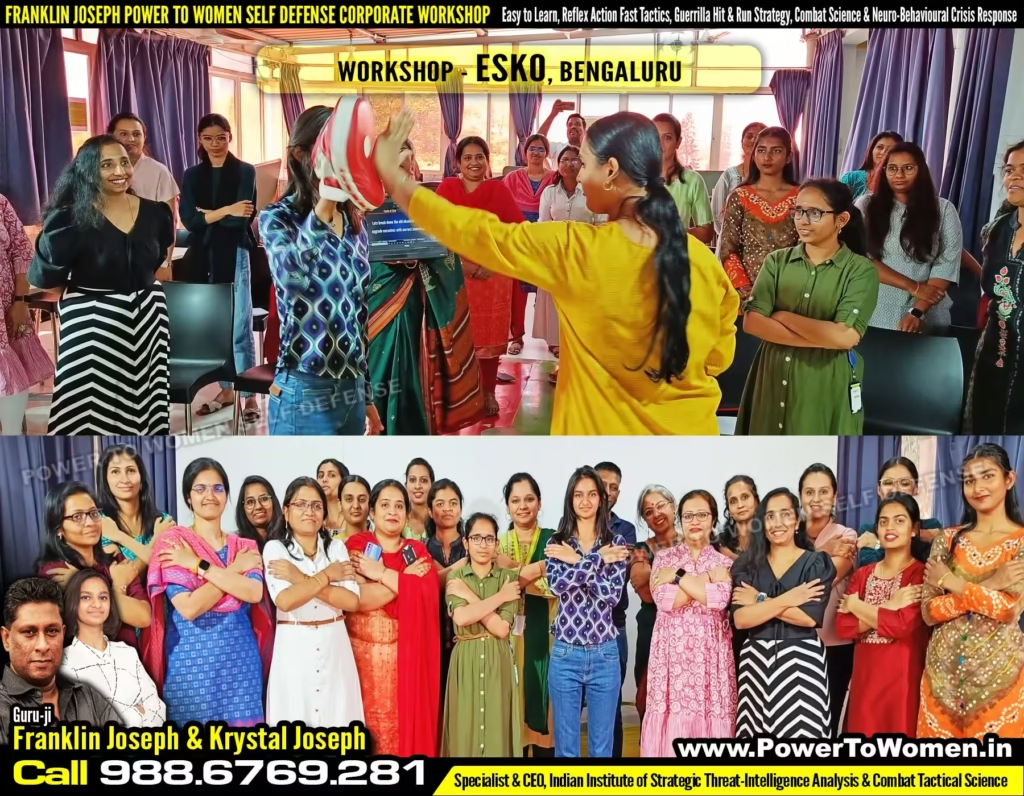
ESKO India ~ International Women Day Self Defense Workshop
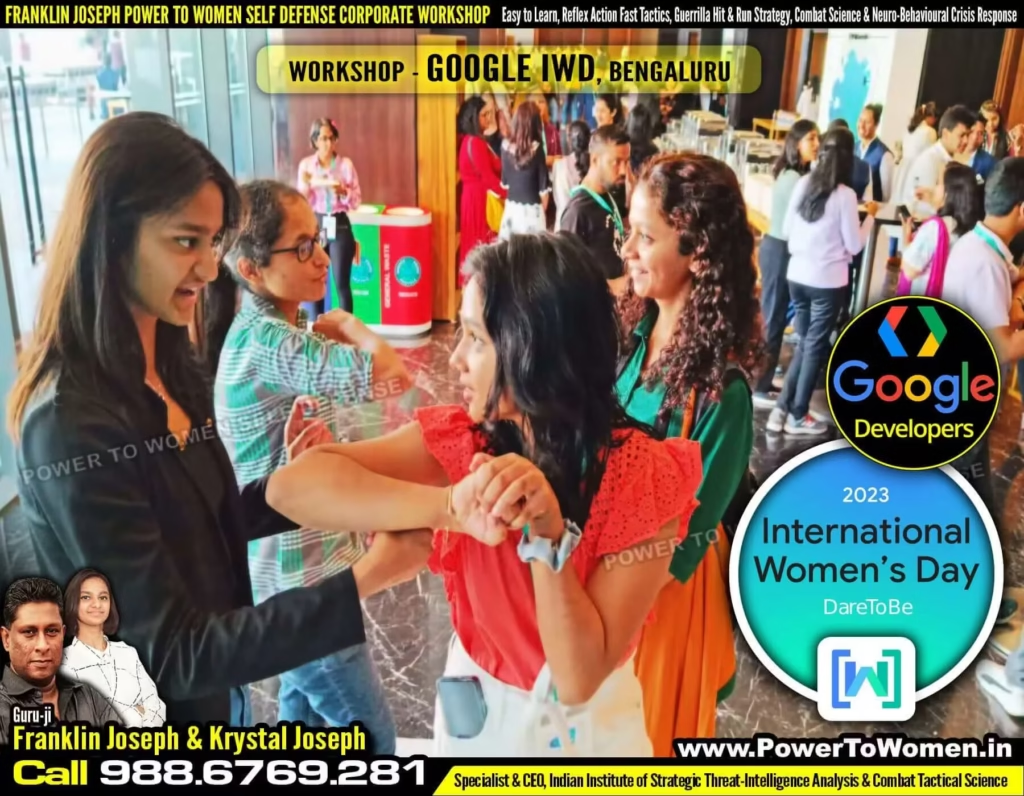
Google Women Techmakers ~ Krav Maga Self Defense + Psychological Women Empowerment
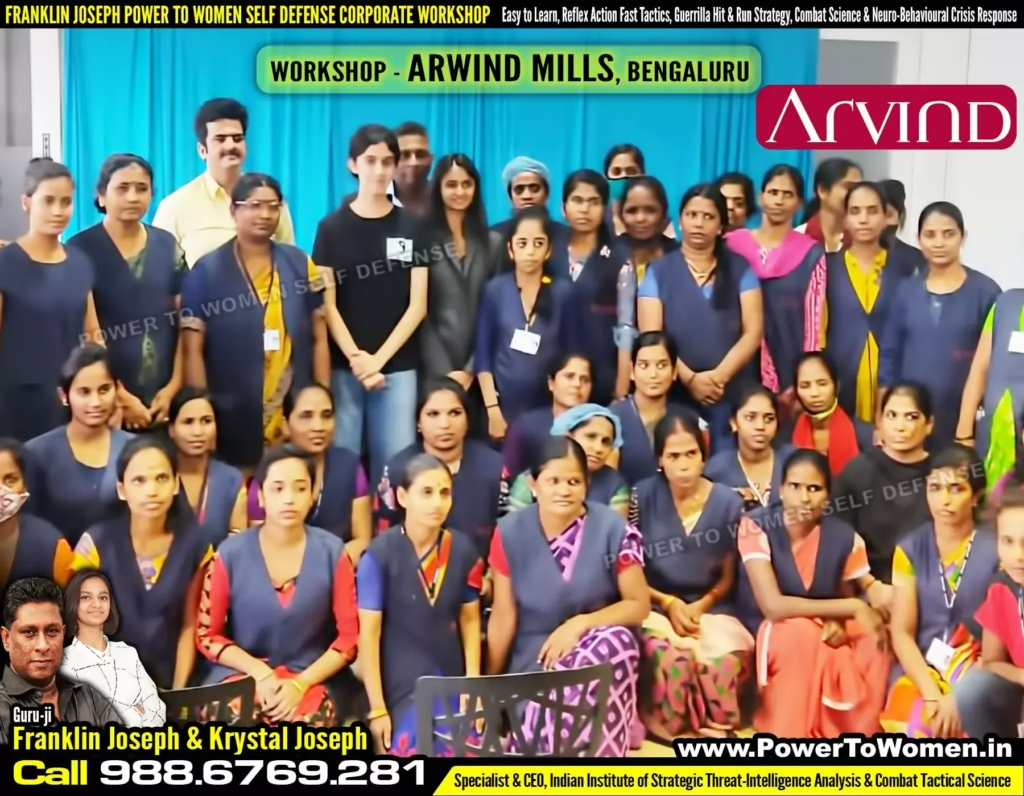
Arvind Mills – Power To Women Corporate Self Defense Workshop
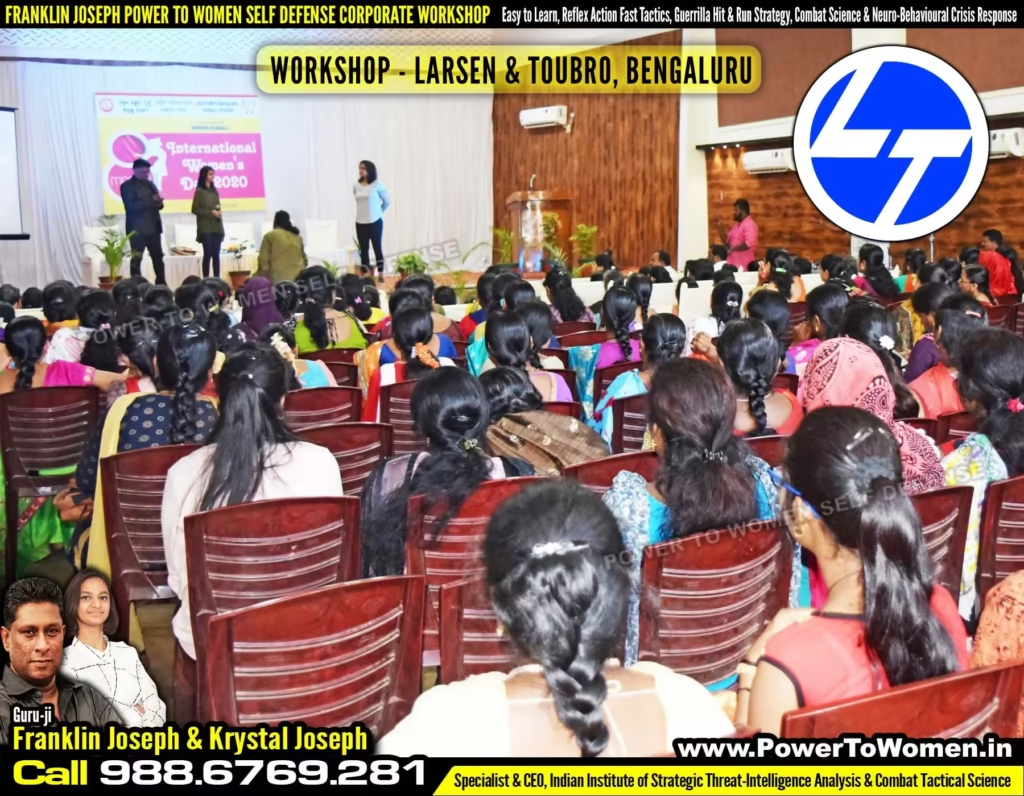
Larsen & Toubro Technology Self Defense Workshop, Bengaluru

Amazon India – Power To Women Corporate Self Defense Workshop
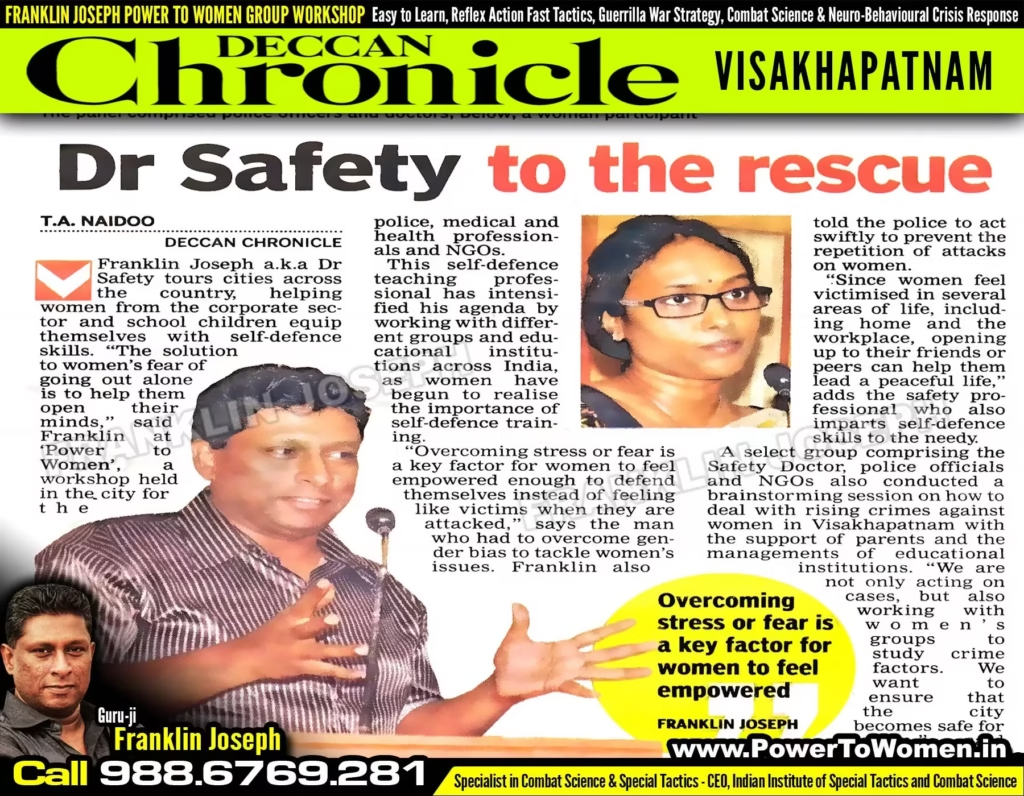
Deccan Chronicle – Newspaper – Dr. Safety to the rescue
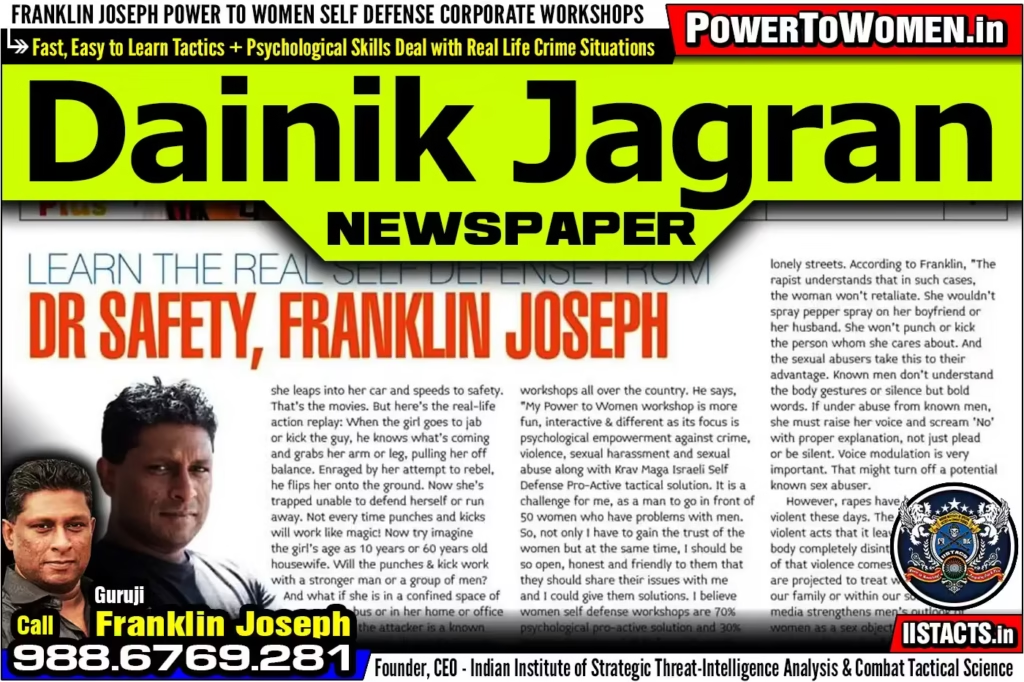
Dainik Jagran Newspaper ~ Learn the real self defense from Dr. Safety, Franklin Joseph
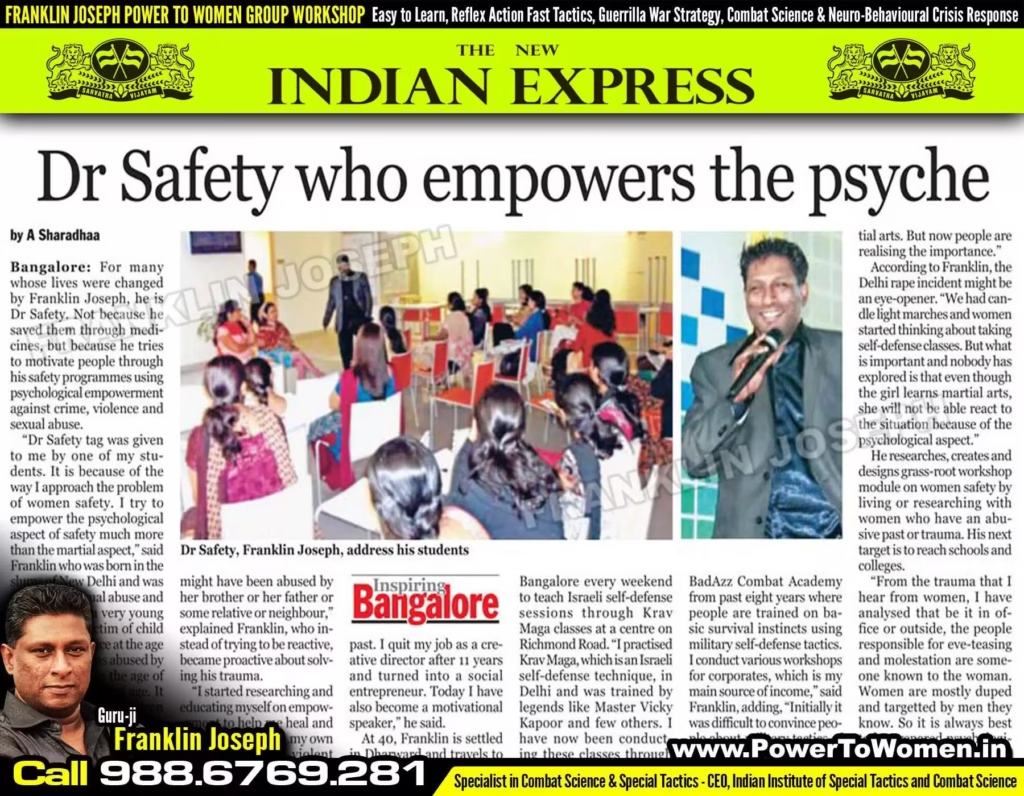
The New Indian Express Newspaper ~ Dr Safety who empowers the psyche
Bangalore Times Newspaper ~ Is India really a safe place for women?

Deccan Chronical Newspaper ~ Krav Maga Work your mind
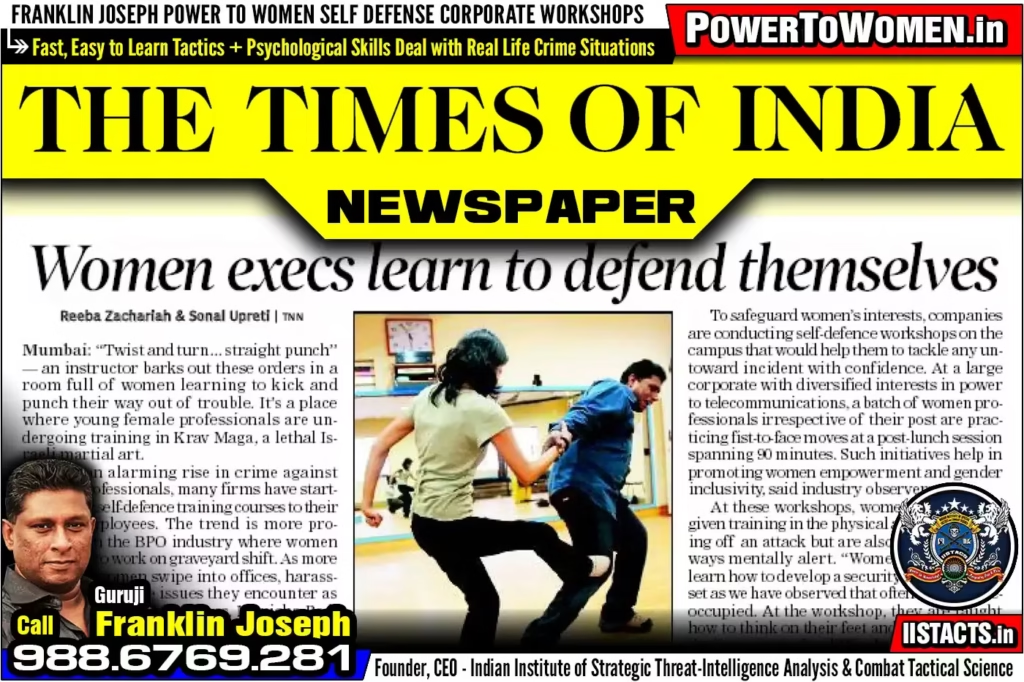
Times of India Newspaper ~ Women execs learn to defend themselves

International Women’s Day 2026 is about POWER TO WOMEN
Female Empowerment or Female Fragility? What Your Self-Defense Workshop Choice Says About How You See Women
Women’s Self-Defense Is Not About Gender. It Is About Surviving Crime

Corporate Women’s Self-Defense Workshop: 10 Red Flags That Your Workshop Is Failing Your Employees
Does the Indian POSH Act Require Female Trainers for Women’s Self Defence Workshops?

What Should You Look For When Hiring a Corporate Self-Defense Instructor?

Quest towards a Warrior Mindset – Ms. Priyamvada, Advocate

Indian Institute of Management, Bengaluru – Women Self Defense Workshop
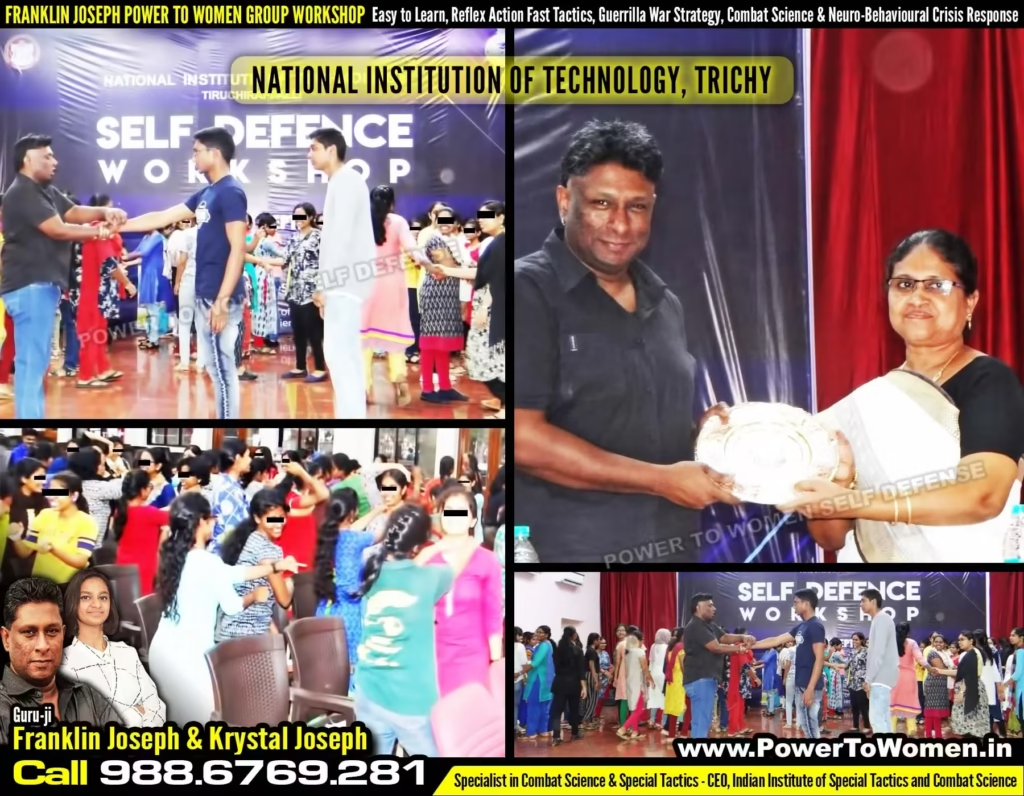
National Institute of Technology, Tiruchirappalli – Women Self Defense Workshop

Car Tactics – Power To Women Corporate Self Defense Workshop with Psychological Women Empowerment Workshop

Titan ~ 4 Cities – Power To Women Corporate Self Defense Workshop with Psychological Women Empowerment
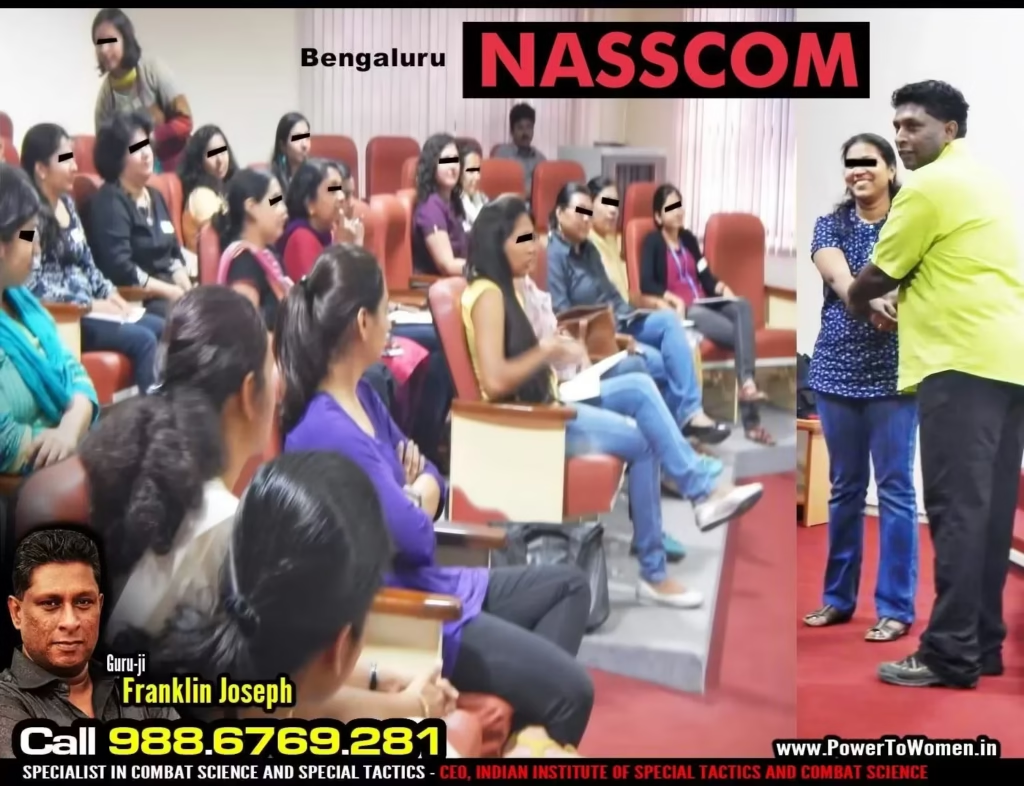
NASSCOM – Power To Women Corporate Self Defense Workshop with Psychological Women Empowerment
About Specialist Franklin Joseph