














Does the Indian POSH Act Require Female Trainers for Women’s Safety Programs?
By Specialist Franklin Joseph | Power to Women Corporate Self-Defense Workshop
The Short Answer
Read Franklin Joseph Corporate Women Empowerment / Self Defense ArticlesCall 9886769281 for Corporate WorkshopsNo. The POSH Act does not require female trainers for women’s safety programs. It does not mention the gender of the trainer at all.
Now, let me explain why this matters, why so many companies get it wrong, and what the Act actually does require.
What the POSH Act Actually Says About Training
The Sexual Harassment of Women at Workplace (Prevention, Prohibition and Redressal) Act, 2013 is a landmark piece of legislation. It was created to ensure that workplaces are safe for women, that sexual harassment is taken seriously, and that organisations have mechanisms for prevention, redressal, and awareness.
Under the Act, employers are required to organise awareness programs and workshops related to workplace safety. This is clearly stated and is a non-negotiable compliance obligation.
However, and this is the part that most people miss, the Act specifies what the training should cover and what it should achieve. It does not specify who should deliver it, in terms of gender.
The emphasis in the legislation is entirely on:
- The relevance of the content to workplace safety.
- The quality and comprehensiveness of the awareness program.
- The effectiveness of the training in creating a safer workplace culture.
- Compliance with the procedural requirements of the Act.
Nowhere in the Act, its rules, or its guidelines does it say: “The trainer conducting the awareness session must be female.”
This is not an ambiguity. It is not a gap in the legislation. It is a deliberate focus on outcomes over demographics. The lawmakers understood that the quality of the training matters far more than the gender of the person delivering it.
“The POSH Act cares about whether your employees understand their rights and are safer at work. It does not care whether the person explaining those rights has two X chromosomes. Content determines compliance. Gender does not.”
– Specialist Franklin Joseph
Where the Misconception Comes From
If the Act does not require a female trainer, why do so many companies assume it does? I think there are several reasons, and they are all understandable.
Conflating POSH Committees With POSH Training
The POSH Act does have specific requirements about the Internal Complaints Committee (ICC). The Act mandates that the ICC must be headed by a woman, and at least half of its members must be women. This is a clear, explicit gender requirement written into the law for a specific structural reason.
Read Franklin Joseph Corporate Women Empowerment / Self Defense ArticlesCall 9886769281 for Corporate WorkshopsMany HR professionals, understandably, extend this logic to the training component. They reason: “If the committee needs to be led by a woman, surely the trainer should also be a woman.”
But this is a conflation. The ICC has a gender composition requirement because it is a quasi-judicial body that handles complaints from women, and the legislation determined that female representation in its structure was essential for creating trust in the complaints process. The trainer, on the other hand, is an external or internal facilitator delivering educational content. These are structurally different roles with different requirements.
The Act is specific about where gender matters (the ICC) and silent about where it does not (the trainer). That silence is itself a statement.
Assumptions About Comfort
The second reason is the comfort assumption. Companies believe women will be more comfortable with a female trainer, and they connect this belief to their POSH obligations without realising that the Act itself makes no such connection.
Comfort is a consideration in event planning. It is not a legal requirement under the POSH Act. The Act requires effective training. How comfort is managed is an operational decision, not a compliance obligation.
Vendor Marketing
The third reason, frankly, is that many training vendors market themselves specifically as “female-led POSH training providers,” creating the impression that this is what compliance requires. This is a marketing strategy, not a legal position. And it is worth distinguishing between the two.
The Irony of Using POSH to Justify Gender Discrimination
Read Franklin Joseph Corporate Women Empowerment / Self Defense ArticlesCall 9886769281 for Corporate WorkshopsHere is where this topic gets genuinely interesting from a legal and philosophical standpoint.
The POSH Act was created to combat gender-based bias, stereotyping, and discrimination in the workplace. Its entire purpose is to ensure that women are treated fairly and that workplaces are free from gendered assumptions about power, vulnerability, and behaviour.
Now consider what happens when a company uses the POSH Act as justification for requiring a female-only trainer. The company is essentially saying: “In order to comply with a law that opposes gender stereotyping, we are making a gender-stereotyped decision about who can deliver the training.”
The assumption behind the decision is a stereotype: that women as a group cannot learn effectively from a male professional, or that a male professional cannot handle sensitive topics with appropriate skill. Neither assumption has any basis in reality, and both are exactly the kind of gendered thinking the POSH Act was designed to dismantle.
Using an anti-discrimination law to justify a discriminatory practice is a contradiction that deserves attention. Not as an accusation, but as an observation that can lead to better decision-making.
“The POSH Act was written to fight gender stereotyping. Using it to justify a gender-stereotyped hiring decision is like using a fire extinguisher to start a fire. The tool is being used in the opposite direction of its purpose.”
Read Franklin Joseph Corporate Women Empowerment / Self Defense ArticlesCall 9886769281 for Corporate Workshops– Specialist Franklin Joseph
What the Act Does Require (And Why It Matters)
Since we have established what the Act does not require, let us focus on what it does require, because this is where corporates should be directing their attention.
Awareness and Education
The Act requires that employees understand what constitutes sexual harassment, what their rights are, what the complaints process looks like, and what the organisation’s obligations are. Effective training should cover all of this clearly and thoroughly.
Prevention-Focused Culture
The Act’s framework is not just reactive (dealing with complaints after they happen). It is proactive (creating conditions where harassment is less likely to occur). Training should reflect this proactive orientation by addressing awareness, behavioural standards, and organisational culture.
Comprehensive Understanding of Safety
While the POSH Act focuses specifically on sexual harassment, the broader goal is workplace safety for women. Many companies extend their training to include personal safety, self-defense awareness, and crime prevention. When they do this, the same principle applies: the quality and relevance of the training matter, not the gender of the facilitator.
Regular and Ongoing Engagement
The Act envisions training and awareness as ongoing processes, not one-time events. This means the choice of trainer is a recurring decision, and it should be made consistently on the basis of quality and effectiveness.
The Broader Legal Context
Read Franklin Joseph Corporate Women Empowerment / Self Defense ArticlesCall 9886769281 for Corporate WorkshopsEven setting the POSH Act aside, the broader Indian legal framework does not support gender-based trainer requirements.
- Article 14 of the Constitution: Equality before law.
- Article 15(1): Prohibition of sex-based discrimination.
- Article 16: Equal opportunity in employment.
- Equal Remuneration Act, Section 5: No gender discrimination in recruitment for similar work.
- Code on Wages, Section 3: No gender-based discrimination.
- BFOQ: Gender as a job requirement is only valid when essential to the work. Instruction and training do not qualify.
Internationally, ILO Convention No. 111 (ratified by India) prohibits sex-based occupational discrimination. CEDAW (ratified by India) opposes gender stereotyping. ESG frameworks assess non-discrimination under the Social component. UN SDG 5 calls for gender equality and the removal of discriminatory barriers.
No matter which legal lens you use, the conclusion is the same: the gender of the trainer is not a legally defensible basis for selection when gender is not essential to the service being provided.
What Good POSH-Aligned Training Looks Like
If you want your training to genuinely serve the objectives of the POSH Act, here is what to focus on when selecting a trainer.
- Deep understanding of the legal framework. The trainer should know the POSH Act thoroughly, including its provisions, the role of the ICC, employer obligations, and employee rights.
- Ability to address real-world scenarios. Training should go beyond reading slides. It should use scenario-based learning that helps participants recognise harassment, understand boundaries, and know how to respond.
- Integration of personal safety and crime awareness. If your training extends beyond POSH to include self-defense, the trainer should have expertise in crime psychology, threat recognition, and behavioural response. This is specialised knowledge that goes far beyond martial arts.
- Psychological depth. Effective training addresses the psychological barriers that prevent people from acting: fear, social conditioning, the freeze response, reluctance to report, and fear of retaliation. A trainer who cannot address these factors is delivering surface-level content.
- Professionalism and sensitivity. The trainer must be able to handle sensitive discussions with maturity and empathy. This is an individual quality, not a gender quality. Evaluate it through references, past feedback, and direct conversation.
- Track record of measurable impact. Has this trainer delivered results? Do past clients report increased awareness, changed behaviour, and greater confidence? Results are the ultimate measure of training quality.
“Good POSH compliance is not about checking boxes. It is about creating real change in your workplace culture. And real change comes from real expertise. Not from gender matching.”
– Specialist Franklin Joseph
Addressing the Comfort Question One More Time
Read Franklin Joseph Corporate Women Empowerment / Self Defense ArticlesCall 9886769281 for Corporate WorkshopsI keep coming back to this because it is the argument I hear most often, and I think it deserves one more careful look in the specific context of POSH training.
The concern is that women might be uncomfortable discussing harassment-related topics with a male trainer. This concern is genuine, and I take it seriously.
But consider the following. Under the POSH Act, a woman who experiences harassment has to file a complaint with the ICC. That ICC, while headed by a woman, may include male members. The respondent in the case will often be male. Legal proceedings, if they follow, will involve male lawyers, male judges, and male investigators.
At no point in the formal process does the POSH Act guarantee that a woman will interact exclusively with other women. It provides structural safeguards (female ICC chairperson, women members), but it does not eliminate male involvement. Because the legislators understood that the ability to engage with the process matters more than the comfort of avoiding male presence.
If the formal complaint process under the Act does not exclude men, the training process certainly should not either. Training is preparation for reality. And reality includes engaging with men, including men in positions of authority, on difficult and sensitive topics.
A training environment that shields women from this experience is not preparing them for the process they will need to navigate if they ever actually need to use the protections the Act provides.
The Bottom Line
Read Franklin Joseph Corporate Women Empowerment / Self Defense ArticlesCall 9886769281 for Corporate WorkshopsThe POSH Act does not require female trainers. It requires effective training. And effective training is determined by knowledge, methodology, sensitivity, and outcomes, not by the gender of the person standing at the front of the room.
Companies that use the POSH Act as justification for a female-only trainer requirement are misreading the Act and, ironically, acting against its spirit. The Act fights gender stereotyping. Requiring a gender-specific trainer is gender stereotyping.
The path forward is straightforward: evaluate trainers on merit, choose the best person for the job, and trust your women employees to learn, grow, and become stronger regardless of who is teaching them.
“Read the POSH Act carefully. It asks you to create awareness. It asks you to build a safe culture. It asks you to take harassment seriously. It never once asks you to check the gender of your trainer. Because the legislators, unlike some procurement teams, understood that expertise has no gender.”
– Specialist Franklin Joseph
Corporate Workshops ~ 'Embrace Inner Power'
Our all-encompassing strategy combines state-of-the-art Israeli Military Krav Maga self-defence methods with revolutionary psychological tactics like to help you maintain composure, assertiveness, and control whether you're negotiating a high-pressure boardroom or an unpredictable street or domestic encounter. Don't hesitate; give Specialist Franklin Joseph a call @ 9886769281 right now to learn the most important skills and become a part of the movement towards empowered life.
Connect with Specialist Guruji Franklin Joseph for

Corporate Workshops Clients
Other Posts & Articles
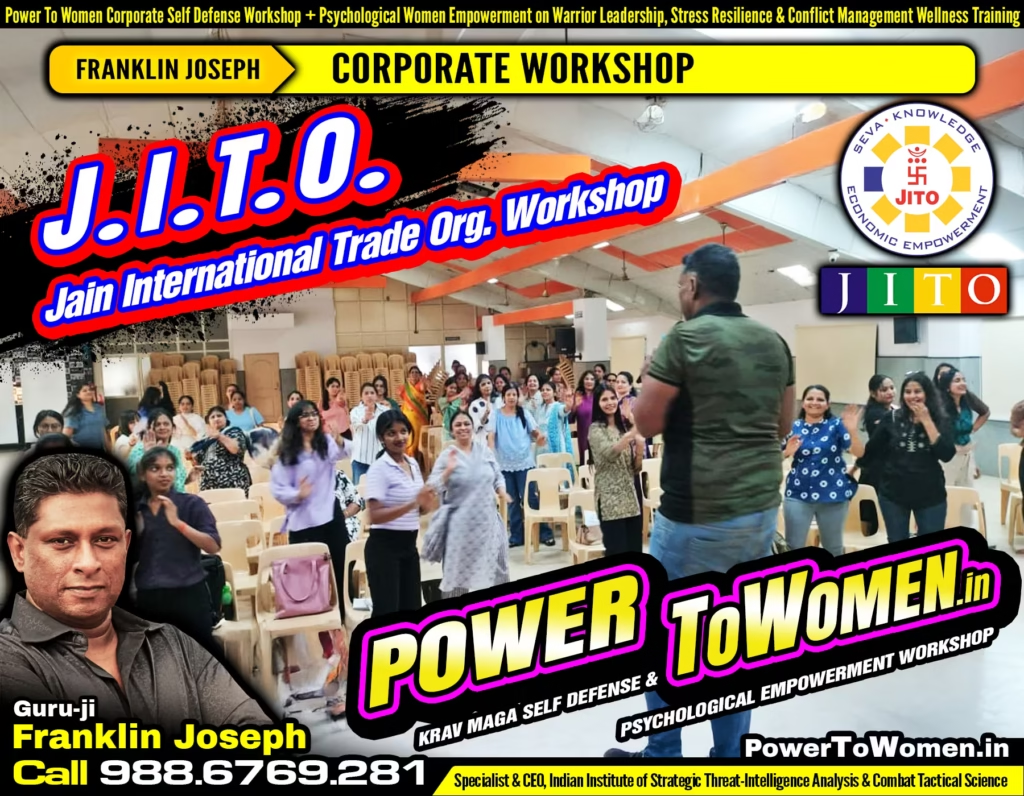
Jain International Trade Organisation (JITO) Power To Women Self Defense Workshop
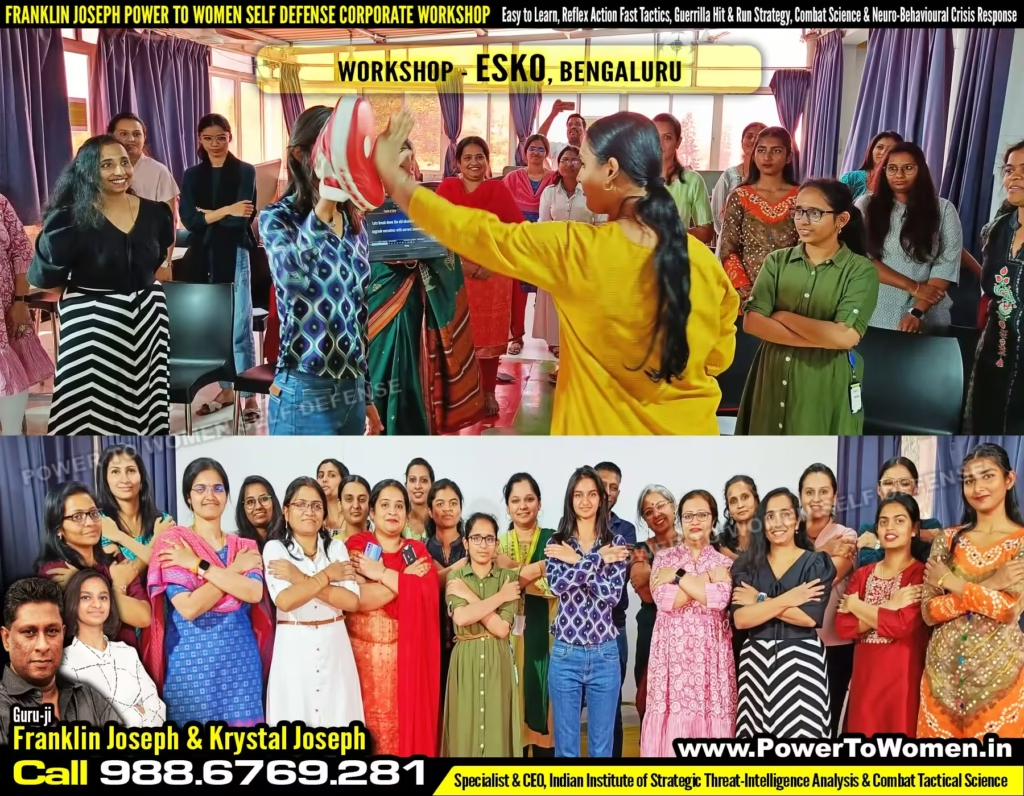
ESKO India ~ International Women Day Self Defense Workshop
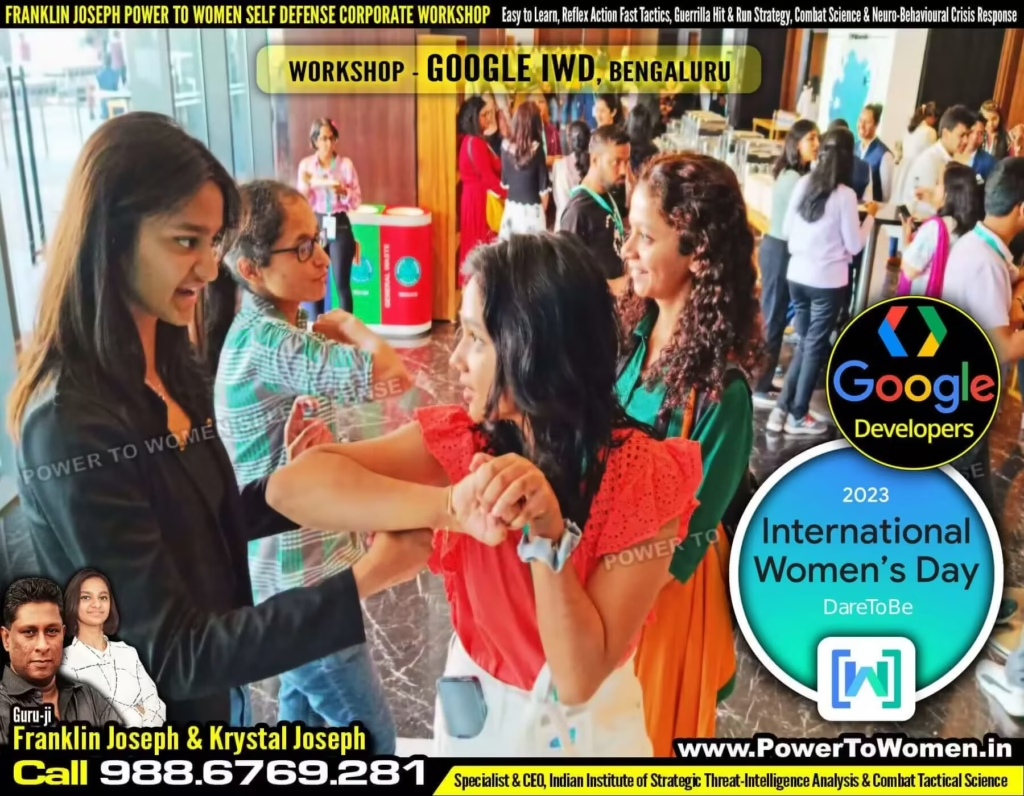
Google Women Techmakers ~ Krav Maga Self Defense + Psychological Women Empowerment
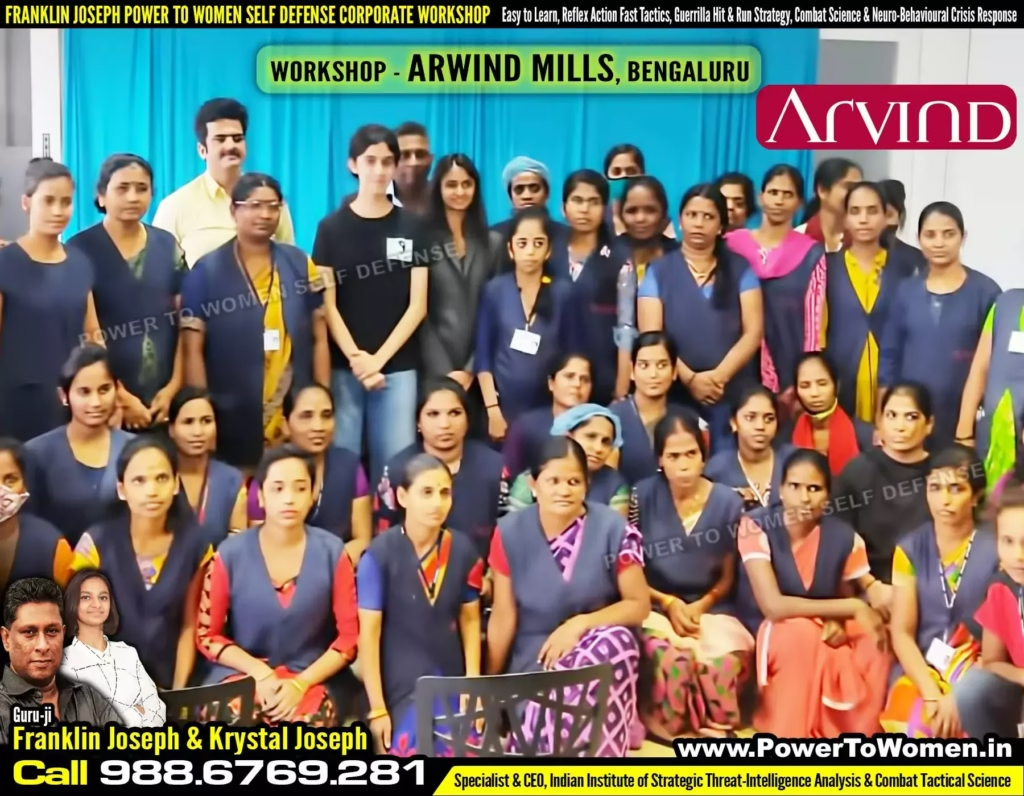
Arvind Mills – Power To Women Corporate Self Defense Workshop
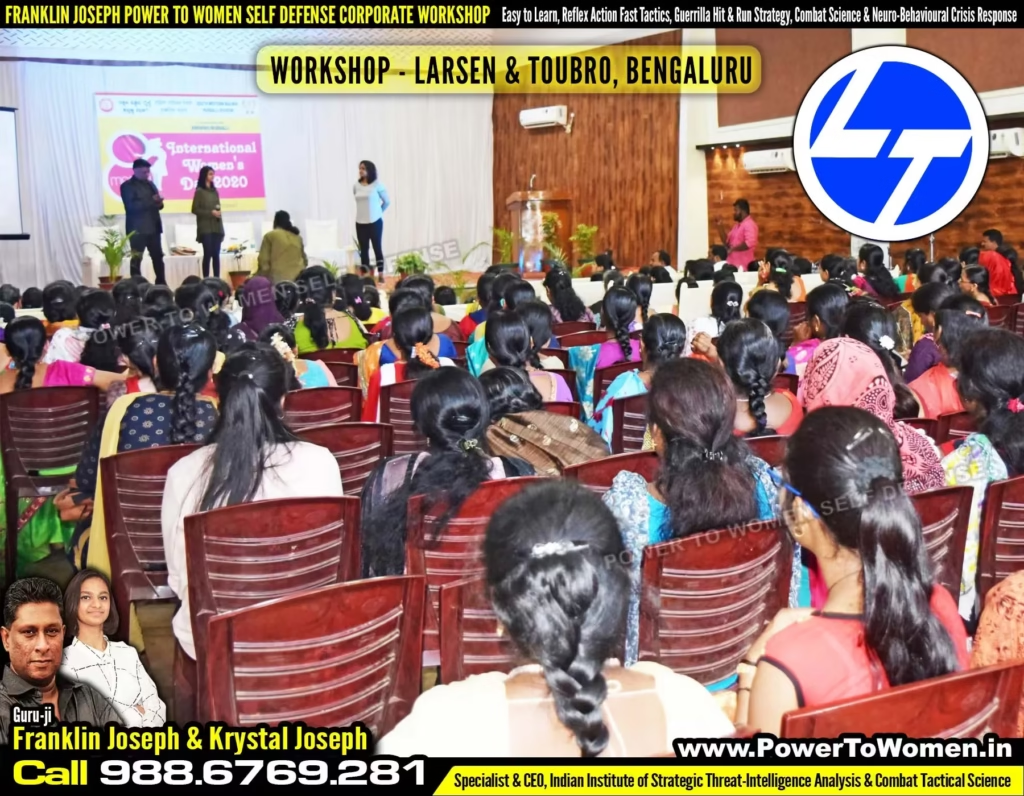
Larsen & Toubro Technology Self Defense Workshop, Bengaluru

Amazon India – Power To Women Corporate Self Defense Workshop

Deccan Chronicle – Newspaper – Dr. Safety to the rescue
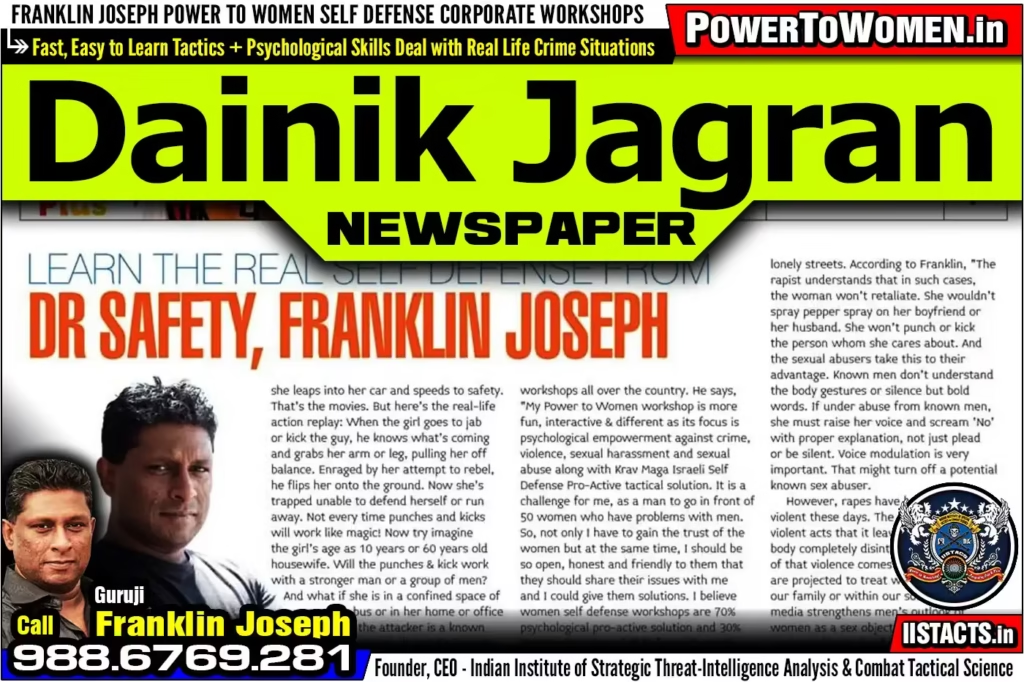
Dainik Jagran Newspaper ~ Learn the real self defense from Dr. Safety, Franklin Joseph
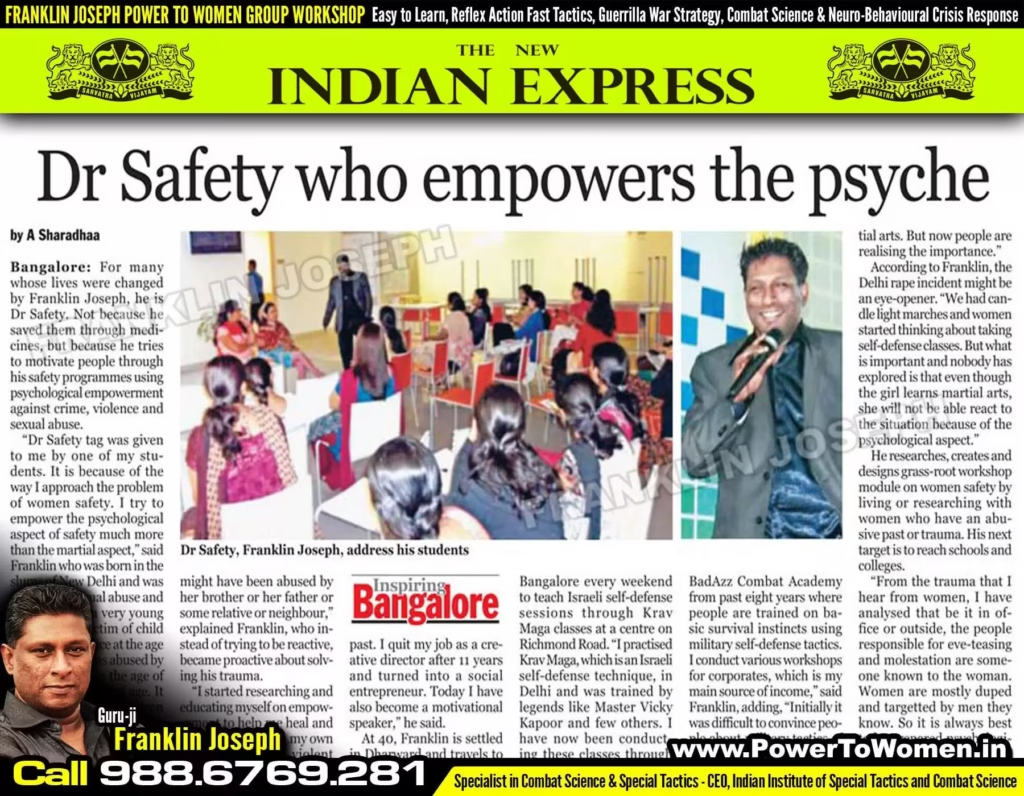
The New Indian Express Newspaper ~ Dr Safety who empowers the psyche
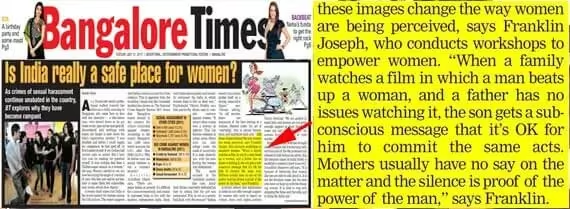
Bangalore Times Newspaper ~ Is India really a safe place for women?

Deccan Chronical Newspaper ~ Krav Maga Work your mind
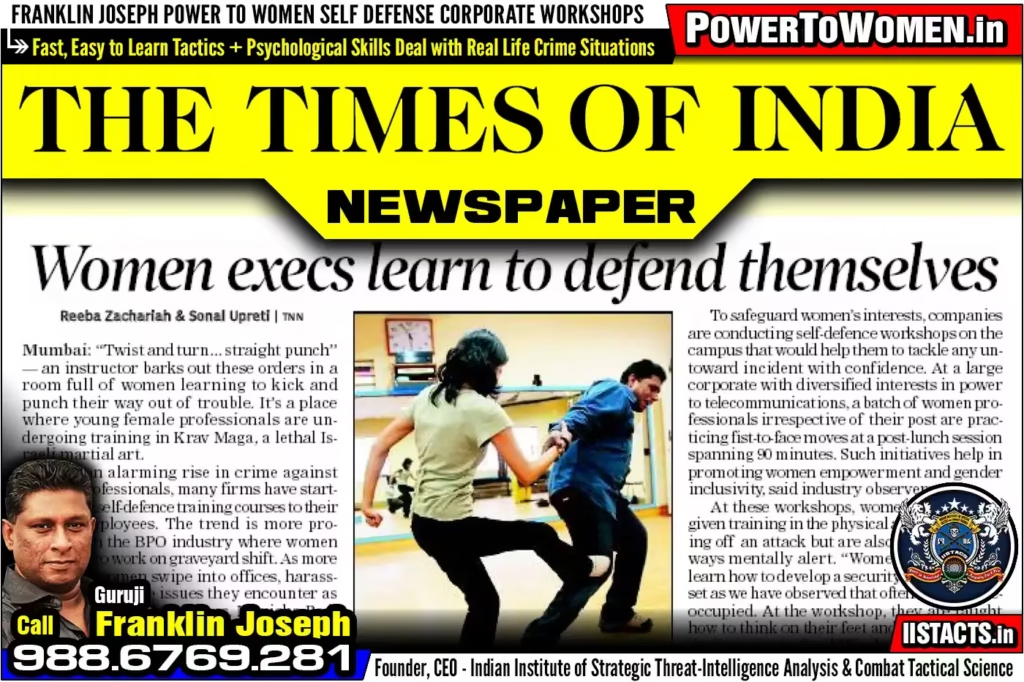
Times of India Newspaper ~ Women execs learn to defend themselves
International Women’s Day 2026 is about POWER TO WOMEN
The new syllabus must teach women to NEVER be caught off guard — physically, digitally, legally, or psychologically ...
Female Empowerment or Female Fragility? What Your Self-Defense Workshop Choice Says About How You See Women
Women’s Self-Defense Is Not About Gender. It Is About Surviving Crime.
Corporate Women’s Self-Defense Workshop: 10 Red Flags That Your Program Is Failing Your Employees
Does the Indian POSH Act Require Female Trainers for Women’s Safety Programs?
What Should You Look For When Hiring a Corporate Self-Defense Instructor?

Quest towards a Warrior Mindset – Ms. Priyamvada, Advocate

Indian Institute of Management, Bengaluru – Women Self Defense Workshop
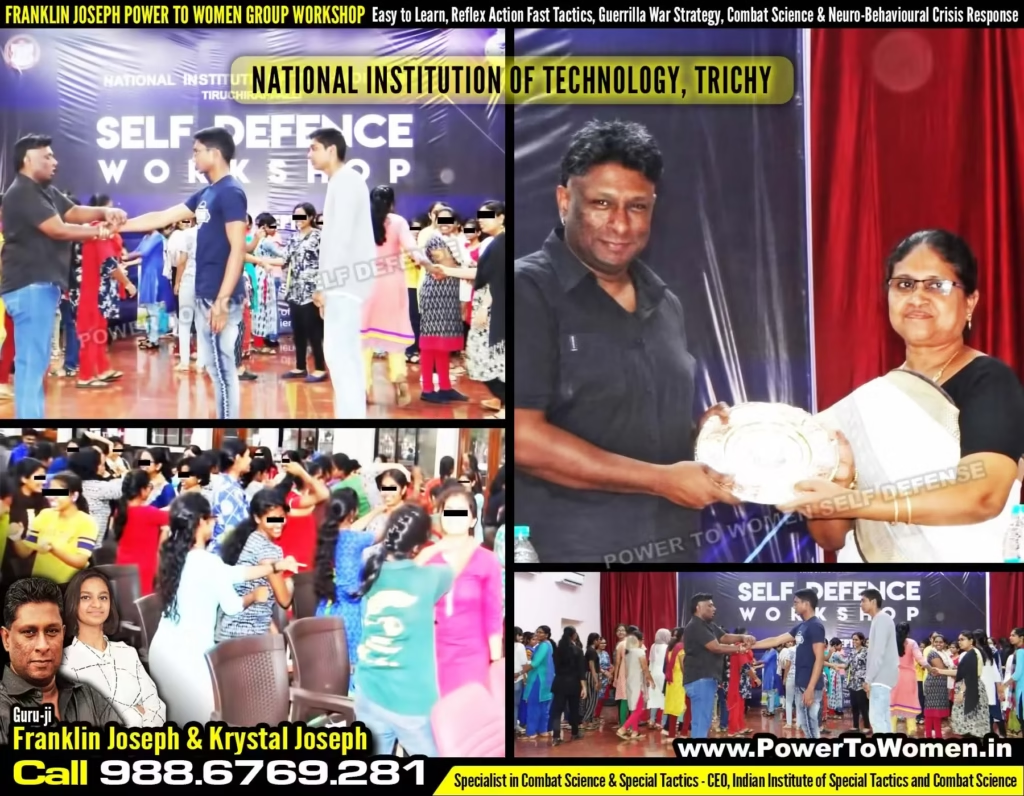
National Institute of Technology, Tiruchirappalli – Women Self Defense Workshop

Car Tactics – Power To Women Corporate Self Defense Workshop with Psychological Women Empowerment Workshop

Titan ~ 4 Cities – Power To Women Corporate Self Defense Workshop with Psychological Women Empowerment
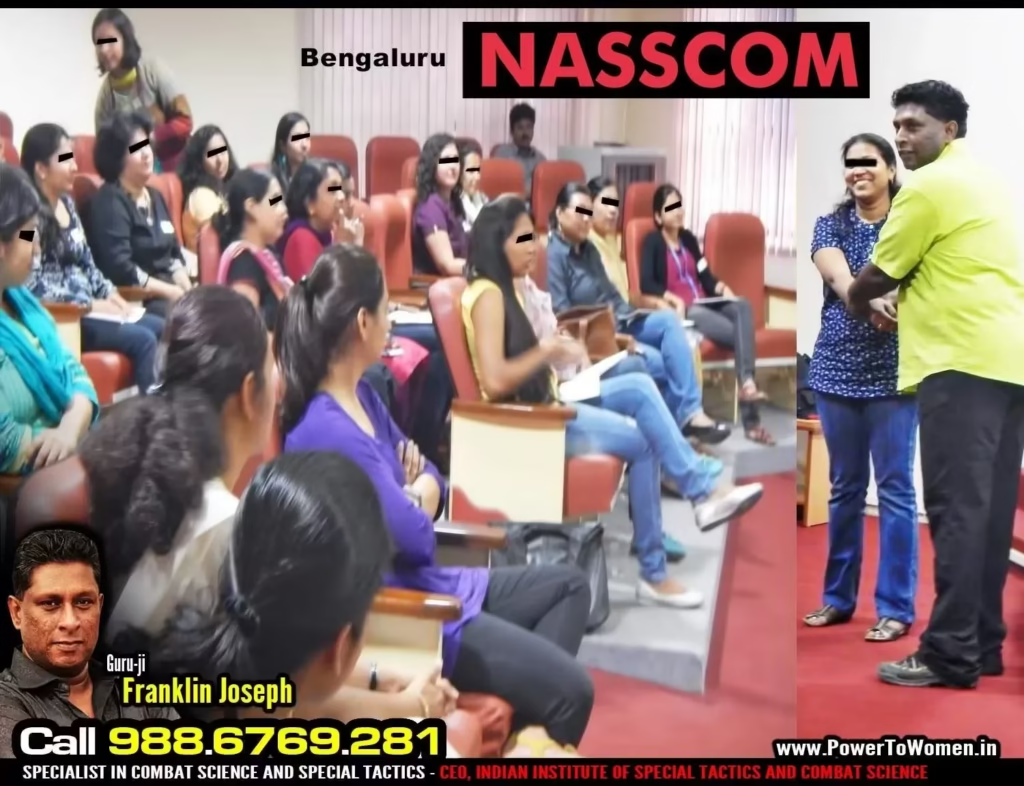
NASSCOM – Power To Women Corporate Self Defense Workshop with Psychological Women Empowerment
About Specialist Franklin Joseph